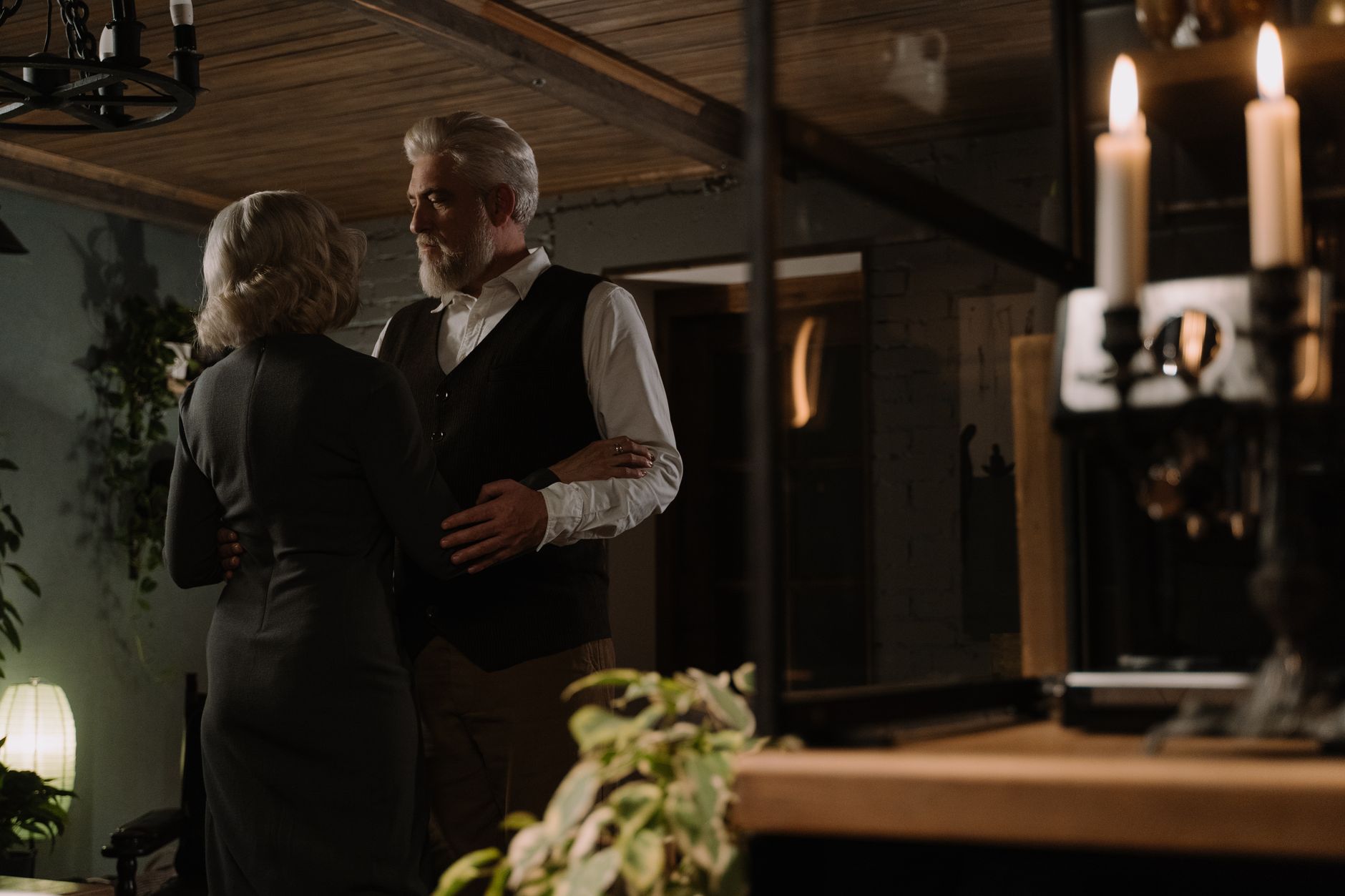
The Last Waltz I Saved for Vonnie
I made it past the bandstand and past the card table by the door and around the corner by the trophy case. I made one full circuit of the floor, and somewhere along the way I understood what I had missed in all those months of standing.
I had been guarding that spot as if someone might take it. Nobody ever would have. They had been guarding it too. Every Saturday, a hundred of my neighbors had gone out of their way to leave a patch of floor untouched, a place in a song they were all waiting to hear me use. It was never mine to guard. It was only mine to walk into.
I did not cry. I was too busy with the count. The only person in the hall who wept openly was Iola Dunning, and I saw her the whole way around, in the corner of my eye. She stood by the card table in her Auxiliary cardigan with both hands over her mouth, and her shoulders moved the whole length of the song.
The song ended the way it does, with the steel holding the last note a long time and letting it go a little flat, like a man who is not quite ready to say goodbye. Elton let it ring until it died. Then the room was quiet.
Nobody clapped. I’m glad. I could not have borne it. I stood in the middle of the floor with my arms still up, and I lowered them, one and then the other.
Marlin said into the microphone, in his soft slow voice, “Thank you, Loyd. That’s all she asked.”
And the hall came off the carpet and onto the floor all at once, and I was in the middle of a hundred and fifty people. They touched my shoulder, my elbow, the back of my sleeve. Ruthann Pickett kissed my cheek. A farmer I have known my whole life and never heard say more than six words in a row shook my hand and held on to it. Dean got there last, on his bad ankle.
“I couldn’t tell you, Loyd,” he said. “She made me swear.”
“On what?”
“Her pie recipe. She said I’d never get it otherwise.”
I picked up my hat. Somebody had set a boot beside it to keep it from being stepped on. I never saw whose.
Marlin came down from the riser with the slip in his hand. He didn’t give it to me in front of the room. He walked me out to the entry, past the trophy case, where it was quiet.
“I only read you the top,” he said. “There’s more. It’s yours.”
He put it in my palm. I unfolded it under the exit sign.
The writing on the front was not Vonnie’s. It was rounder than hers. Iola’s hand, I understood, taken down at the foot of the hospital bed, because Vonnie’s fingers shook too badly by then to hold a pen. Underneath the part Marlin had read, Iola had written the rest, as Vonnie said it. I am going to give it to you the way it’s written, because it is the only thing I have ever kept that I can’t read standing up.