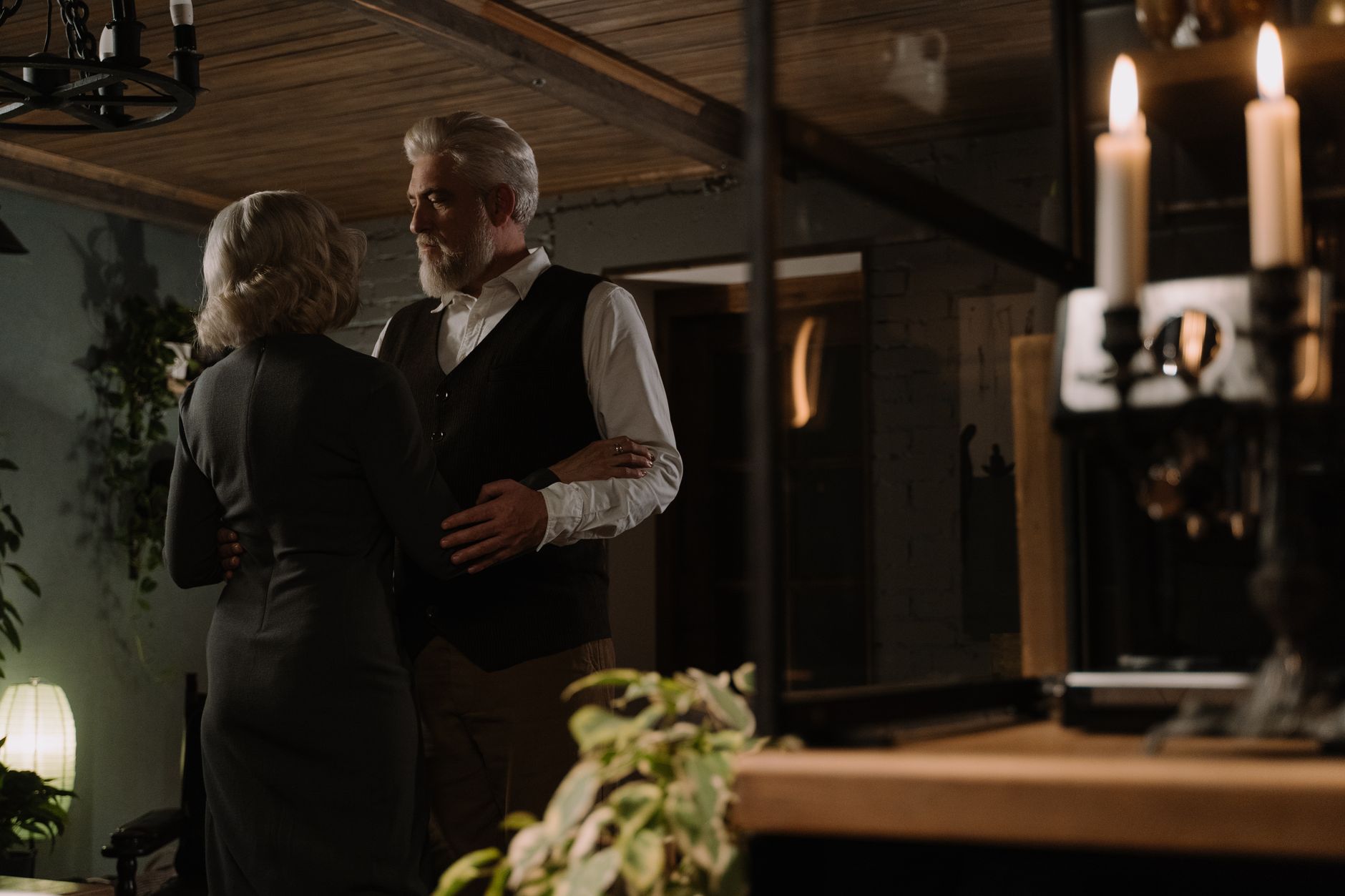
The Last Waltz I Saved for Vonnie
There is a particular loneliness in a crowd that loves you and does not know what to do with you. Everyone treated me like a pie they were afraid to drop. Even Elton’s steel seemed to rise a little more softly when I stood at the edge, and I felt it, and I wished they wouldn’t.
Seventy-six Saturdays I drove home to a house where the bed was a bed and the nail by the door was a nail. I counted afterward.
Nobody tells you that grief can turn into a job. You do it so faithfully that you begin to wonder if you are doing it right, and then if you are doing it at all, and underneath, a smaller voice starts to ask if this is what she meant.
On the third Saturday in October, the seventeenth, I decided I was finished.
It was her birthday. She would have been seventy-eight. I had been awake since four. The milo was coming off, and all day the grain trucks went by on the county road, dust hanging behind them in the low light, and every one of them put me in mind of her in the front room, watching who drove by.
I went out in the morning and stood in the yard and said her name out loud. It’s a thing I do now.
Then I came inside and thought it through the way I used to think through a failing engine. She had told me to keep going, and I had kept going. She had told me to save the song, and I had saved it, and nobody had so much as hummed it in my hearing in eighteen months. So who was the standing for?
I had no good answer, and for the first time since February I was angry at her. I am not proud of that. I stood at the sink with a coffee cup and said, out loud, “Vonnie, I can’t keep doing this, and I don’t even know what it is I’m doing.”
The kitchen didn’t say anything. I put on my good shirt anyway.
I got to the hall at seven-fifteen. Iola was at the door. She stamped my hand, and she had an odd look on her face, an alertness, like a woman at a train station. I didn’t think anything of it. I was too deep in my own head.
At nine the band took its break, and I did a thing I hadn’t done in eighteen months. I walked to the riser. Marlin was wiping down his fiddle with a flannel. He is a big, slow, patient man in his fifties with hands like a pair of work gloves, and I have known him all his life.
“Marlin,” I said. “Got a minute?”
“Sure, Loyd.”
I told him I was done. I’d be at the dance one more time, tonight, and then I wouldn’t be back. I said I had stood at the edge of that floor for a year and a half for no reason I could name, and it was making me meaner and smaller, and I thought I had honored her about as far as a man could. I said maybe I’d keep the song at home.
Marlin looked at me a long time. He didn’t look surprised. That should have told me something. He looked like a man who had just heard a clock strike a quarter hour he’d been expecting.
“I understand,” he said. “I surely do. Loyd, I’m going to ask you one thing. Stay for the last waltz tonight.”
“I’ve stayed for every one of them. That’s the whole point.”