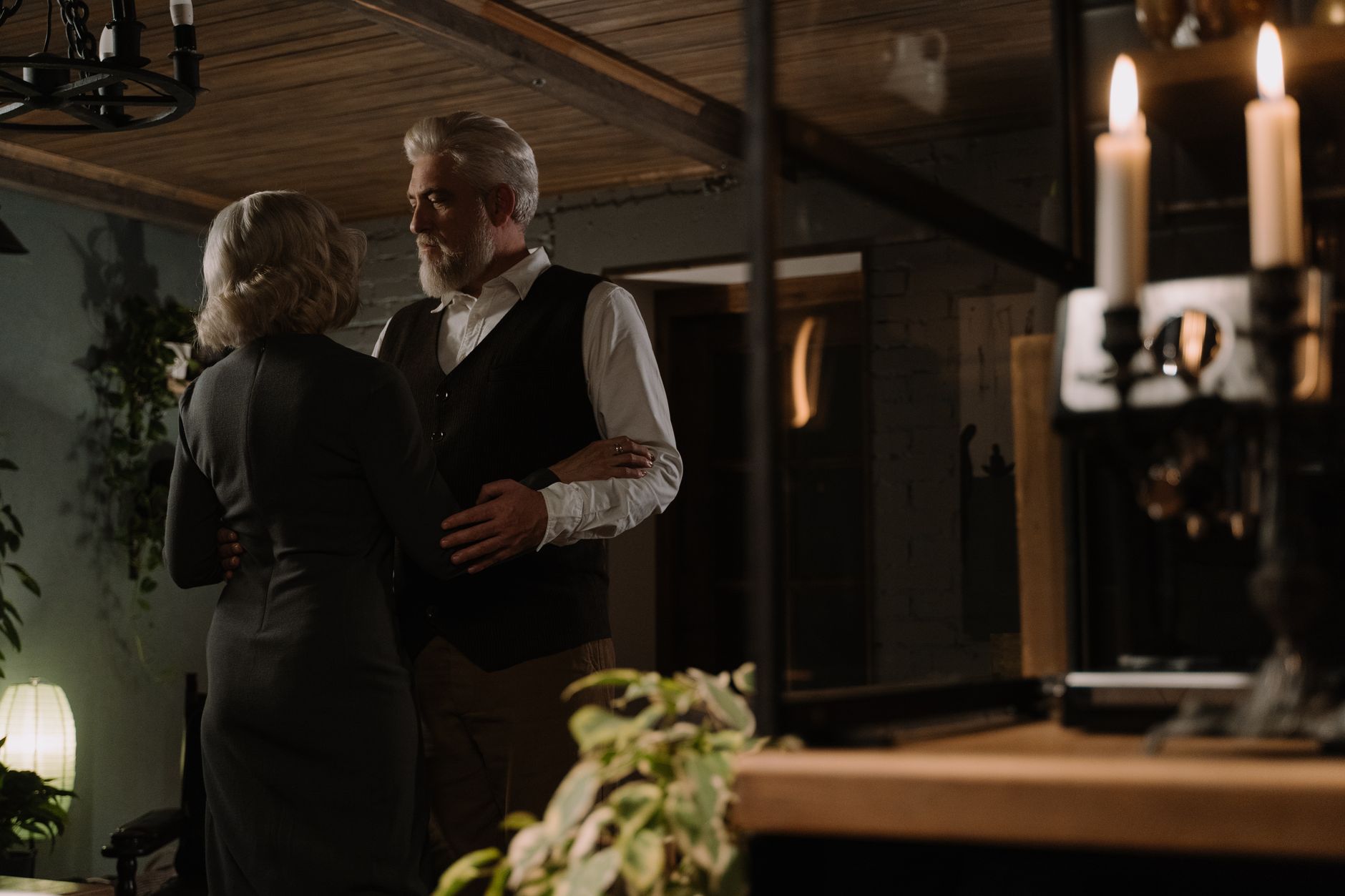
The Last Waltz I Saved for Vonnie
“One. You keep going to the dance. Every Saturday. If you sit in this house you’ll turn into the furniture, Loyd, and I won’t have it. You’ll tell yourself it’s too much, and then you’ll tell yourself you’ll start again in the spring, and in the spring you’ll be in that recliner watching a man on the television sell insurance.”
“All right.”
“Two.” She took a breath, and it cost her. “Our song. You’re not to dance it with anyone else. Not Iola. Not Ruthann Pickett, I see how she looks at you. Not Tamra at somebody’s wedding. You save it. It’s mine. You save it for me.”
I said I would.
I did not ask what she meant. I had been following her instructions for fifty-six years. I thought I knew. I thought it was what a wife tells a husband when she is dying and afraid he will take up with a woman who dusts. I was moved by it, and a little flattered, and I said yes with my whole heart.
I had it exactly backwards. It took me eighteen months to learn that.
She died on the eleventh of February, a Tuesday, a little after four in the morning. Tamra was with her. I was asleep in the recliner, which Tamra says Vonnie planned, waiting until I was out and then until it got quiet.
We buried her at Salem Lutheran on the fourteenth, in ground a backhoe had to break through frost to open. It was twelve degrees. The church was full to the walls. Marlin Wiebe and Elton Neufeld came together and sat in the same pew, and each of them shook my hand with both of his. At the funeral lunch the Ramblers played hymns in the basement, with no microphone, just fiddle and steel.
They did not play our song, and I was glad.
I did not go to the dance for six Saturdays. Then the house got quiet in a way I didn’t know a house could be and still contain a man.
In April, on a Saturday, I found I had put on my good shirt without deciding to. I took the hat from the nail and drove the twelve miles, and in the gravel lot I sat in my truck twenty minutes with the engine off. Then I went in.
Iola was at the door with the cigar box. I looked at the card table, which had been Vonnie’s and now had a different tablecloth. Iola stamped my hand without saying anything. Her thumb stayed on my wrist a second longer than it needed to.
That night at ten forty-five Marlin said, “Folks, this is the last waltz. Find somebody you like,” and my feet carried me to the strip of aluminum and stopped.
She didn’t come, of course. I stood there holding my hat. After that it was the rule.
I told myself I was saving the song. If I danced, or even set down my hat, I would be saying the last waltz was just a dance, and letting some other hand sit where hers had been. The Tennessee Waltz was not our song, but I could not separate them in that room at that hour.
By summer I had my routine down to the minute. I arrived at seven-fifteen. I sat with Dean Hartzler, who has the gout, and drank two cups of the Auxiliary’s coffee, and listened to him complain about the price of diesel. At ten-thirty I stood and worked the stiffness out of my knee. At ten forty-five I was at the strip.