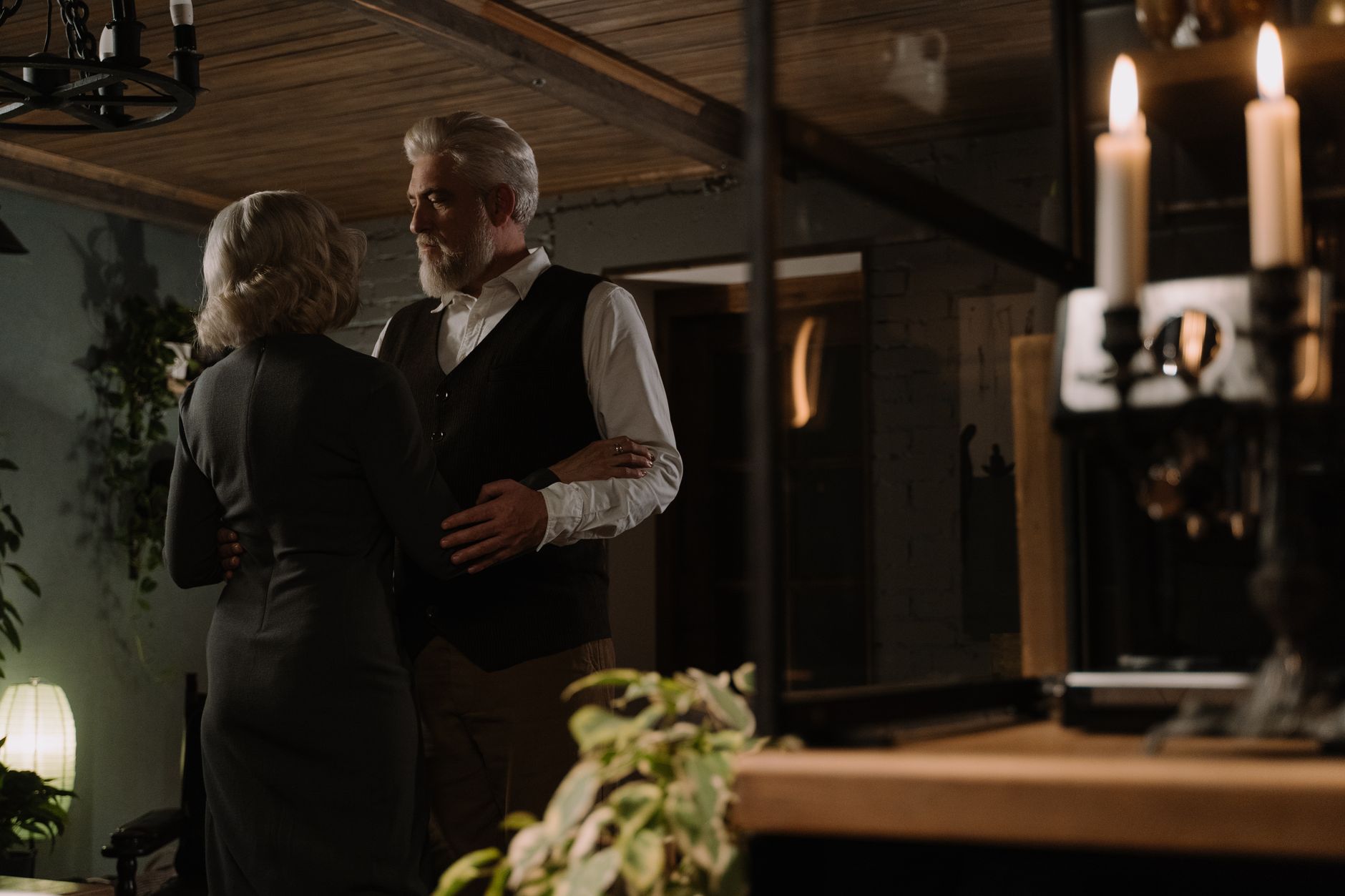
The Last Waltz I Saved for Vonnie
There is a strip of aluminum on the floor of the Burdette VFW hall, about the width of a man’s thumb, where the maple dance floor stops and the brown carpet begins. For eighteen months I stood with my toes behind that strip every Saturday night, with my hat in both hands, and watched everybody else in Reno County dance the last waltz.
Nobody told me to stand there. I want that understood from the start, because people who hear about it afterward want somebody to have been cruel or somebody to have been foolish, and neither one is true. I stood there because I made a promise to my wife, and I took the promise to mean what I thought it meant. I was wrong about that, for eighteen months.
My name is Loyd Tiemann. I am eighty years old. I live on a half section southwest of Burdette, Kansas, twelve miles of county blacktop from the hall and a little over twenty from Hutchinson, where I spent thirty-three years underground at the salt mine keeping the haulage trucks running. My wife was Lavonne. Everybody called her Vonnie, including the pastor. We were married fifty-six years.
Let me tell you how a Saturday went, so you can see the spot.
The doors open at seven. The Smoky Hill Ramblers start at seven-thirty, four of them on a plywood riser the Post built in 1974 and never painted. Marlin Wiebe plays fiddle and calls the numbers. Elton Neufeld plays pedal steel, and he is the reason that band sounds like itself. Bonnie Yoder plays bass and sings the Patsy Cline songs, and a boy named Brady Funk plays drums when he isn’t in school.
There is a coffee urn that has been percolating since the Carter administration, and by the east door a glass trophy case holding Post photographs, a Korean War helmet, and a bowling trophy nobody can explain.
At nine the band takes a break and the Auxiliary ladies pass out lemon bars on paper plates. At ten forty-five Marlin steps up to the microphone and says what he has said at the end of every dance for as long as I have been a member, which is thirty-eight years.
“Folks, this is the last waltz. Find somebody you like.”
Then they play the Tennessee Waltz, slow, and the lights come down by half, and every couple in the hall gets up. The old ones go slowest. A man named Gus Adler, who is ninety-one, dances with one hand on his granddaughter’s arm and his walker parked by the punch bowl, and I have never seen anybody look so pleased about a thing.
And I stood by the trophy case with my hat.
I sat through the rest of the evening like anybody, drinking coffee and talking wheat prices with Dean Hartzler. But when Marlin said the word waltz, I got up, walked to the strip of aluminum, and stood.
The first few Saturdays, people tried. Iola Dunning, who has run the Auxiliary since before her hair went white, crossed the floor and held out her hand. A farm wife named Ruthann Pickett offered to teach me the box step again, “like it was nothing.” I told them all the same thing. “I’m not dancing tonight. I’m sorry. I’m holding a spot.”
It was the best I could do. After a while the hall let it stand. They danced around me the way water goes around a fence post. By that first summer nobody asked anymore. Iola would catch my eye over somebody’s shoulder and nod, and I would nod back.