The Last Waltz I Saved for Vonnie
I came home in April of 1968. Four days later I drove out to the Gustafson place with my hat in my hand and asked her father if I could take Lavonne to the Saturday dance at the VFW hall in Burdette. He said I could ask her myself.
We were married the eighth of June at Salem Lutheran, in the church where we’d had the coffee. She wore her mother’s dress, let out at the seams. Our first dance was Waltz Across Texas, and she led me again. By then I had learned a little, behind the machine shed, with a mop. I didn’t tell her. She knew anyway. She said I had worn a smooth patch in the grass.
We had two children. Tamra is the older, a nurse in Wichita, and Russ is the younger, who sells farm equipment in Salina and calls on Sundays. She raised chickens, partly for the egg money and partly because she liked having something to yell at. She taught third grade for eleven years, and when the district made her retire she said she wouldn’t. They gave her a clock.
The thing to know about Vonnie is that she ran things, and I never minded. She picked the house. She picked the church. Who would stand where at a funeral she settled with a glance. She was good at it, the way some people are good at piano, and it never occurred to me I might want a say.
And every Saturday for as long as the Burdette VFW had held its dances, she ran the door.
Thirty-one years, that was her job. A card table by the front entrance with a green felt cloth, a White Owl cigar box for the money, and a blue ink stamp with a little star over the word Post. Five dollars at the door, three if you were a member. If you were over eighty she would say, “Don’t make a fuss, it’s on the Auxiliary.” Then she stamped the back of your hand and you went in.
She stamped my hand every Saturday for thirty-one years, though I stood right beside her with my own money and the whole county knew I was her husband. I asked her once why she bothered. She said, “Because it’s the rule, and I like your hands.”
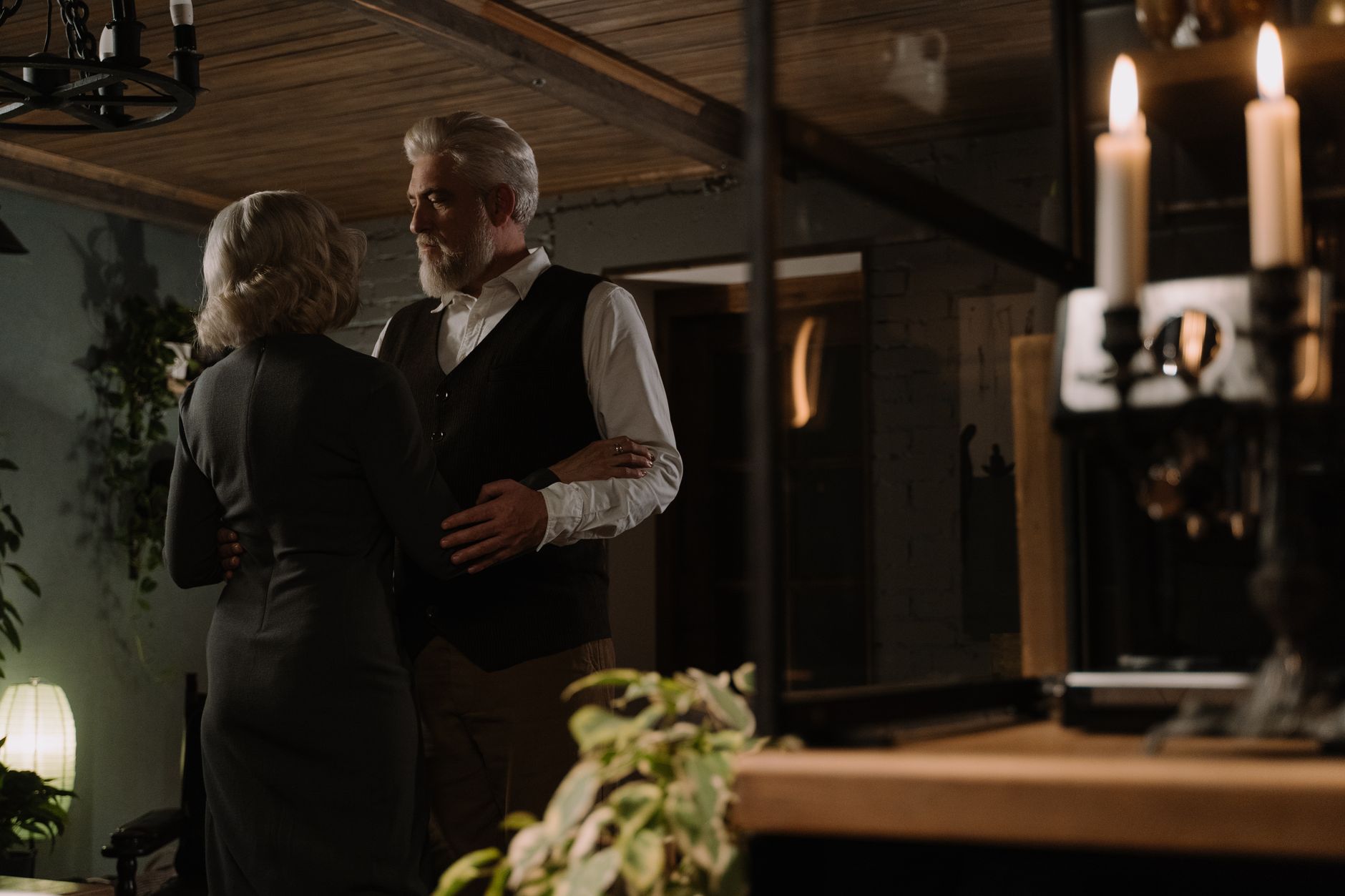
At the end of the evening she would close the box, count it twice, and come find me at the edge of the floor, the very spot I stood in later, because from there you could see the whole room.
At ten forty-five, when Marlin called the last waltz, she would take my hat out of my hands, set it on the nearest chair, and say, “All right, Loyd. Here’s where it matters.”
And we danced. Thirty-one years of that. Not our song, since the last number was always whatever waltz Marlin called, and she said any waltz would do so long as it was in three. She led. I counted in my head. She told me every time that I was a natural.
I was not a natural. I was a man whose wife was patient.
There was one night a year the band played ours. It was our anniversary, the Saturday nearest the eighth of June. Marlin’s father, who led the Ramblers before Marlin did, would take a nod from her at the door, and about nine-thirty the steel would start in and everyone who knew would clear a little room. She would take my hat, set it down, and we would dance. The last time was June of 2024, a few weeks before she began to complain of her back.