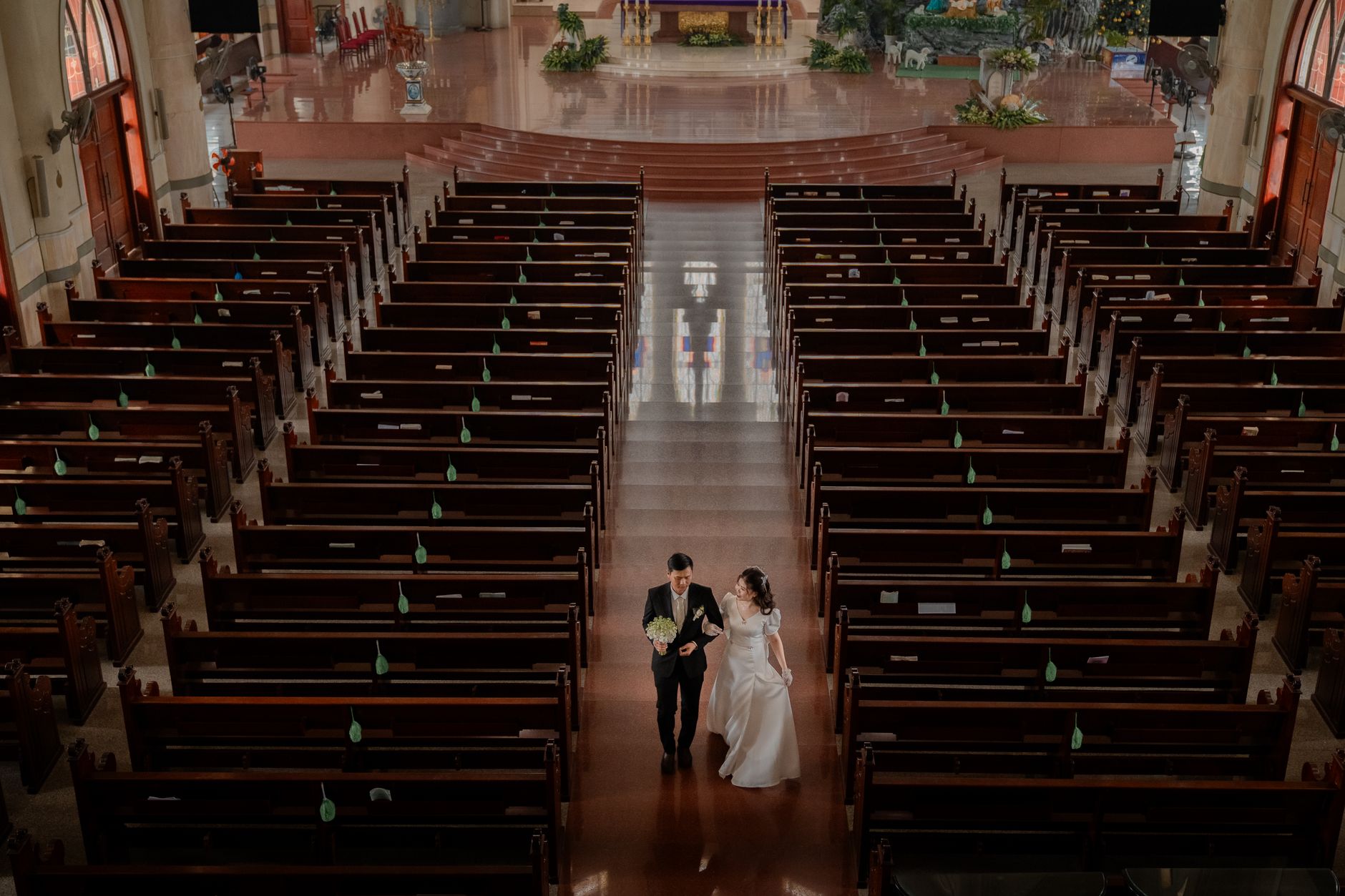
The Day I Set Down My Cane
The picture the photographer took in the aisle ran in the Lindley paper that Wednesday. It shows an old man in a gray suit and a girl in a plain white dress, walking arm in arm toward a church full of people on their feet. I look scared, and I look proud, and I look a hundred.
Sheila came out to my house on Thursday.
I was on the porch in my chair, with my cane propped up beside me, where it had gone back to living. Her car came up the lane slowly. She parked by the barn and got out and stood there with her purse on her shoulder and the newspaper folded under her arm.
She did not come up the steps.
“You made the paper,” she said.
“So I hear.”
“Rhonda at the cafe saved me a copy. She didn’t say a word, she just handed it over.”
“Hm.”
“Everybody was nice about it,” Sheila said, and her voice did something. “That’s what I can’t get past. At the school. At the bank. Nobody said one word. Mrs. Dunham asked about my garden.” She looked at the barn, and not at me. “I’d have rather had a fight.”
“Dad. I didn’t think anybody would go.”
“They did.”
“I thought it would be twelve people and some folding chairs. I counted the cars along the ditch. There must have been a hundred.”
“A hundred and sixty at the hall.”
She nodded for a long time.
“How was she?”
“She walked.”
“She asked about you,” I said. “At the end of the day. After the cake. She said, did Mom call. I said no.”
Sheila put her hand over her mouth.
I did not say what I could have said. I could have told her she had missed the one afternoon in her daughter’s life that would not come twice, and that nothing she did now would put her in that room. That is the sentence a hot man says, and he is right, and it does not help.
I said the other thing.
“Sheila. There was a chair at the head table, beside mine. Codi didn’t give it to anybody.”
“Dad…”
“It stayed empty all day. A hundred and sixty people, and not one sat in it.”
She was crying now, quietly, standing in my yard with a newspaper, the neat woman. She was crying the way you do when you finally set something down.
“She can’t want me there,” Sheila said. “After what I said.”
“She said it was so the door would be open.”
“Open.”
“That’s the word she used.”
“I don’t know how to walk through it.”
“Neither did she,” I said. “She stood at that door in Wichita a good minute before she went in.”
She stood there a long time. A pickup went by on the county road, and the dust drifted over the field.
“Does she still have Mom’s ring?” Sheila said.
“It’s on her hand.”
“I heard.” She wiped her face with the heel of her hand. “I heard Nate put it on her himself.”
“Sunday dinner’s at one,” I said. “Pot roast. She comes most weeks. She’d be here anyhow.”
“I can’t come Sunday.”
“I didn’t say you had to.”
“All right.”
She laid the newspaper on the porch rail, and smoothed it, and I saw her look at the girl in the picture a good while. “She looks like Mom,” she said.
“She does,” I said. “Around the chin.”
I want to say something about forgiveness, because there is a church lady in every family who will want it said. I did not forgive Sheila that day, because it was not mine to forgive. The hurt was Codi’s, and the wrong was Sheila’s, and an old man does not make a peace out of his own pocket. All I did was keep the porch light on.