The Garden That Came Back
I saw the gray of it from the end of the lane, and for a long moment my mind refused to name it.
I had been gone eight days. My sister Verna had a new hip in Marietta and nobody to fetch her pills, and I would have stayed a second week if she had let me. I drove home that Saturday on Route 33 with the windows down, thinking about my peas. They had been eight inches tall when I left.
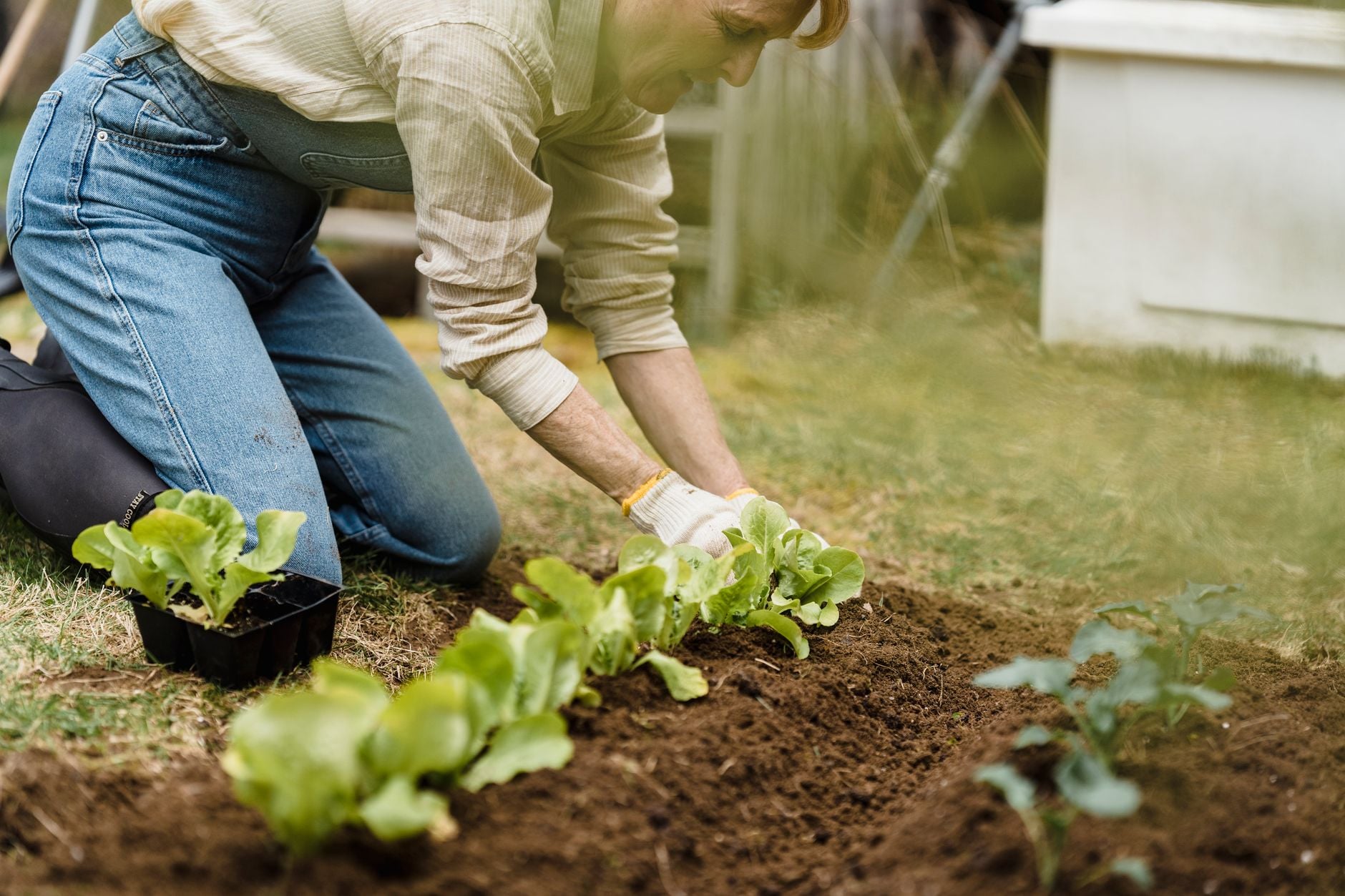
My garden sits between my house and the house my son built on the five acres his father and I deeded him, out past Linden Fork, Ohio. It is a hundred and ten feet long and sixty wide, a good deal bigger than a sensible woman needs. For forty springs you could stand at my mailbox on County Road 9 and see all of it, the rhubarb like green elephant ears on the south end, the woven wire fence Earl put up against the deer.
What I saw that Saturday was a flat gray rectangle.
Crushed limestone, the bright clean kind they put down at the church, raked smooth as a baking sheet. Orange cones at the four corners. Somebody had sprayed two rows of white lines on the stone to show the cars where to go.
No fence. No peas. No rhubarb. Not one green thing in a hundred and ten feet by sixty.
I turned off the engine in the lane and did not get out. I sat with my hands at ten and two and said, out loud, to nobody, “Lord, I am going to need You to hold my tongue, because I cannot seem to find it.”
That was when Megan came across the yard.
Megan is my son Brent’s wife. She is forty-one, she sells houses for an office in Lima, and she keeps her hair blown out even on a Saturday. She came toward me with a smile on, the careful kind you put on before you hand somebody a bill.
“Phyllis, you’re back early,” she said. “I know you’re going to be upset at first.”
“But it was an overgrown eyesore,” Megan said, “and it was dragging down the value of the whole property. We have eighty people coming for Owen’s graduation party on the twenty-third and there was nowhere to park. You’ll thank me when you see how clean it looks.”
She said it kindly. I need you to understand that. She said it the way you talk to a child about to cry over a shot at the doctor’s, with her head tipped, sure that the pain was the whole of the matter and that it would pass.
Twelve tons of stone, I learned later, on a black cloth they call landscape fabric, laid in two days by a crew from Lima with a little loader. Nineteen hundred dollars on Megan’s own card. She was proud of the price.
I did not scream. I have never been a woman who could do it well, and I have come to think that is a mercy, because the things you say loud are the things you carry.
I said, “Where is the rhubarb, Megan?”
She blinked. “The what?”
“On the south end. By the fence post with the red paint.”
“Oh.” She looked toward the ditch. “The crew cleared all that. It was kind of a mess, Phyllis. It had gone to seed, and there was all that tall weedy stuff along the fence.”
That weedy stuff was asparagus.