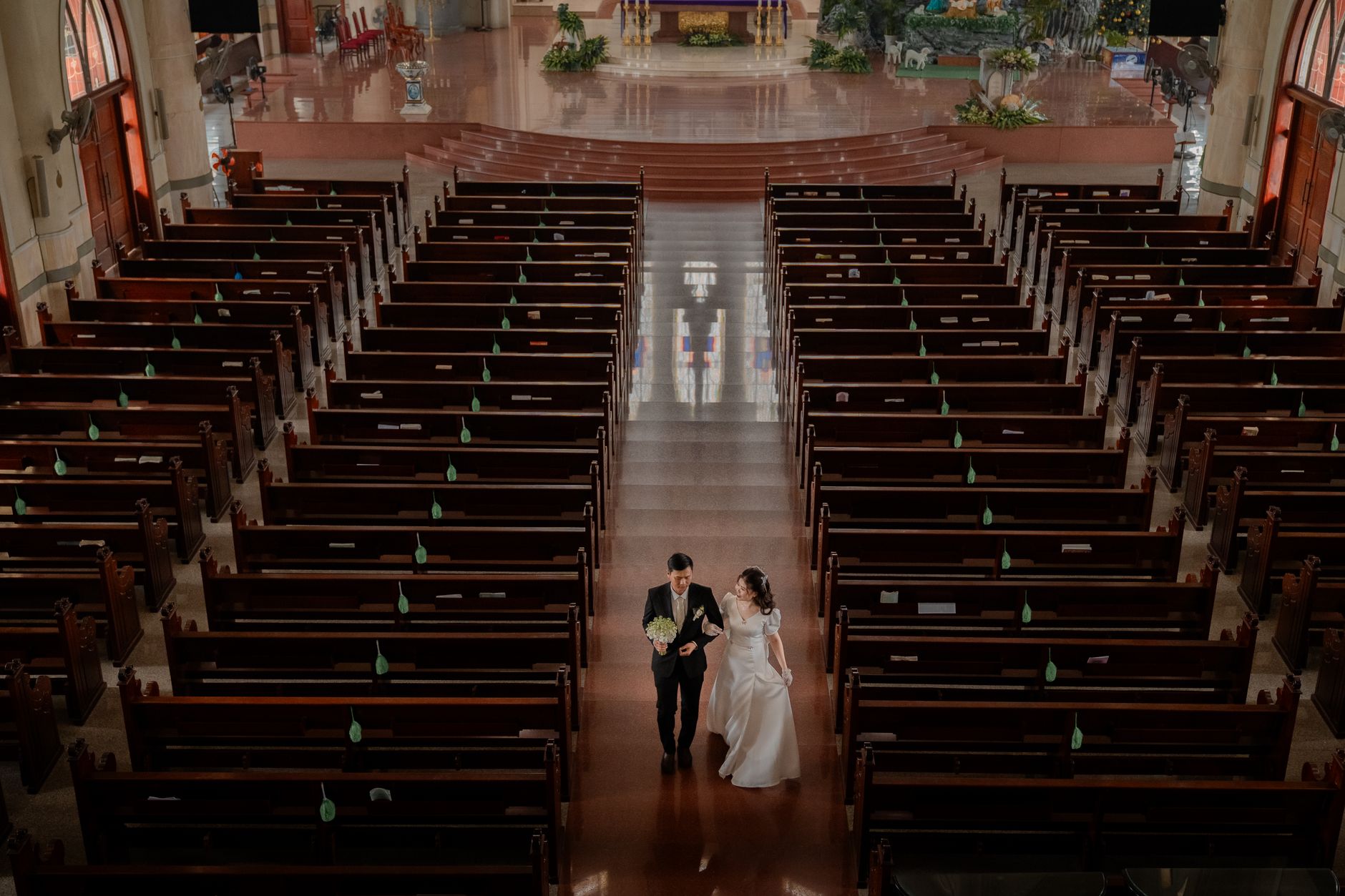
The Day I Set Down My Cane
I had had one sentence ready for a week. I had turned it over in the dark and sanded it down, the way you do a board, until there was nothing left on it that wasn’t needed. I was afraid I’d forget it. I was afraid my voice would give out.
“Codi,” I said. “I have watched you get up every morning for five years and four months. I would be proud to be seen with you.”
She did not say anything.
Her bouquet came down to her waist. Her mouth moved without a sound. Behind her, through the glass in the door, I could see the backs of heads, a hundred and some, every one of them facing front, waiting.
“Take my arm,” I said. “I’ll lean on you, and you lean on me, and neither of us will know which is which.”
She put her hand through my arm.
Her hand was ice cold. I covered it with mine.
Doreen stopped playing. Then she began again, the processional, the big plain chords that every church in the country knows. And the doors swung open.
The first thing was the sound. A church full of people stands up all at once with a noise like wind going through a corn crib, the pews creaking, hymnals knocking, shoes on old wood. I thought, they are standing for the bride.
They were. But they were doing something else too.
The groom’s whole side was on its feet, the way it should be. But on Codi’s side, the thin side, the twelve people stood too. And the instant they stood, so did the people behind them, who were Nate’s people, who had no business on that side. They simply moved over, into the wrong pews, to make the thin side thicker. The boys from the implement dealer filled the empty rows. A farmer in a clean denim shirt, whose beans I had graded for thirty years, slid into the third pew on the bride’s side, took off his cap, and put it over his heart.
We took the first step. Nate’s cousin Duane, the usher, had gotten a look from Nate, I think. He drifted along the ends of the pews beside us, hands loose, a step off my elbow.
My hip told me about it. I will not pretend. It had been grinding bone on bone since Christmas, and every step down that aisle was a small bright knife. I did not use a cane. I used the arm of a twenty-six-year-old woman, who held me up with a strength that had not been in her at nineteen, and I held her, with whatever I had.
Halfway, around the fifth pew, my leg started to go. I felt it give.
Her hand tightened. Just a little. And at the edge of my eye, a rented gray sleeve: Duane, a step from my elbow, close enough to catch me. He did not touch me. He only stayed in reach until the leg caught again.
“I’ve got you,” she said. So quietly that nobody else could have heard.
“I know you do.”
“Lean.”
I leaned.
We went on.
Past the fifth pew. I was looking straight ahead at Nate, who had given up on his cap and was standing with both arms at his sides, his face wet, not even trying to hide it. A big man crying in a rented suit. I thought: that one will do.
Past the sixth pew. On the aisle, in a wheelchair, in the blue hat with the pin in it, Vera Beck lifted her thin old hand and reached for Codi as we went by.
Codi stopped. We stopped.
“Miss Vera,” Codi said.