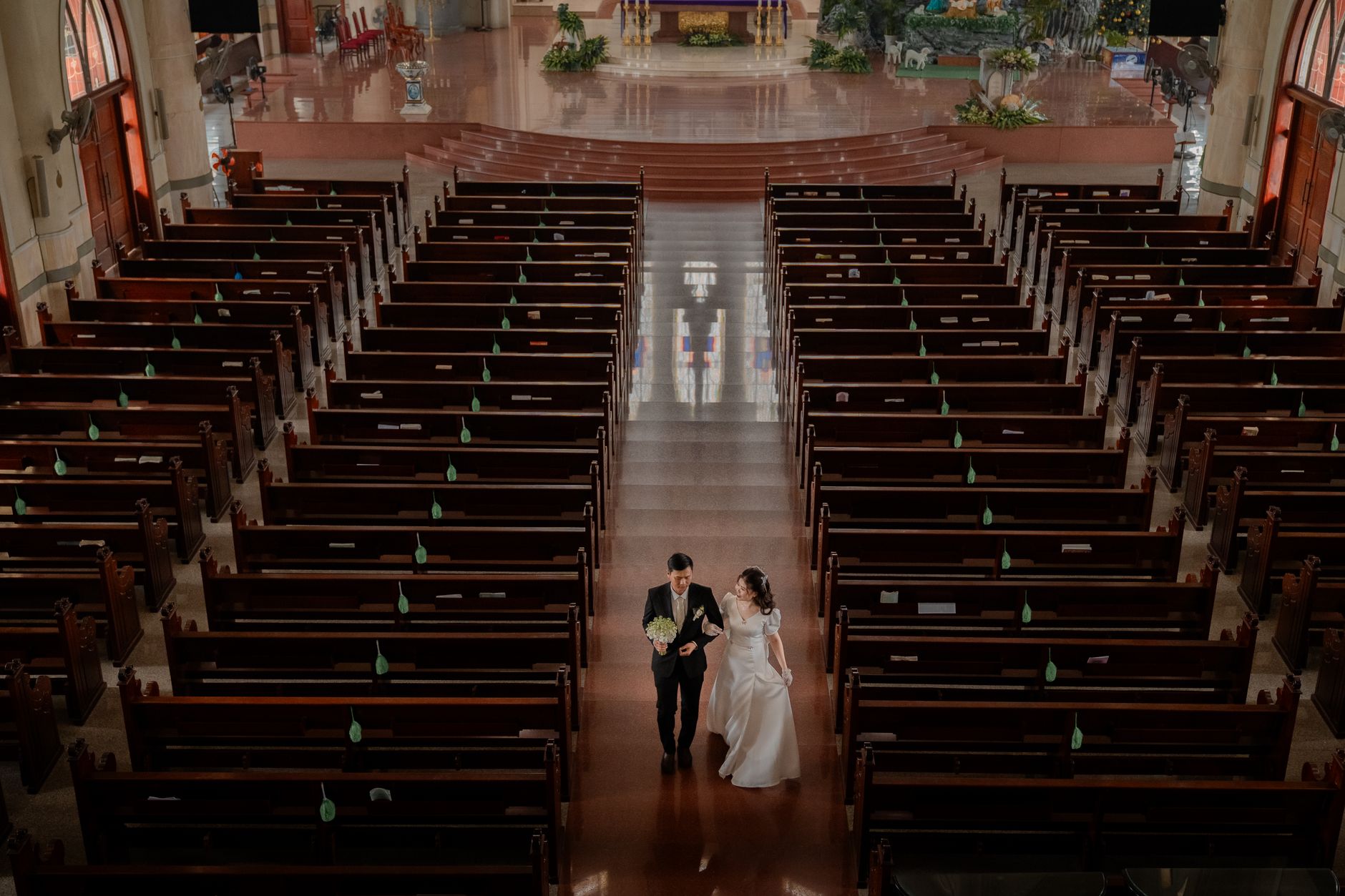
The Day I Set Down My Cane
My daughter told me on the Friday before last, at my kitchen table, with her coat still on.
She had driven the nine miles out from town after work. She sat in the chair that had been her mother’s, and she never took her purse off her shoulder. I put a cup of coffee in front of her. She looked at it like it was somebody else’s.
“I won’t walk her, Dad,” Sheila said.
I was standing at the counter. I stayed there.
“I won’t be there next Saturday either. I wanted you to hear it from me and not from Rhonda at the cafe.”
“Sheila.”
“I’m not yelling.” She said it very evenly. She had her hands folded on the oilcloth, the way she used to fold them in the second pew when she was seven years old and trying to be good. “I’m telling you what’s so. A girl with that history does not get a white dress. She does not get the front pew and the flowers and a hundred people standing up for her. And she does not get me walking her down the middle of that church like it’s all forgotten.”
“It’s not forgotten.”
“Then you understand me.”
“I didn’t say that.”
I want to say something about my daughter before I go on, because it would be easy to make her a villain, and she is not one. She is fifty-four years old. She has run the front office at the county elementary for twenty-two years and has never once lost a child. She sat up with her mother every night of the last month. She loves her people hard, and she holds a line about what a decent woman does, and the trouble is that the line has no door in it.
Codi had been on the wrong side of that line for years.
“She lied to me to my face for two years,” Sheila said, as if I had spoken. “And the night the deputy called me at two in the morning, I drove down in my nightgown under my coat, and every soul in that sheriff’s office knew whose girl she was. I still don’t sleep right.”
“I know,” I said.
“She took Mom’s ring.”
“I know that too.”
“Then how can you stand there?”
I had called her twice that week already, and she had let it ring out. Now I thought about how to answer. I ran the scale at the Lindley co-op elevator for thirty-one years, weighing trucks all harvest long, and the most I ever said to anybody was about moisture and who was hauling late. I am slow with words.
“She drove out here every Sunday of her mother’s last winter,” I said. “Forty minutes, off a night shift, with her hair still wet. She sat on that bed and read the church bulletin out loud. That counts too, Sheila.”
“It doesn’t cancel the rest.”
“I didn’t say it did. I said it counts.”
She did not answer that, and I let her not answer.
She stood up. She poured the coffee she had never touched down my sink, rinsed the cup, and set it in the rack, upside down, the way her mother taught her. Even angry, she is neat.
At the door she stopped with her hand on the frame.
“You’re eighty-one, Dad. Don’t get your heart set on fixing this. It can’t be fixed by next Saturday.”
Then her taillights went down the lane, and I stood in the kitchen a good while.