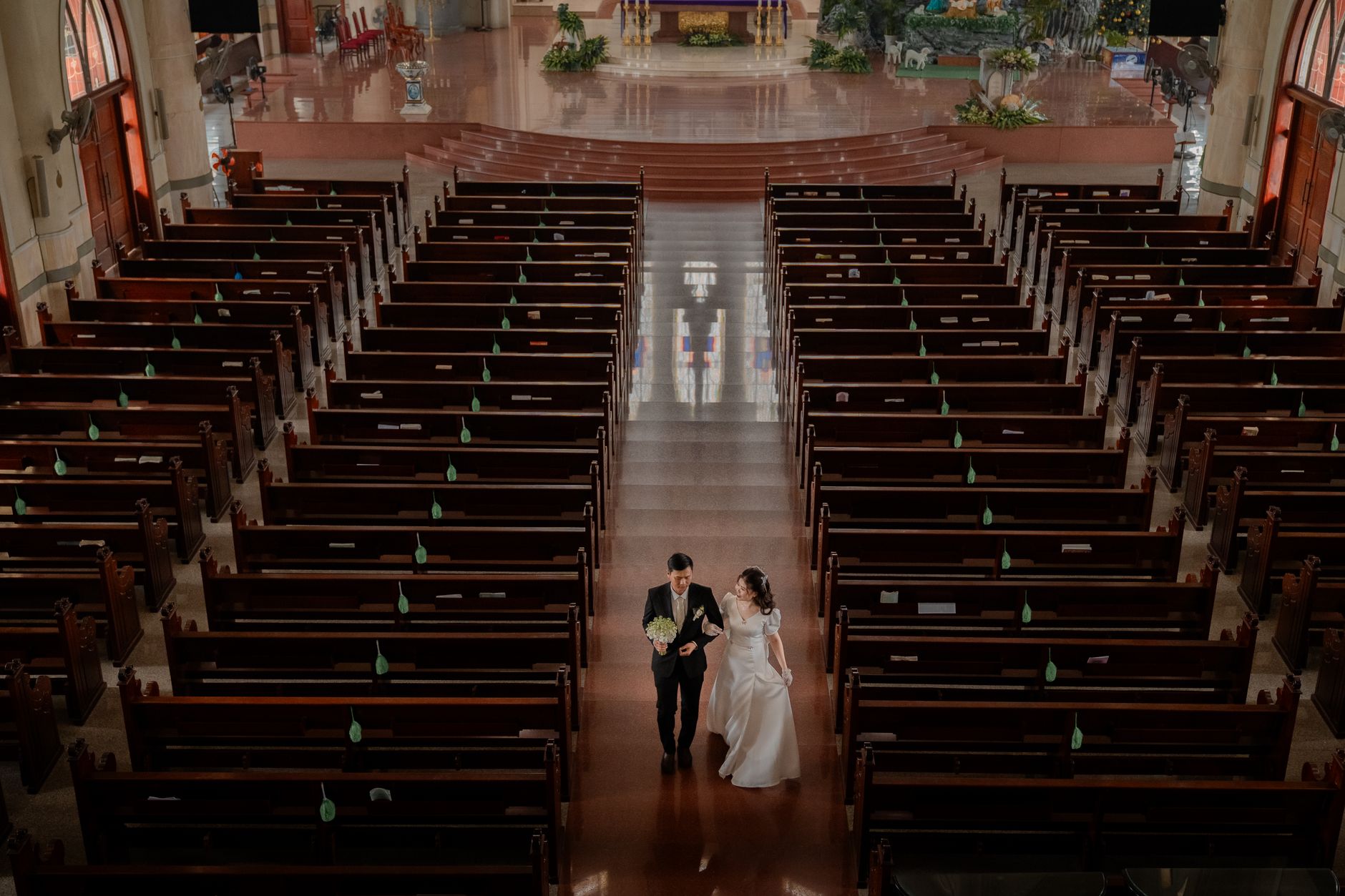
The Day I Set Down My Cane
Twelve people. Codi’s two friends from the community college, still in their church shoes. Her sponsor from the meetings, an old man in a Cardinals cap he’d forgotten to take off. Three aides from Prairie View, who had traded shifts to get here. A few neighbors from out our road. Somebody’s cousin in town.
And a long, polished pew at the very front, with nobody in it.
Nate stood at the altar in a rented gray suit that fit him across the chest and not much anywhere else, turning a seed-company cap in his hands and watching the back doors. When he saw me he put his chin up, the way a man does when he’s asking and doesn’t want to say it.
I nodded to him. He nodded back, once, slow. That was the whole conversation.
The vestibule at Bethel is eight feet wide. It has a bench, a row of coat hooks, a guest book, and a clock that keeps good time. It was the clock I looked at first.
1:57.
Codi stood in the middle of the floor with her back to me. Lorna Beck, Nate’s mother, had been in there with her since half past one, pinning the veil and talking about nothing. She had asked me to give them till three minutes to the hour. When she saw me she squeezed Codi’s shoulder, said, “Elwood’s here, honey,” and slipped through the side door to her seat.
The dress was ivory, long sleeved, plain as a Sunday. Two hundred twelve dollars at the consignment shop in the county seat, taken in with her own needle. In her hands she held late asters and baby’s breath tied with a strip of blue and yellow fabric I knew very well. It was a piece of the afghan from the arm of Lorraine’s chair. She had asked me for it in September. I had cut it myself, with the good scissors, and not said what I thought.
The bouquet was shaking so hard the petals trembled.
She heard my step, and she turned around, and she smiled at me.
It was a smile put on like a coat, to go out into the cold.
“Hi, Grandpa.”
“Hello.”
“I’m fine,” she said. “You should go sit down. They’ve saved you the front on my side.”
She took a breath. “I’m all right.”
She was not all right. She was twenty-six years old, in a white dress, in a hallway with the music about to start, and her mother was across the county in a kitchen, with a clean coffee cup in the rack.
On the other side of the doors, Doreen finished the hymn and began the prelude, soft, the first long phrases of something Lorraine had loved. A hush went through the church, a hundred and some people turning in their seats.
I looked up at the clock.
1:57 had become 1:58.
Three minutes.
My cane was hickory, with a rubber foot. I had bought it two years before at the farm and fleet store, and I’d hated it ever since.
I leaned it against the wall by the coat hooks. It stood there for a second and slid sideways. I let it.
I stood up as straight as my hip allowed, which was not very straight. I crooked my left arm out and held it there.
Codi looked at the arm.
She looked at the cane on the floor.
“Grandpa,” she said. Her whole face was changing. “It’s forty feet. It’s your hip.”
“I know how long it is.”
“You’ll fall.”
“I might,” I said.
“Grandpa, you don’t have to do this.”