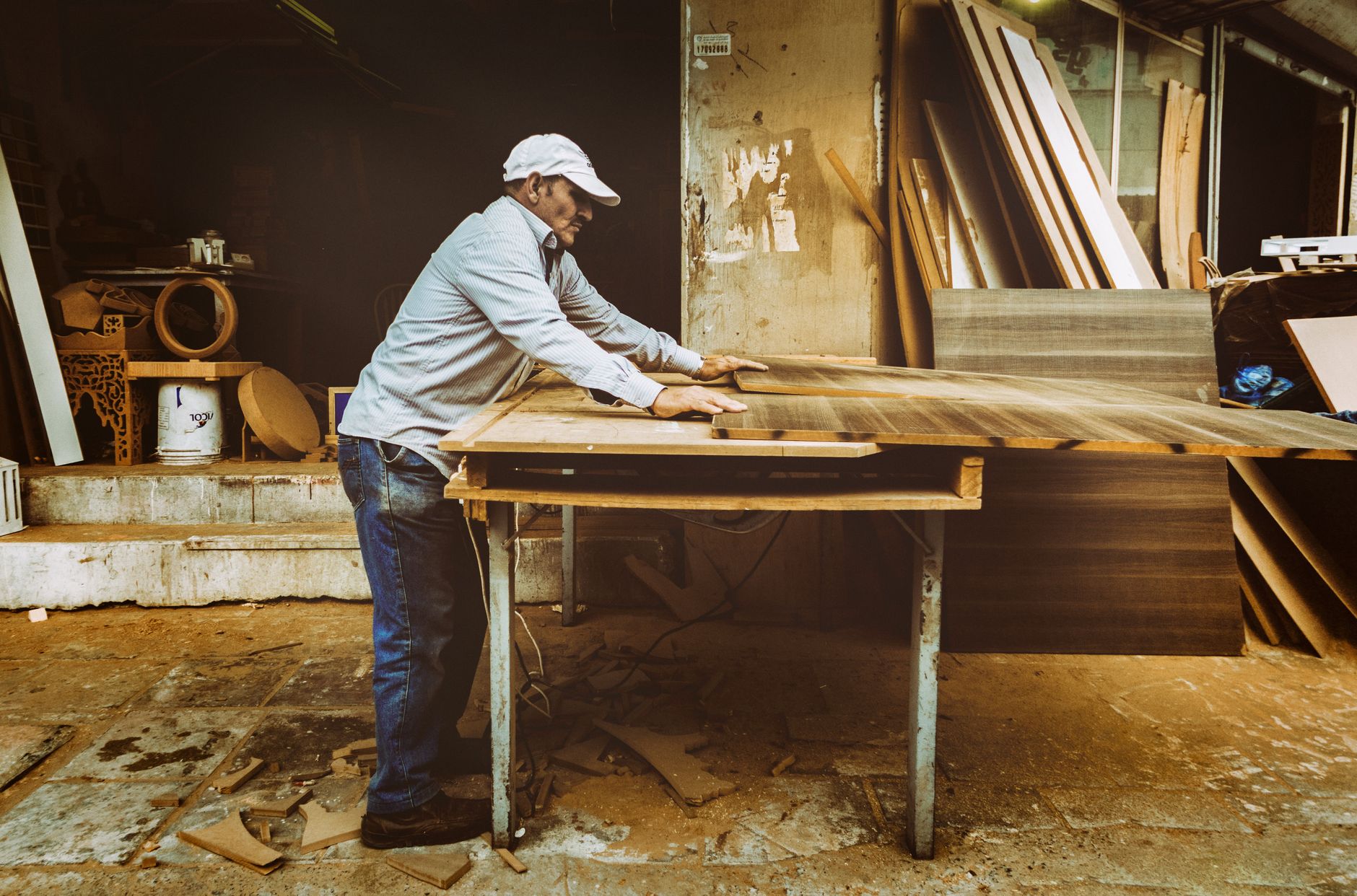
The Workshop They Threw Me Out For
For two more years I did what he wanted on the outside. I worked the farm. I took the ag classes. I let him think the barn was out of me. But at night I drove the eleven miles into the next county to a shop called Dekker Fine Woodworking, and I swept floors and emptied the dust collector for a man named Walt Dekker for no pay at all, just to be near the sound of it, and Walt, who had bought a bench plane at that same Lafayette auction and recognized the initials AR that my grandfather stamped in the heel of every tool he owned, figured out who I was inside a month and started teaching me on the sly the way Amos would have.
My father found out the week I turned eighteen. Somebody saw my truck at Dekker’s and mentioned it to him at the elevator, the way things travel in a county like ours.
That was the August. That was the boxes in the gravel. He did not yell either. He told me he had given me a roof and a name and every chance to be a serious man, and that if I wanted to go play in sawdust like his father then I could go do it under somebody else’s roof, because he would not watch it twice in one lifetime. He said I would come crawling back inside a year, broke and humbled, and he would take me on as a hand and we would never speak of it again.
My mother stood in the doorway with a dish towel in her hands and did not come down the steps. That is the part I had to forgive her for later, and it took a long time, and I will get to it.
Dale watched from the porch with his arms folded. As I was loading the last box into my truck he said, loud enough for our father to hear, You know you are breaking his heart. And I remember thinking, even then, even wrecked, that it was a funny thing to say about a man who had just set my whole life out in the road like trash for the county to haul.
Walt Dekker let me sleep on a cot in the back of his shop for the first eight months. He was a widower, no kids, hands like root wood, and he was the second man God ever gave me who looked at what I could do and saw a future in it instead of an embarrassment. He put me on the payroll. He taught me everything Amos had not lived long enough to, veneer work and steam bending and finishing, the chemistry of it, the patience of it. He taught me the business side too, which Amos had never learned and which had half proved my father right, how to bid a job so you ate, how to say no, how to make people pay what a handmade thing is worth without apologizing for it.
I want to be honest about the years in between, because this is the part people skip when they want the story to be sweet. They were hard. There were winters I ran the shop space heater instead of the furnace in my apartment because I could not do both. There was a long time I believed my father was right and I was just too stubborn to admit it, and that belief is a cold thing to lie down with. I met Maggie at a craft fair in Kokomo where I was selling cutting boards out of the back of a truck to make rent, and she married me anyway, which I have never fully understood and have stopped questioning.