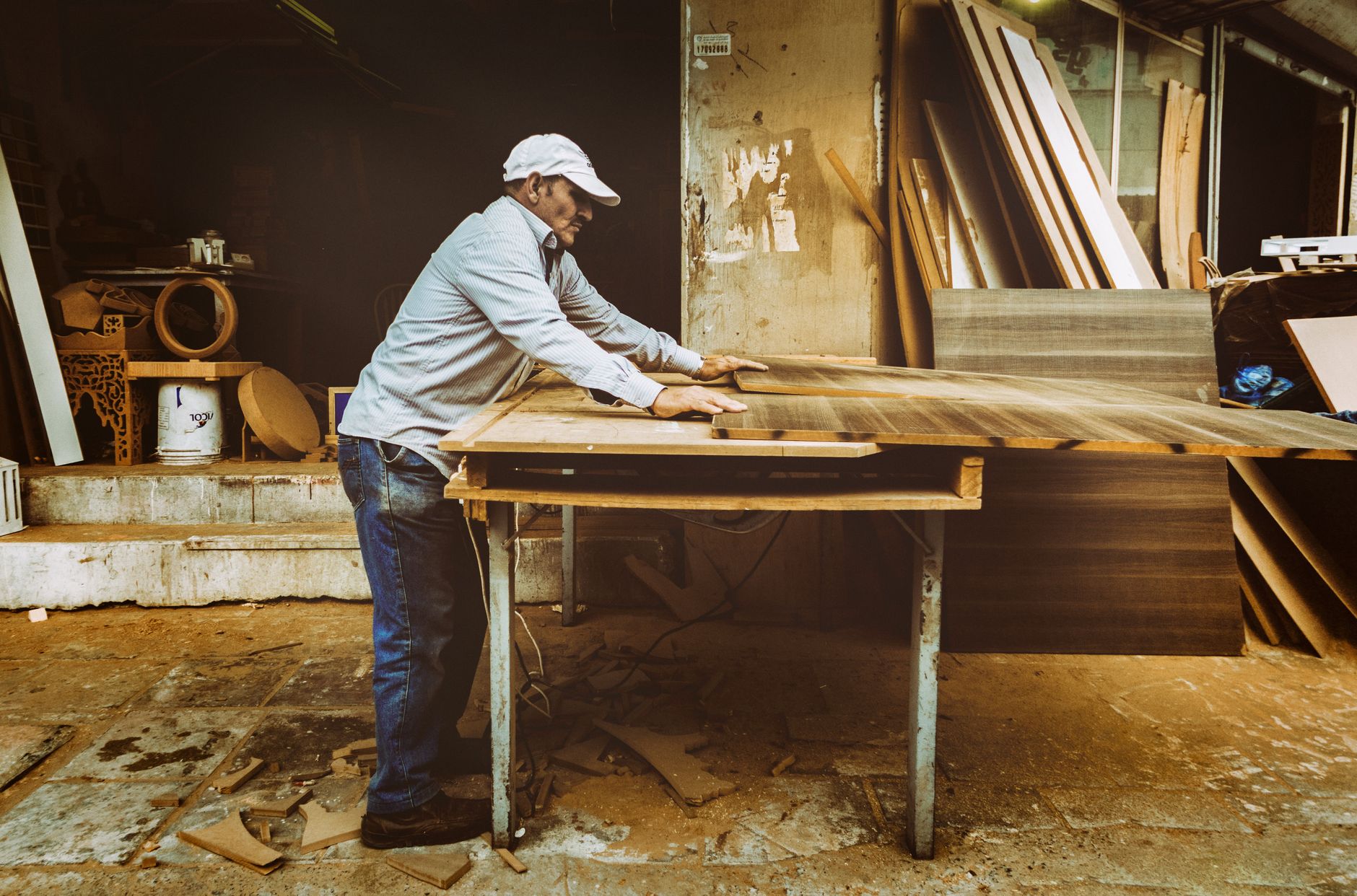
The Workshop They Threw Me Out For
My father knew too. I think that is the thing people never understand when I tell this. He was not confused about me. He saw it clear as glass, and he hated it, because he had spent his own whole life running from that barn.
Vernon grew up watching his father turn away commissions he found beneath him and work six months on a single piece for a family that could barely pay, and he watched my grandmother patch the same two coats winter after winter, and he decided somewhere in his boyhood that love was a poor substitute for a paid feed bill. By the time I came along he had bought his father out of the land, turned the dairy under, and planted corn where the cows had been. He let Amos keep the barn shop because you did not put your own father out, but he let him keep it the way you let a man keep a bad habit, with a tight mouth and a cold eye.
So I grew up in a house with a war in it, and the front line ran right through me.
My older brother Dale was no trouble to anybody. Dale liked the tractor and the market reports and the sound of his own name attached to a four-H ribbon. Dale was going to be exactly what my father was, only maybe bigger, and my father loved him with an ease he never once showed me. I do not say that to be pitied. I say it because it is the shape of the thing. There are two kinds of sons in a lot of these old county families, the one who stays and the one who leaves, and everybody knows which is which long before anybody says it out loud.
I was out in that barn every hour I could steal. Grandpa Amos taught me the way he had been taught, which was mostly by shutting up and letting me ruin good wood until I stopped ruining it. He taught me to sharpen before I ever taught me to cut, because a dull tool is a dangerous liar. He taught me to read a board, to find the way the grain wanted to go and go with it instead of fighting it. He used to tap the side of my head and say the work was in there before it was ever in the wood, and my job was just to get out of its way.
When I was twelve he let me build a blanket chest start to finish, and we gave it to my mother for Christmas. I had hand-cut every dovetail. They were not good dovetails. I can see the gaps now when I close my eyes. But my mother, Ruth, ran her hand over the lid and her eyes went bright and she said, Caleb, you made this, like it was a thing that could not be true, and for one minute at that Christmas my father looked at the chest and did not say anything cutting, and I held my breath hoping.
Then Dale said something about how it was a little crooked, and my father laughed, one short laugh through his nose, and said, Well, he comes by it honest, nodding out toward the barn, and the minute was over.