The Garden That Came Back
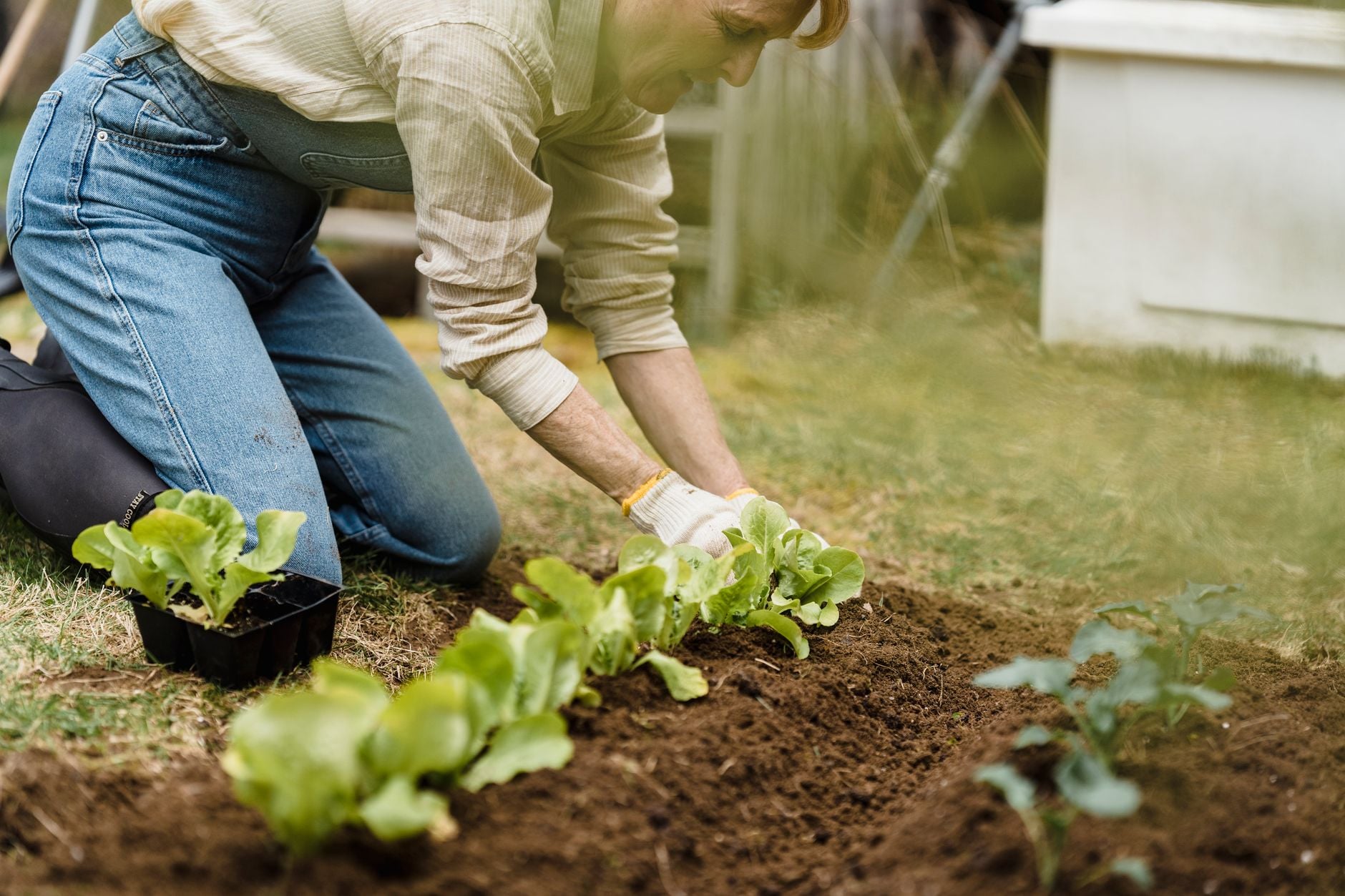
And one morning in late July I came out and found Megan on her knees in the bean rows, pulling weeds, in her scrubs and good running shoes, ruining them.
She said nothing. I said nothing. I went down the next row and started at the other end. We worked toward each other until we met in the middle.
“You missed one,” I said. She pulled it, and her fingernails were black.
“Phyllis,” she said. “Will you show me how to put these up?”
“Put up?”
“Jar them. My mother never… I don’t know how.”
“Come at nine tomorrow,” I said. “Bring an apron.”
She came at nine with no apron, so I lent her Earl’s mother’s, the blue one with a hole in the pocket. We snapped four bushels of beans at my kitchen table, and her thumbs bled a little, and she said a word I will not repeat. I showed her the pressure canner, which she regarded the way you regard a bomb.
When the first batch came out and the lids began to seal, one after another, ping, ping, ping across the kitchen, she turned to me.
“What is that?”
“That’s the seal. That’s the sound of it taking.”
She stood in a blue apron with her hair coming loose and listened to that small music until the last jar had spoken.
“I’d forgotten I wanted this,” she said. I did not understand it then. I do now. She meant she had wanted it as a little girl on a concrete balcony with one tomato in a bucket. She had wanted it all along.
Brent came to me in August over a tailgate full of tomatoes and said, “Mom, I should have called you that week. I knew the stone was coming.” I said, “Yes. You should have.” He took it, and did not look away. He is Earl’s boy. “Come to supper on Sundays,” I told him, “and bring the children.”
*
We put up two hundred and six quarts that year. Not three hundred. But the cellar shelves held them again in their rows, with the late sun through the little window lighting the glass.
I stood in front of them on the last evening of October with Megan beside me. She held a jar of her own, a quart of tomatoes packed tight, with her handwriting on the lid in black marker. First batch. Megan. August 9.
“Is it okay that I put it up here?”
“It’s more than okay.” I took it from her and set it on the shelf, in the middle, between two of mine. “It’s in the line.”
That fall I saved the seed again, and I wrote one more can and had Megan do the writing on the tape. Greasy Beans, Mother Grubb’s. Saved since 1986. And underneath, in her round, careful hand: Replanted with M.
It sits at the end of the row.
*
The asparagus came up on the sixth of April.
I know the date because I wrote it in the margin of my calendar, as I do every year. There had been a hard rain the night before and a warm sun in the morning, and when I went out at seven with my coffee I saw them standing in the bed at the south end: twenty-two spears, fat as my thumb, green and purple at the tips, six inches above the ground.