The Garden That Came Back
From the coffee cans I took the seed.
I had told no one what I meant to do, so what happened next surprised even me. Everyone brought something. A woman I have known at church forty years walked up with two dozen tomato starts grown from my own German Pink seed, which I had given her in 2004. The Hollis brothers brought onion sets. Opal handed me a rhubarb crown the size of a dinner plate, divided from the one I had given her in 1991. “Well,” she said. “It’s yours again.”
And the three crowns I had pulled out of the mud that first night, which Opal had insisted on potting in her flower border, had put out leaves.
That is the thing I will never get over. Everything I had given away came back. The garden had never been in only one place. It had been scattered over forty years into every yard and coffee can on County Road 9, and I did not even have to ask.
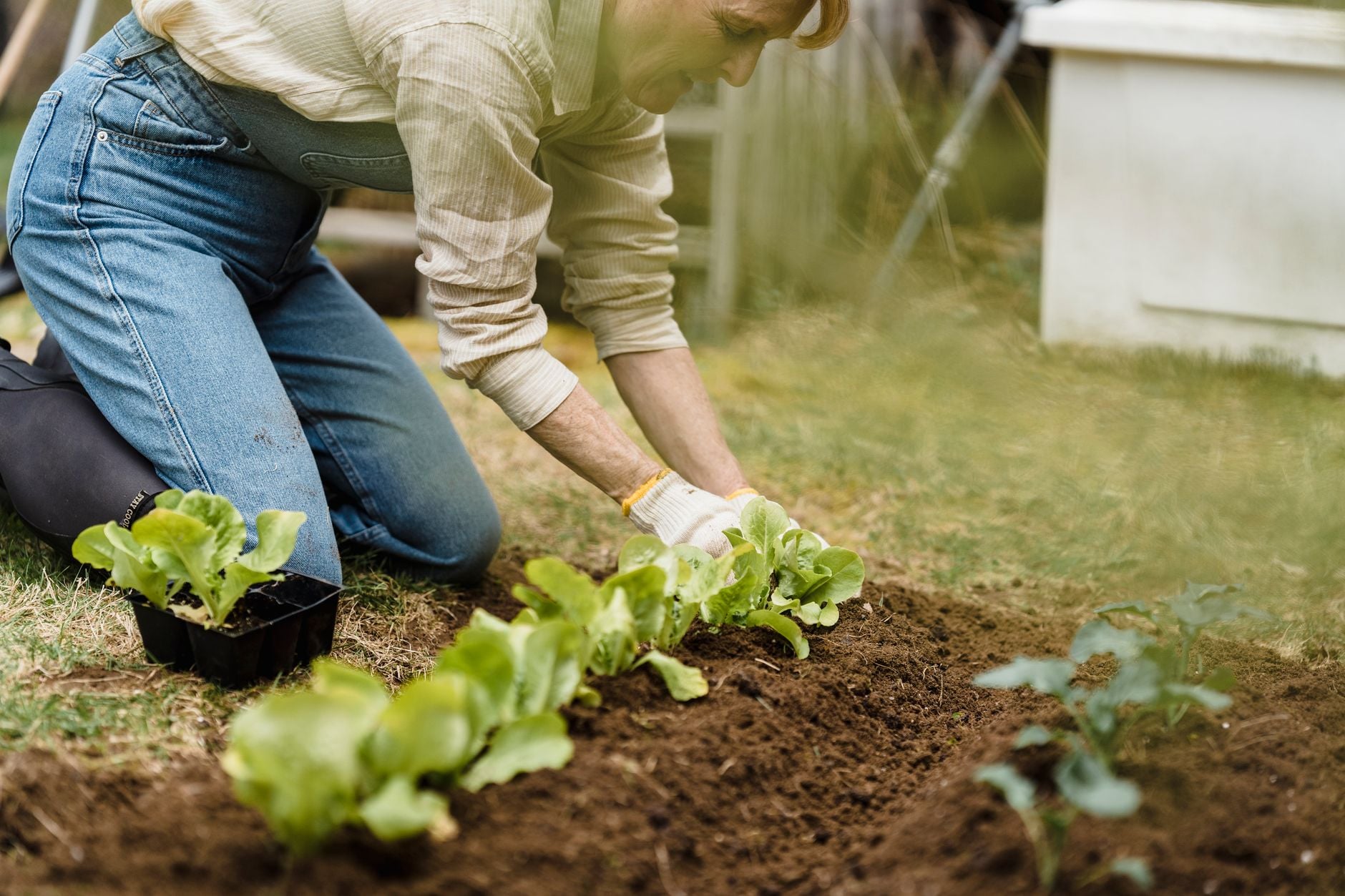
I took the Greasy Beans and a sharpened stick and started at the north end and put the seed in the way my mother-in-law taught me, one every four inches, eye down. Lily knelt beside me.
She is nine, a freckled girl with her father’s chin. She had not spoken to me all morning. She had hung at the edge of the group with her hands behind her back, watching me as though I might ask her to account for her mother.
“Grandma,” she said finally. “Can I plant some?”
“Of course.”
“I don’t know how.”
“It’s not hard.” I put six beans in her palm. “Make a hole with your finger, to the first knuckle. Eye down. Cover it. Pat it like you’re tucking in a baby.”
She did, very seriously, tongue between her teeth. After the first one she looked up and said in a small voice, “Mom cried in the car about it. She said she did something bad.”
“She made a mistake.”
“Is it the same?”
“Sometimes. The difference is what you do the next day.”
She planted her second bean.
When I looked up, Megan stood at the end of the row.
She wore a pair of Brent’s old work gloves, too big for her, and her hair was tied back with a rubber band. She held a flat of cucumber seedlings against her hip as though she did not know where to set them.
“Where do these go?”
“Wherever you want them.”
She looked at the garden a long moment, and I watched her try to see it. Then she crossed the soft dirt, put a knee down at the head of the third row, and began to plant.
*
It was not the garden it had been. I will not tell you it was.
But the beans came.
By mid-July Greasy Beans hung in clusters on the pole teepees Owen and Brent built. By August the Nameless cucumbers were ripening on the ground, yellow-green and ugly and perfect. And at the south end, where the asparagus lay, tall green fern came up waist high, soft and feathery, as if nothing had ever happened.
What I wanted to tell you most is what happened over that summer, and it was not sudden. It was slow, the way a garden is slow. But I began to notice that when I came out at six, someone was often there already. Lily, mostly, in pajamas and rain boots, with a colander, tending a short row of her own where she had planted sunflowers and green beans together, which no book would tell you to do, and which flourished anyway.