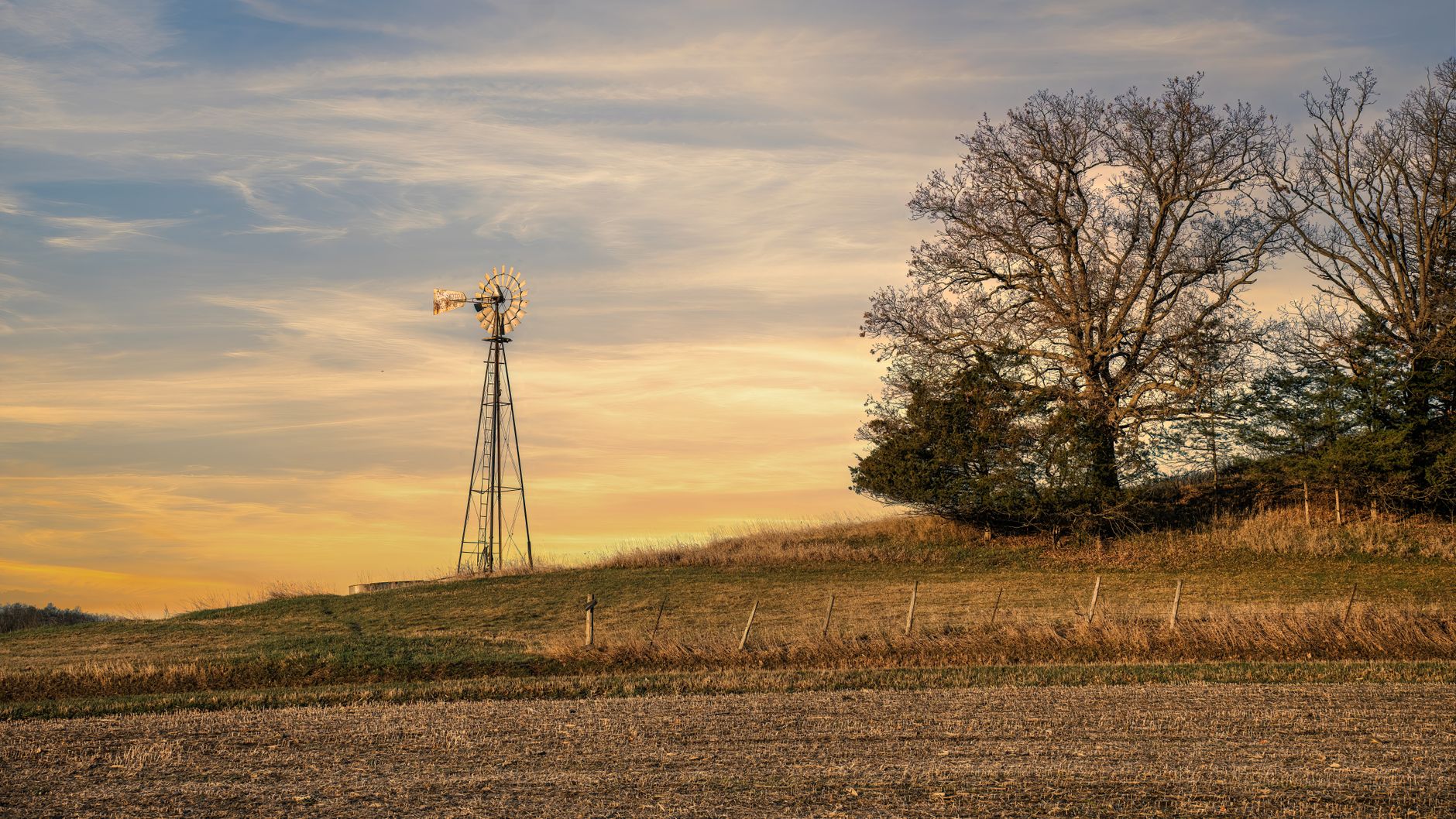
The Well That Held All Summer
The long middle
By the end of July the Bermuda grass in my yard was the color of a lion. I lost my vegetable garden, which I had put in on the first of May with the best of hopes, and I lost my roses, all but the old yellow one by the porch that Ancel’s mother planted and that nothing can kill. I let the grass go and I let the porch go. I would not let go of the pecan tree.
That tree stood by the pump house, a big gray-barked thing with a wide crown, and Gaylord Haldeman planted it in 1954 from a nut he took out of his coat pocket. It had dropped half its leaves by the Fourth of July. I carried it dishwater and washwater and the water from the bottom of the coffeepot, and when the road had gone home for the night, I would stand under it in the dark and let a hose run slow around the roots for an hour.
Forty-one days in a row it was over a hundred degrees. I counted them on the kitchen calendar with a red pencil. The wind blew. The dust blew. Hobart’s herd stood in the pasture, down to sixty-eight head but fat in the flank, and every one of them knew the sound of the truck.
And every morning, at a quarter to six, the road came to my cattle guard.
September
The heat broke in the first week of September, not all at once, but a degree at a time, like a man putting a heavy thing down. A hundred and one, then ninety-eight, then ninety-four, and I could hear it in the road. The talk at the cattle guard got slower and longer.
The creek stayed dry.
On the twenty-first the sky in the west went purple at sunset, and thunder walked around the edge of the county for two hours, and not one drop fell. Hobart stood on his porch with his hat in his hand and watched the whole thing go by, and then he put his hat back on and went inside. There was no more to say about it. Everybody had been fooled before.
But on the night of the twenty-third, I woke up about two in the morning because the dog was shaking against my leg.
I put on my robe and went out onto the porch, and the air had changed. It had weight. You could feel it on your arms, like a hand laid there. A wind came up out of the south, cool, smelling of earth and iron, and the lightning in the west was going off in long silent sheets, and the whole yard flickered, the pecan tree and the pump house and the empty hose reel.
Then the first drops hit the dust. They came down like thrown gravel, big as quarters, each one raising a small puff of red.
I stood there with my hand on the porch rail and Tick pressed against my knee. The rain came in a solid roar, and I listened to it hit the tin roof of the pump house, and the dry lane, and the thirsty field beyond the fence. I stayed on that porch until my nightgown was wet through. I did not pray, particularly. I think I only said “thank you,” over and over, in an ordinary voice, and I’m not sure who I was saying it to. The water ran off the porch roof and made a brown rope at the edge of the yard.
I went back to bed at three, soaked and cold and smiling like a fool. And I slept, for the first time in a hundred and twelve days, straight through to ten till five.