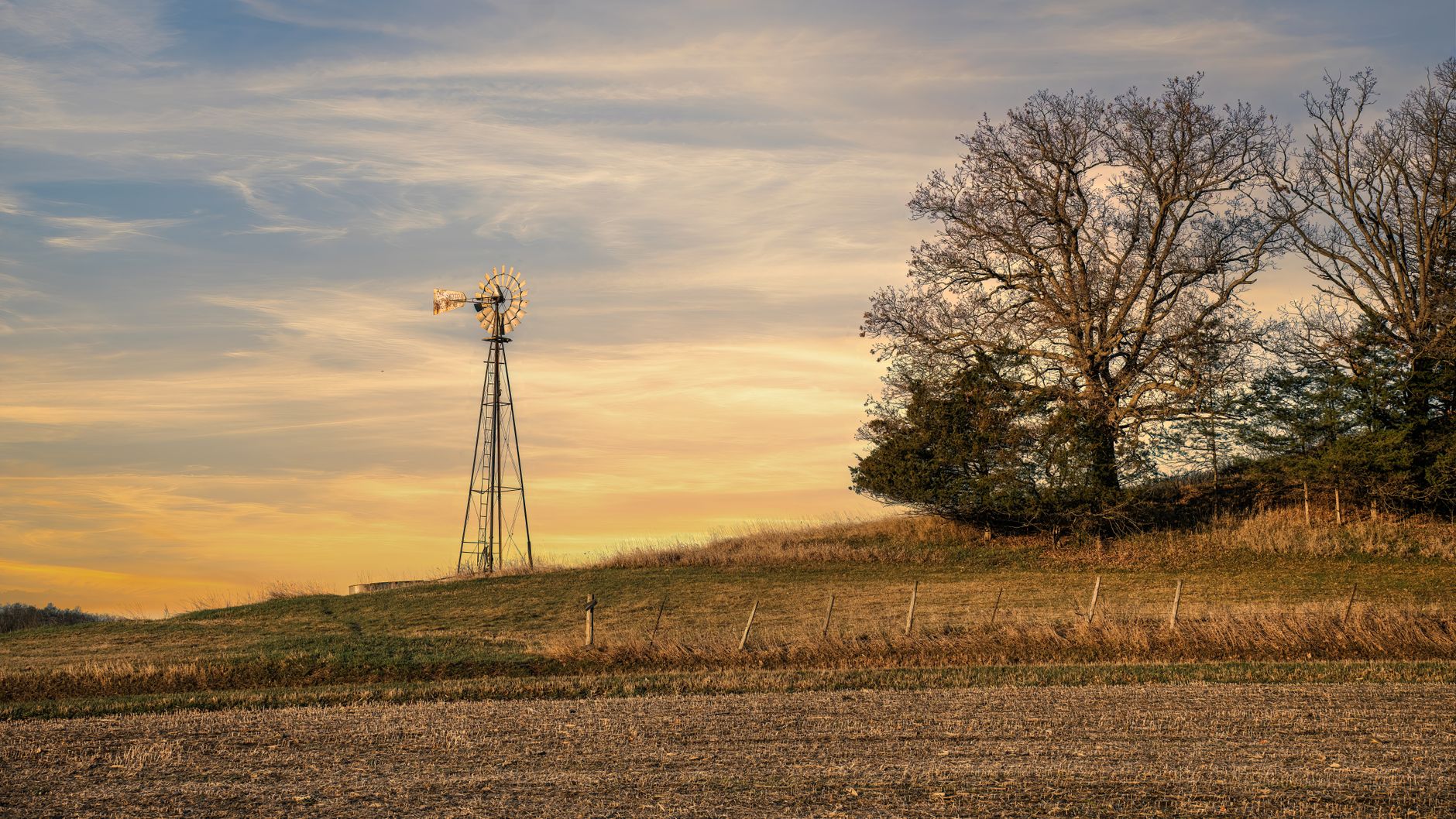
The Well That Held All Summer
What the road did
This is what I want you to understand about a road.
Before that summer, the six houses on Rock Chapel Road got along the way people get along in the country. We waved from our trucks, two fingers off the wheel. We brought food when somebody died. But in all the years I had lived there, we never once stood in one place together.
Now there was a place. Every morning between a quarter to six and half past, the road came to my cattle guard. They came in the order they came. First Aurelio, with the buckets and the fuel truck. Then Merlin and Joanne, with the barrels in the pickup bed. Then Kyle Brunner, on his way to the turbines, with the barrels and, once in a while, the baby in the car seat, so Taylor could sleep. Then Hobart with the big tank. Then, a little after six, the Buick.
Nobody made a schedule. Nobody ever said “after you.” Hobart would hold a hose for Merlin, and Merlin would carry a bucket for Joanne, and Aurelio would lift Eula’s jug in without a word. The morning Hobart showed Esperanza how to shut the nozzle off without losing the pressure, the child held it like a pup somebody had given her.
Everybody tried to pay me. There was no end to it. Kyle left a twenty tucked under the zinnia jar and I found it and put it back in his truck. Joanne brought a coconut cake. Hobart said he wanted to pay for the poly tank and the line, and I told him it was his tank, he could keep it, and he said, “That’s not what I mean,” and I said, “I know what you mean.”
I said the same thing to every one of them. “Use it gently, and shut the valve when you leave.” That was the only rule on Rock Chapel Road that summer, and I’m not sure it counted as a rule.
The sound in the night
I will tell you something I have not told anyone.
I was afraid the whole time.
A well is not a bottomless thing. Gaylord Haldeman drilled it deep, but it drew from a layer of sand that was refilling slower than we were pulling it out, and everybody on the road who understood anything about water knew it, and none of us said it to each other. The first week of July, I called a well man, Rainey Duncan, out of Hobart, and he came with a long steel tape and a chalked line, and he dropped it down the casing and stood there with his hand on the cap, listening, the way a doctor listens to a chest.
“Static level in the spring?” he asked.
“A hundred and forty-two feet,” I said. Ancel had written it on the inside of the pump house door in grease pencil in 1996, and he had updated it every spring until he died.
Rainey pulled up the tape and squinted at the wet mark. “She’s at a hundred and eighty-one,” he said. “And you’re drawing that every day?”
“Every day.”
“You’ve got a good well, Mrs. Haldeman,” he said. “That’s a good well. But a well’s like a person. You can’t ask her to work around the clock. If you rest her at night, she’ll come back up. If you don’t, she won’t.”
So I did the one thing I could do. Every evening at nine, I walked out to the pump house and threw the breaker. Every morning at half past four, I walked out and threw it back on. I never told anybody I was doing it. There was no note on the post. But by the end of July, nobody came to my cattle guard after dark, and nobody came before five, and I never heard a truck on the gravel in the night. The road had simply worked it out, the same way the road had worked out everything else.
I would lie in bed with the window open and listen for the pump. A submersible pump, three hundred feet down, makes almost no sound at all, but the pressure tank in the pump house kicks on and off with a click like a clock, and under it there is a low hum. I knew that hum better than my own breathing. I lay awake and waited for the pitch to change, for it to turn thin and ragged and gulp air, which is the sound a dying well makes.