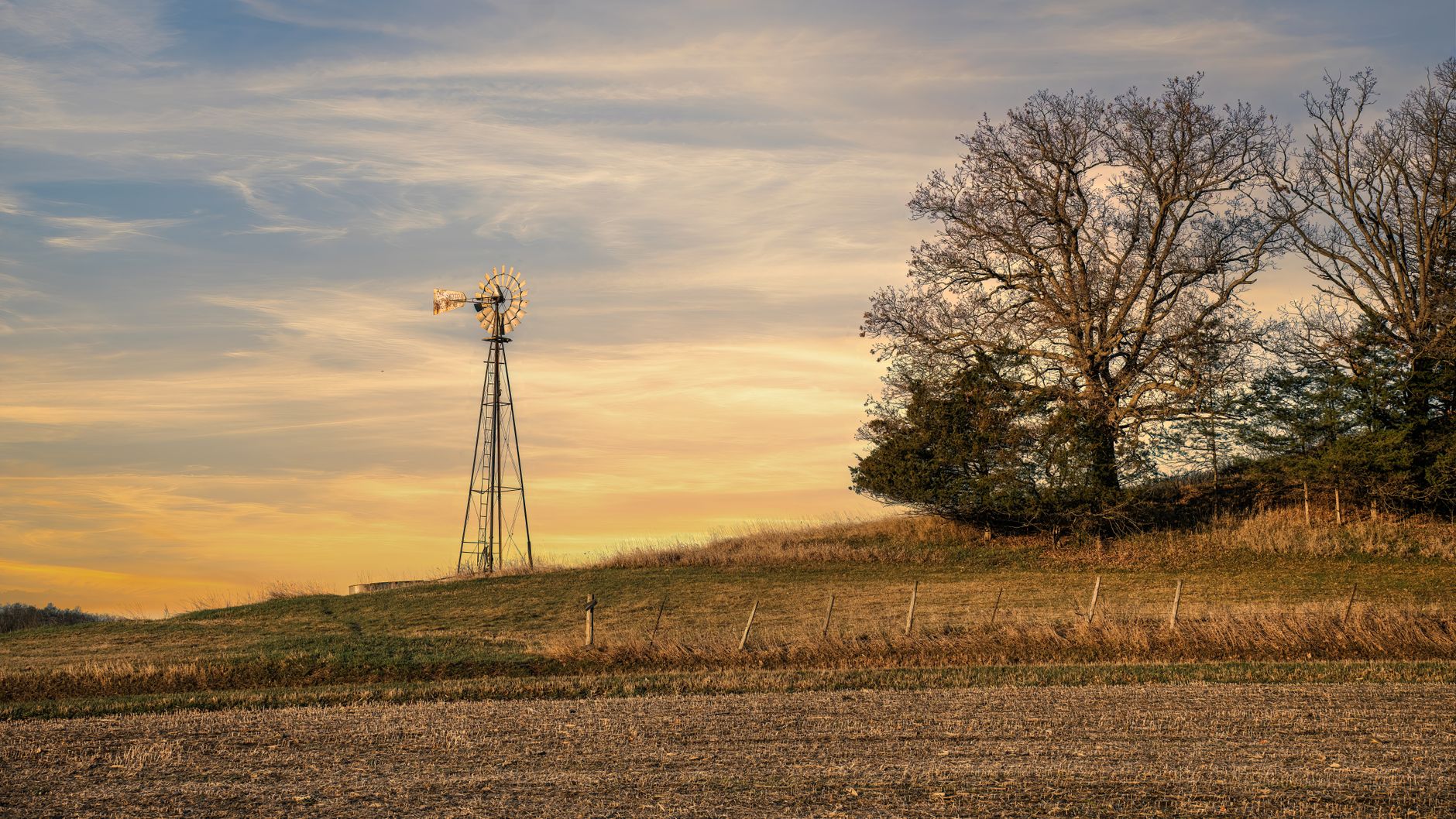
The Well That Held All Summer
The road
I live on Rock Chapel Road, a mile and a half of red gravel that runs off the highway north of Mangum, in Greer County, in the southwest corner of Oklahoma. If you have never been out here, picture wheat and cotton and mother cows, wind, and more sky than a person has any use for. Out here we say we have two seasons, too hot and too windy, and we say it like it is a joke.
There are six houses on our road, counting mine.
Hobart Pritchett is at the north end, eighty-four years old, with a hundred and ten mother cows and a pair of hearing aids he keeps in his shirt pocket. At the corner by the old cemetery lives Eula Pickens, who is ninety-one and still drives a tan Buick she keeps in the garage like a parade horse. Across from my lane is the rented house where Aurelio and Graciela Cantu live with their three children. Aurelio drives a fuel truck, and Graciela does the books for two businesses in town and makes a tamale that would stop a funeral. Down toward the highway are Merlin and Joanne Speer. Merlin spent thirty-four years climbing poles for the electric co-op and can look at a dead light switch and tell you the sins of the man who wired it. And on the little place by the culvert are Kyle and Taylor Brunner, who have a baby named Hazel and a new pickup with a payment, and Kyle is a technician on the wind turbines out past Willow.
And then there is me, Ludie Haldeman. I am seventy-eight. I live on a hundred and sixty acres that my husband’s people have held since before the war, in the white frame house where Ancel was born. He died eleven years ago in March. Our son, Wiley, lives in Edmond and calls on Sundays.
I tell you about the six houses because of one fact, and the fact is the well.
The rural water line that serves the town and most of the county stops two miles short of our road. Every house on it has its own well, and the wells are not equal. Ours is not equal. My husband’s father, Gaylord Haldeman, drilled it in 1953, in the middle of the worst dry spell this country had seen since the thirties. He had hauled water to his stock in a borrowed tank trailer for two summers, and one night at supper he said he would never haul water again as long as he lived. The next week he rented a cable-tool rig out of Altus and made it come down through red clay and gypsum rock to a layer of sand he said was older than the Bible. Three hundred and forty feet. The neighbors said he was a fool to spend that kind of money on dirt.
Ancel’s father was a man of very few words, but he said one thing about that well that I heard secondhand a hundred times, and it was that you ought to dig past what you need.
That was our road. Six houses and six wells and one deep one.
Dry
The last good rain fell on the thirty-first of March, a quarter of an inch, and I remember it because Tick stood in it with his mouth open.
April came and nothing. May came and the wheat that had come up so nice in the fall never headed. It stood in the field the color of a paper sack and clicked in the wind. Hobart sold forty head of cows at the sale barn in Mangum in the middle of May, because there was no grass and hay was a hundred and fifty dollars a bale and going up. He did not say a word about it.
The bar ditches turned to powder. Grasshoppers rose out of the road in clouds every time a truck went by. I swept red dust out of my kitchen in the morning and swept it out again at night. In June it hit a hundred and six, and then a hundred and nine, and then I quit looking at the thermometer because it was not telling me anything I could use.
By the middle of June, Plum Thicket Creek had stopped running.
In a normal year, it is a pretty little thing, a ribbon of brown water running under cottonwoods half a mile behind my house, and in a wet year it comes over the low-water bridge and you have to go the long way to church. I walked down to it one evening with Tick, the nineteenth of June, I think. The last big pool under the bank had shrunk to a puddle the size of a bed sheet, and it was alive with little catfish, bumping against each other, gasping. By the next week they were gone, and the mud had dried in curled plates like shingles. A box turtle was walking up the middle of the creek bed as if it were a road, and it did not look back at me.
I stood there a while.
Then I went home and carried my dishwater out to the pecan tree by the pump house, like I did every night, because I had decided I was going to keep that one tree alive if it was the last thing I did.