The Mare I Promised Never to Sell
The barn at five-thirty
Janice came on the Tuesday before Thanksgiving, straight from her shift, and she did not call first. I opened the back door at five-thirty, with my coffee and my flashlight, and found her sitting on the bucket by the water tank in her scrubs and her good coat, shivering.
“I let myself in,” she said. “I hope that’s all right.”
“It’s your house.”
“I know. I just wanted to watch you do it.” She nodded at the mare. “You go out here every morning?”
“Every morning.”
“In the dark.”
“That’s when he did it.”
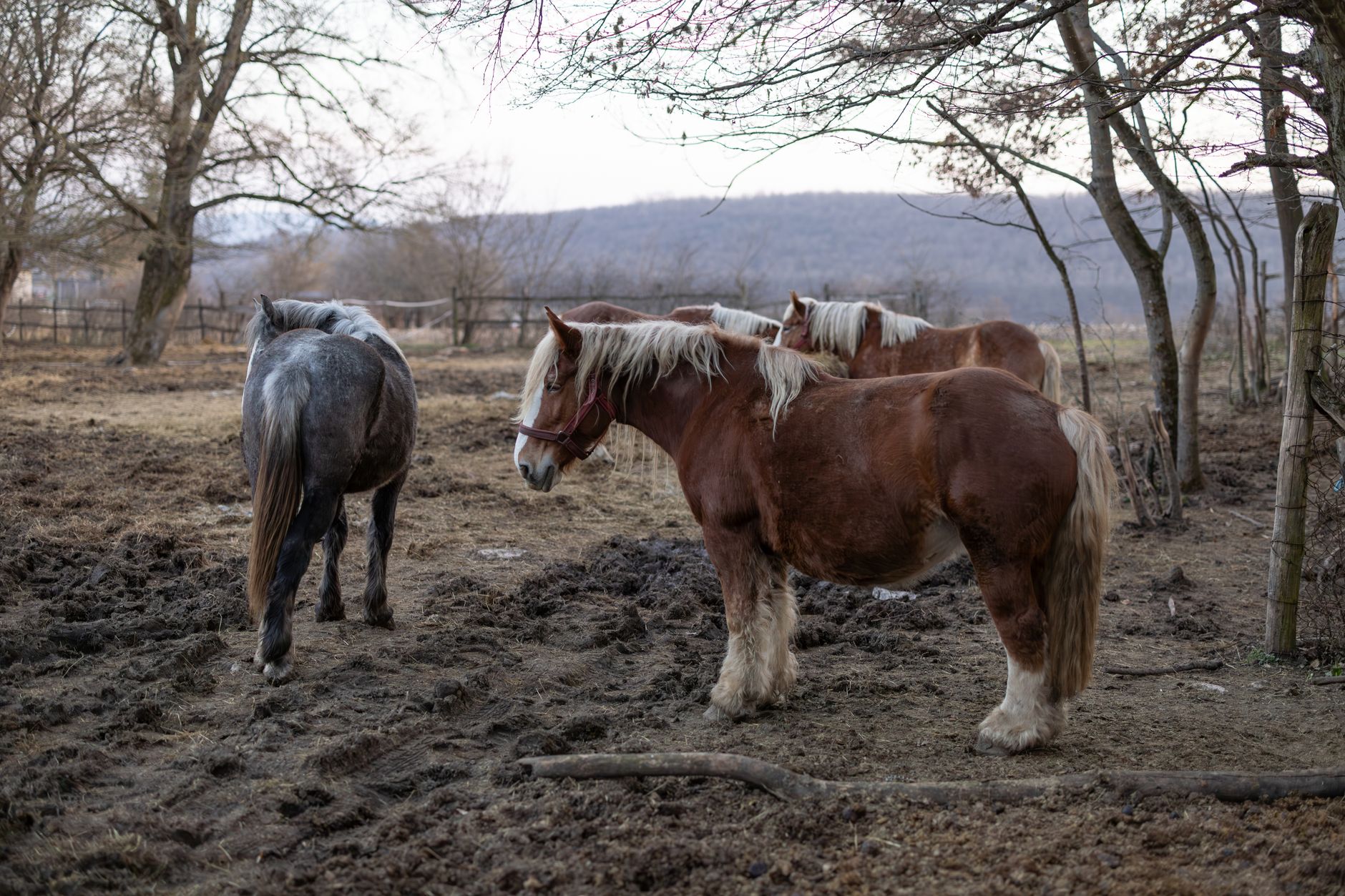
She did not say anything. I took the brush off the nail and I started on Bess’s flank, long slow strokes, the way Ray did, the way I had slowly learned. Bess leaned into it and let her lip droop.
“I was awful at the dinner,” Janice said after a while.
“You were not awful.”
“I was. I said a thing about a horse I’d have slapped a patient’s daughter for.” She wiped her face with the back of her glove. I had not seen her cry since the funeral. “I’m tired and I’m frightened for you, and when I’m frightened I get hard. I’m sorry.”
“Come here.”
She came. I stood her next to the mare and handed her the brush, and I watched my forty-one-year-old daughter’s hands move down that great gray shoulder, tentative, then surer, the way a child’s do. Bess turned her head and looked at Janice with one dark eye.
“Mom,” Janice said, with her face turned away, “can I tell you why Kevin did it?”
I waited.
“Kevin didn’t find that man because he wanted to get rid of the horse. He found him because you told him no, twice. You said you’d sooner lose the farm than take a dime from your own kids, and he thought you meant it.
He thought the only way you’d ever take money was if it came from somewhere that wasn’t us. He’s been trying for three months to find you a way to say yes without it feeling like charity.”
I stood there with the brush in my hand.
“He’s not trying to take Dad away from you, Mom. He’s trying to find a way to keep you.”
“I didn’t want you to carry us,” I said.
“You carried us for forty-one years. And Dad did, and he’d have carried us a hundred more.” She turned around and her face was wet. “Let us carry you. That’s all. That’s the entire thing. We have been standing outside this house like we weren’t allowed in.”
I put the brush down on the water tank.
I would like to say I said something wise. I did not. I put my arms around my daughter, in her scrubs and her good coat, in the dark, in a horse lot, and she held on to me so hard that I felt her coat buttons through my own.
Bess stood very still. After a moment she lowered her head and breathed out over both our shoulders, a long warm breath that smoked in the flashlight beam.
“Mom,” Janice said into my collar. “Maybe he wasn’t asking you to keep a horse.”
“What do you mean?”
“I don’t know. Maybe he was asking you to keep something to get up for. Maybe he knew.” She shook her head. “I don’t know. I’m just a nurse. I see it all the time. They want to leave you something that needs you at five-thirty in the morning.”
I thought about that for a long time, and I still do. I did not answer her. I don’t know that she was right, and I don’t know that she was wrong.