The Mare I Promised Never to Sell
The five-thirty
I want you to understand about the mare, because it would be easy to hear all this and think she was a pet.
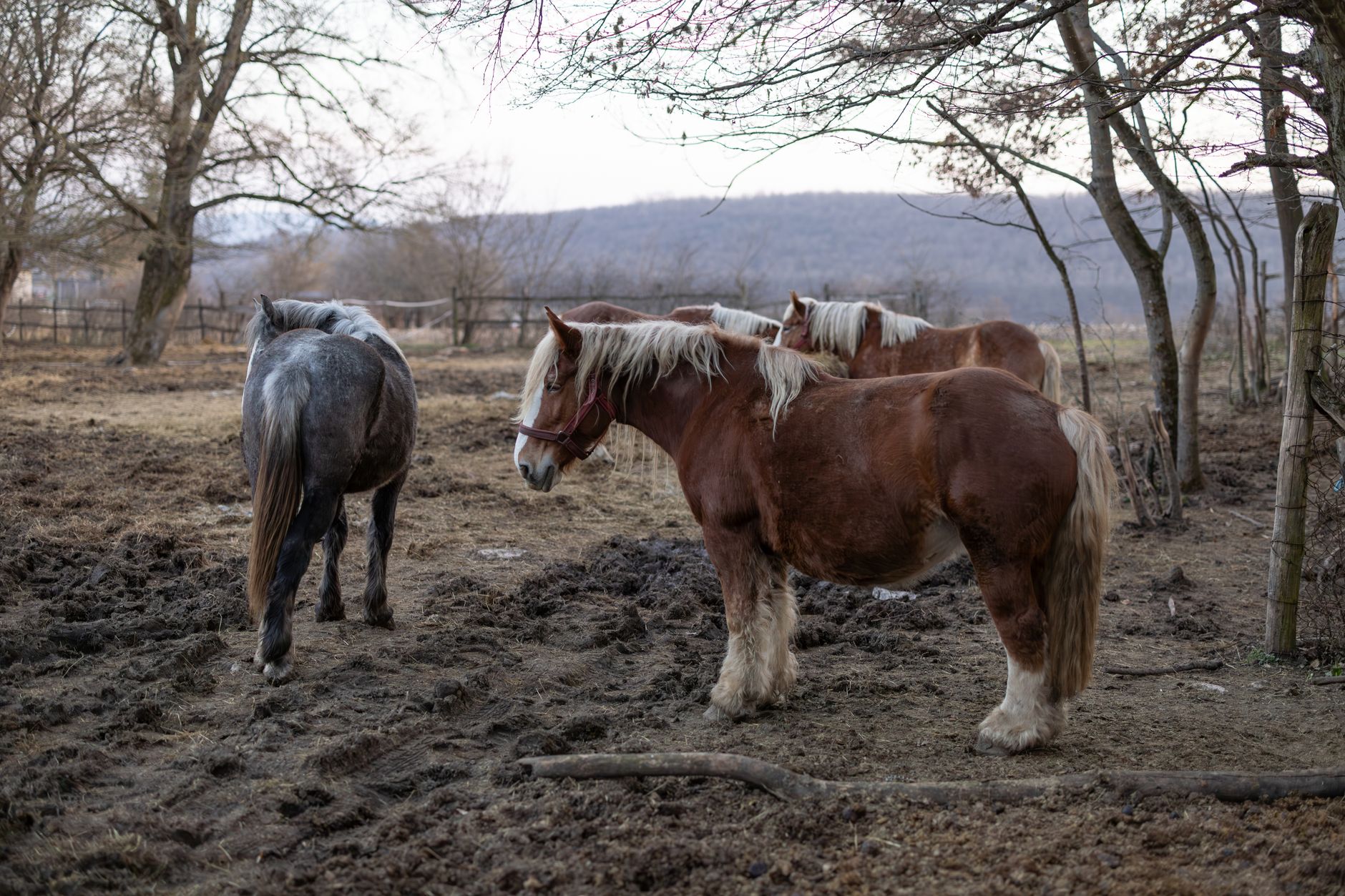
Ray bought Bess as a weanling at a draft horse sale in Grand Island, the autumn he turned fifty-nine. We did not need a horse. We had three tractors. But Ray’s father had farmed with Percherons, and Ray had been twelve the day they sold the last team, and he never got over it.
He broke her himself, an hour every morning in the lot for two winters, with a halter and a long rope and a pocket full of sugar cubes, speaking in the low flat voice he saved for animals and the very ill. I never heard him raise it at her once. By three she could pull a hay sled.
That was the point, and every farmer in the county thought he was crazy. A tractor will not start at fifteen below. A horse will.
So every winter morning, Ray harnessed Bess to a plank sled he had built and the two of them went out to the cows through the drifts with a load of bales, her breath going up in clouds and the bells on her collar ringing so you could hear them from the road.
He got up at five-thirty every morning for forty-one years, and for the last twelve he went to Bess first. He did her feet. He brushed her down. He hung his old driving gloves on the hame of her harness in the shed every night, and the left one has a hole in the thumb he never let me mend.
When he got sick he couldn’t do the sled anymore. Kevin came out in January and said, “Dad, we have to stop,” and Ray looked at him as if he’d been struck. Marvin’s boy fed with a tractor after that, and Bess stood in the lot and watched it go by every day. I do not care what anyone says about animals. I know what I saw.
She quit coming to the corner at five-thirty the week after the funeral.
I knew it the first morning. I waited at the window with my coffee, in my robe, in the dark, and she did not come. I put on Ray’s barn coat over my nightgown and went out, and she was standing by the water tank with her head down.
I said her name. She lifted her head and looked at me with those big dark eyes, as if she were waiting for me to say something else.
I did not know what to say. I went and got a brush.
That was in February, and I have gone out every morning since, at five-thirty, in the dark, in all weather. I brush her. I pick her feet, or try to.
She is patient with me, though I do not do it as well as Ray did, and she lets me know it with a look.
I never meant it to become a thing. I just could not think of anything else to do with my hands.