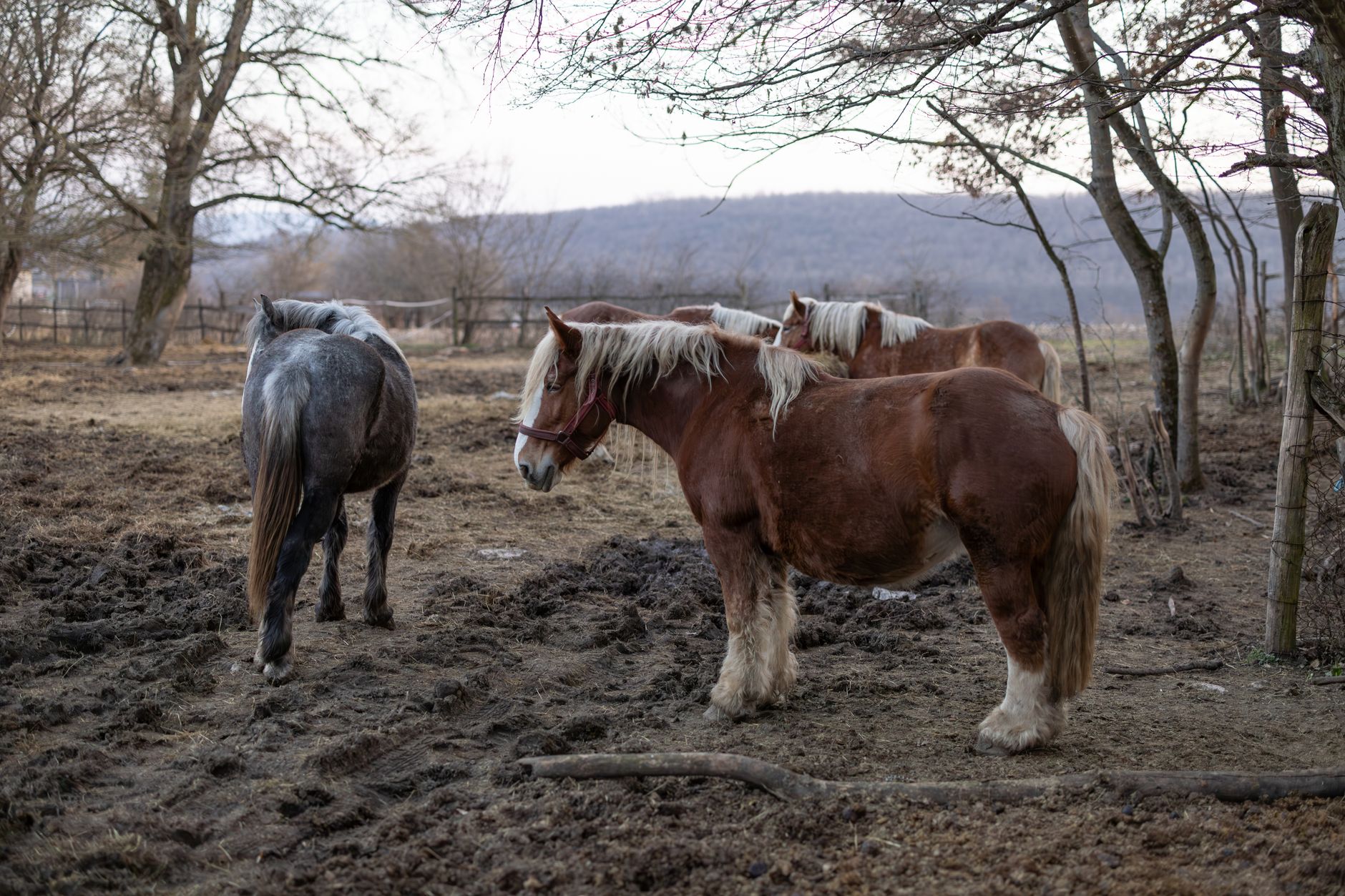
The Mare I Promised Never to Sell
The long week
I did not sleep that night, or much of the next.
I want to tell you what that kind of not-sleeping is like at seventy, because the young think it is grief. It is arithmetic. You lie in the dark and do the sums over and over, like picking a scab. Nine thousand two hundred. Nine thousand five hundred. The second of January. The twentieth of December. Eighty acres. One mare.
I went out to the barn at three in the morning on the Friday, in my coat, with a flashlight. I did not know why. I let myself into the lot and stood in the dark and listened to Bess breathe.
She came over. She smelled my pockets for sugar, found none, and settled for my hand.
“I promised him,” I told her. I was not embarrassed to be talking to a horse. I had been talking to a horse every morning for eight months. “I don’t even know why. He never said.”
She leaned her head into my shoulder, and I nearly went down.
You will think I am telling you this to make you cry. I am telling you so you know it was not a decision I could make by being sensible.
If it were only what a horse was worth against what a farm was worth, I would have signed in a minute. I am a farm wife. I have sold a hundred calves with my own hand and never lost a night’s sleep.
But Ray had said her name in the last sentence he spoke to me that made any sense. I had made the promise to a dying man, and you cannot go back to him and ask to be let out of it.
I thought about calling Marvin Kopp. I got as far as holding my thumb over his number. The north eighty is where Ray proposed to me, on the creek bank, on the Fourth of July in 1977, with a bad ring and a worse speech. I put the phone down.
The harness
Mr. Brandt called on the first Saturday in November. He asked politely whether he might come out one more time, not to push me, and I said yes before I knew I was going to.
“I’d like to bring Duke,” he said. “My gelding. I’d like her to meet him. It won’t change my offer. I just think it’s only fair to the mare. If she hates him I’ll go home.”
That seemed fair to me. So on the Tuesday he pulled in with the gooseneck, without Kevin, which I appreciated, and backed the trailer to the lot gate and let out a big gray Percheron gelding with feet like dinner plates.
Duke was fifteen years old, I would say, with a thick neck and a gentle, stupid face. He walked down the ramp, looked around, and gave a long sigh, and Bess, on the other side of the fence, put her ears forward and made a low noise in her chest that I had not heard her make since the winter.
It was a call. It was a horse’s word for hello.
“There,” Mr. Brandt said softly. “Well, now.”
He asked if he could put her in harness. He had brought his own, but I told him Ray’s was hanging in the shed.
“It’s all there,” I said. “Ray kept it oiled. I’ve kept it oiled. I haven’t known what else to do.”
We went into the shed together. The harness hung on its pegs where it had hung for twelve winters, black and heavy and smelling of neatsfoot oil and horse, and on the left hame, where it always hung, was the pair of old driving gloves, with the hole in the left thumb.