The Empty Seat in Merle’s Combine
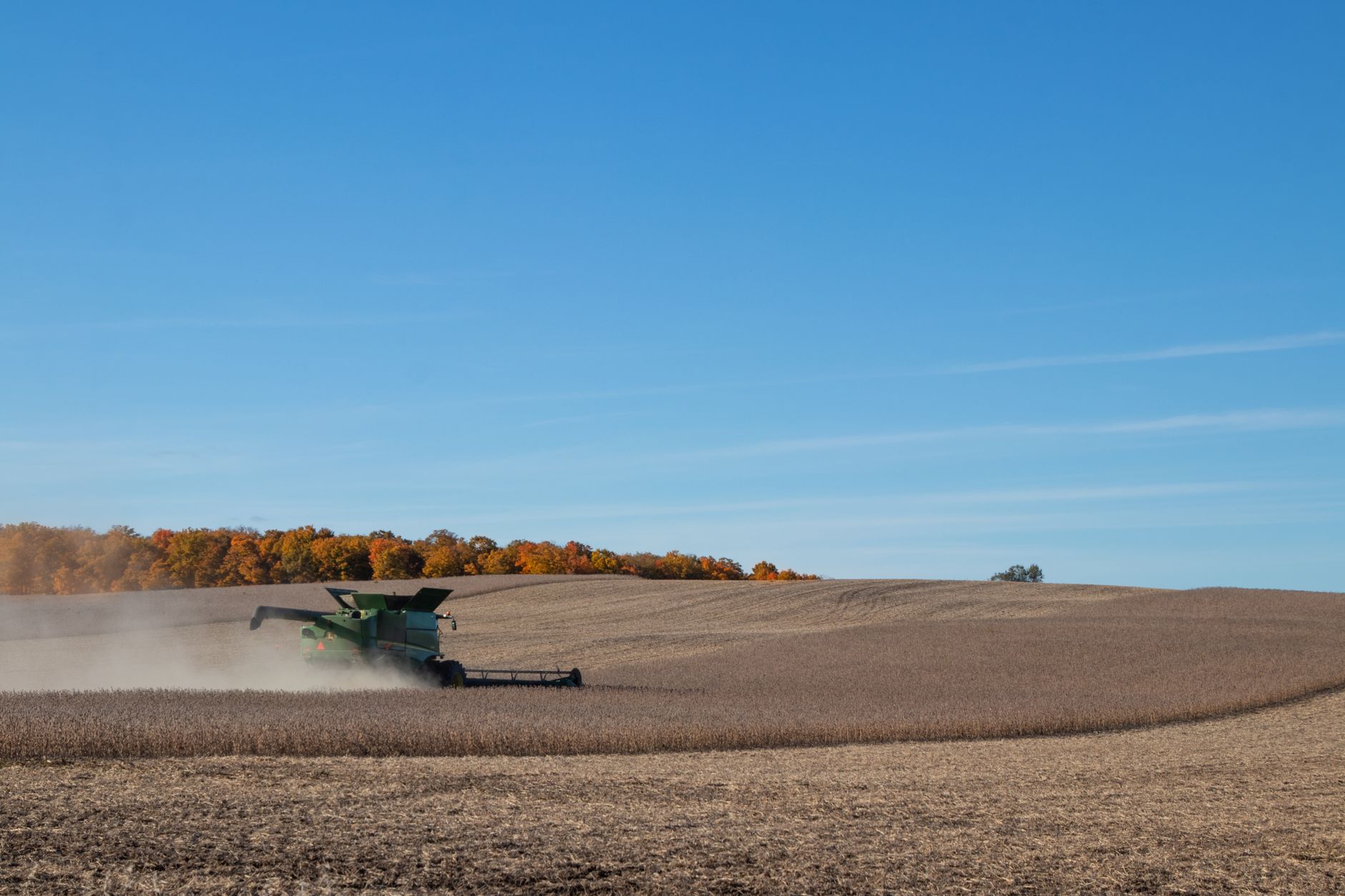
She came down the long side of the field at three and a half miles an hour with the header floating a couple of inches off the ground and a perfect straight swath behind her. At the end she lifted the header, swung the old girl around in a tight clean arc, dropped the header onto the beans, and lined up on the next swath without a bobble.
I looked over at the fence.
My son had taken his cap off. He held it against his chest with one hand. The other was over the lower half of his face, a leather glove with a patch of grease on the palm, and his shoulders were going.
He did not make a sound. He just stood there at the fence and cried.
Kurt did not cry at the funeral. He stood at the front of that church in his good suit with his jaw like a locked gate. I remember thinking he was holding the whole building up.
Abby saw him on the next pass. She slowed. I thought she might stop. But I put my hand on her arm and said, “Don’t stop. Keep cutting,” and she did.
When she came back up the long side the second time, he had put his cap back on. He lifted his hand to her. And she lifted two fingers off the wheel.
He stayed to watch two more rounds. Then he got into his pickup and went up the section road toward Groton, a little slower than he normally drove.
On Monday, after school, Abby cut the last thirty acres of the east eighty and finished at twenty minutes to eight. It was the fifth of October. The forecast said rain by midnight, and the first drops hit the kitchen window at ten past ten.
A hundred and sixty acres of soybeans in the bin and at the elevator, and the rain not even on the ground yet. Abby was washing up at the kitchen sink beside me with chaff in her hair, smelling of dust and diesel, and she looked about twenty-five years old.
I did not say anything about the three and a half. She had listened to the machine, and I thought he would have wanted that.
The corn took longer.
We waited out two weeks of rain and gray cold, and then it cleared, and the corn on the home eighty and the south eighty came down to twenty-two percent, and Abby and I changed the header.
That is a job. The platform comes off and the six-row corn head goes on in its place, and every pin and hose has to line up. It took two evenings, with Kurt holding a flashlight and Cody lending a jack. Cody took a pie.
Lower on the dash there was a second strip of tape that we had not bothered to read in bean season. It was for corn, and it said:
Corn. 22 and under, else the elevator docks you. Ground speed 3. Snap rolls tight, gather every ear. Don’t chase the loss monitor the first round. Down corn: go across, not with.
Abby read it out loud, one line at a time, every morning before she turned the key.
For two weekends and most evenings through the end of October, we took out the corn. Cody hauled when Kurt was on a pole, and when Kurt wasn’t, he drove the truck himself. Renee came out Sundays with supper in a roaster and set it on the tailgate of Kurt’s pickup, and we ate standing up in the cold with our collars turned.