The Empty Seat in Merle’s Combine
When he came in he was gray and his hands were black to the wrists. I washed them for him in the kitchen sink the way you’d wash a child’s, and he let me.
“She’s ready,” he said.
“I know,” I said.
That was the whole conversation about it.
Merle died on the fifth of August, a Wednesday, at home, in the hospital bed the hospice people set up in the front room where he could see the windbreak. The window was open and you could hear a meadowlark. Kurt was there, and his wife Renee, and their daughter Abby, and me.
The funeral was Saturday at Tolstad Lutheran, and two hundred and some people came. I stood in the line for two hours and shook hands with people whose names I had known for fifty years and could not remember.
I cried more in those four days than I had in my whole life before. By the end of August I had run out.
So when Dwight came to see me on the Saturday of Labor Day weekend, I was dry-eyed and polite and I gave him coffee.
Dwight is sixty-one. He runs a custom harvesting outfit with two combines and a crew of local boys, and he stood in my kitchen holding his seed cap in both hands like he was in church.
He told me the rate, forty dollars an acre, same as he charged everyone. Twelve thousand eight hundred dollars for the 320. He’d have both crops in by the middle of October.
He looked out the window toward the shed. “Merle’d have my hide if I let somebody else’s boys run his machine,” he said. “I’d bring my own combine. Wouldn’t touch the old girl.”
It was a kind offer, and the sensible one.
“Let me think on it a few days,” I said.
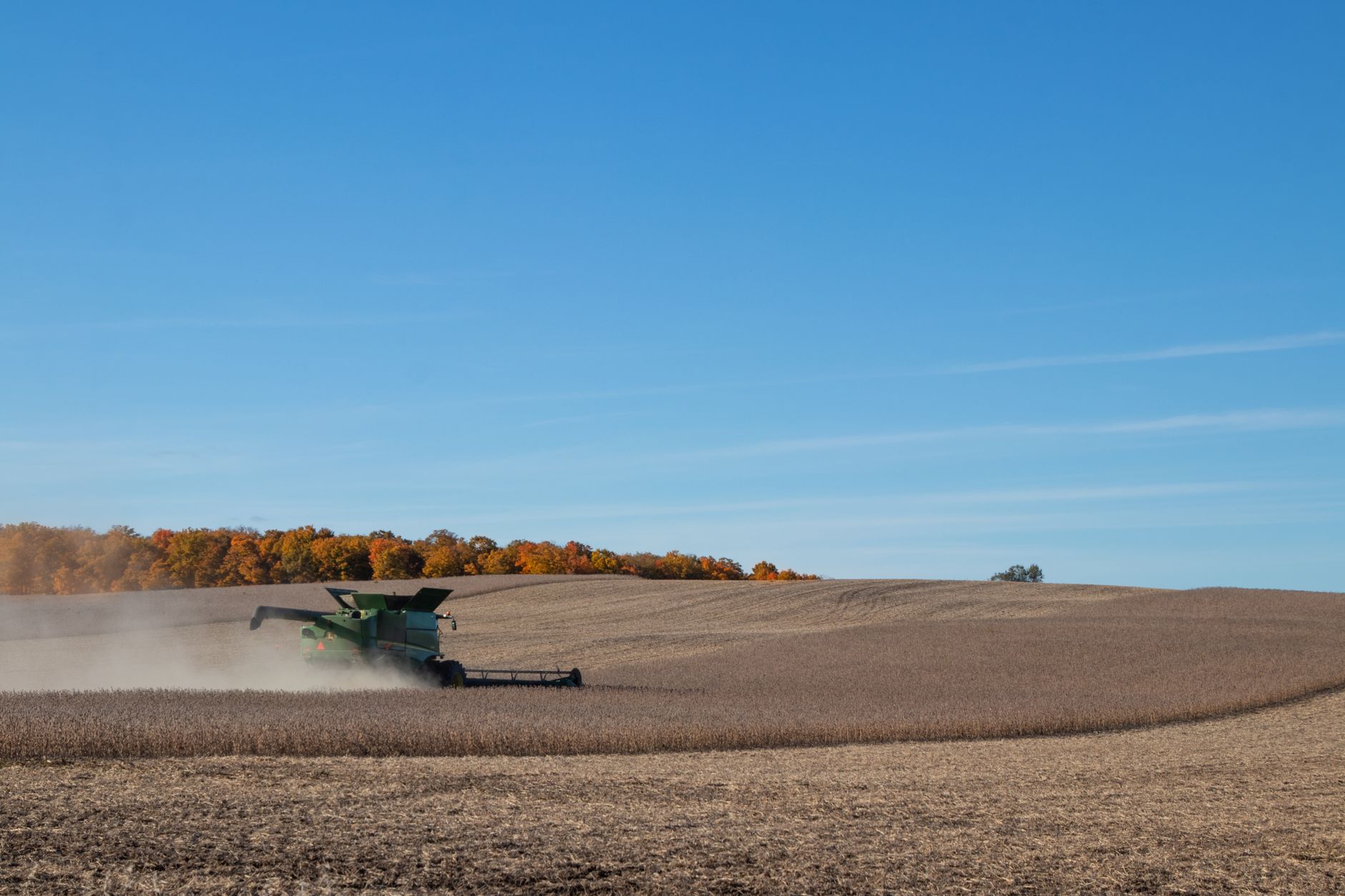
That is how I came to be standing on the third rung of the combine ladder that evening, with the sun going down behind the shelterbelt and my hand on the cold rail.
I told myself it was my shoulder. I had fallen off the back step in February and torn something in the right one, and the surgery had to wait for everything else. Ten hours of a header lever and a steering wheel on a machine with no autosteer would have me in the emergency room by the second afternoon.
That was true. It was also not the reason.
I had run that combine exactly nine days in my life. It was the fall of 1998, when Merle put his back out lifting a sprayer boom, and for nine days I cut our soybeans while he stood at the end of every field with his arms crossed, watching me like I’d borrowed his truck. On the ninth day he took the wheel back and said, “You left some on the ground in the corner,” and I said, “Then you go get it,” and that was the end of my career in combining.
So I knew how. My hands might have remembered. The trouble was the seat.
I climbed up one more rung, and then another, until I could look in through the cab door, and there it was. The split along the edge. The sheepskin worn flat in the middle. His seed corn cap still hung on the hook by the window, because nobody had had the heart to move it.
I tried twice. I got my left foot onto the platform and my hand around the door frame. Then my whole body just stopped. It was the same feeling as hearing a man’s step on the porch after he is dead.