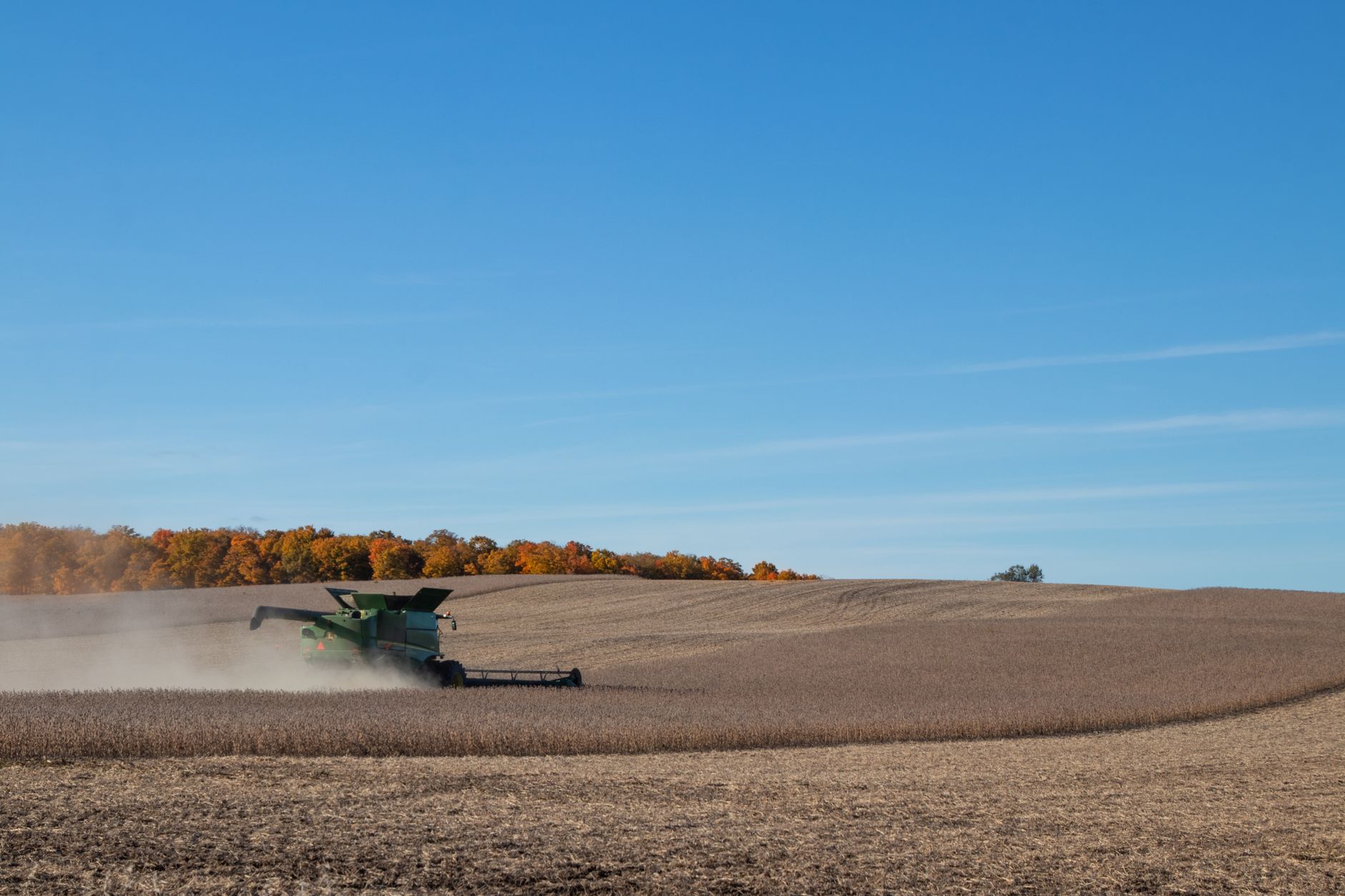
The Empty Seat in Merle’s Combine
I climbed back down. I stood in the dark and thought about Dwight’s hired boys, nineteen and twenty years old, climbing into that cab and putting their boots on Merle’s pedals. Hanging their own caps on his hook.
I thought: they can’t. And I thought: I can’t.
I could not see any way through the middle of those two.
The next day I did what I do when I don’t know what to do. I called my son.
Kurt is forty-eight. He went to lineman school in Mitchell at nineteen, after he told his father he did not want the farm, and Merle said, “Good. Steady work,” and never held it against him once. Now he works for the electric co-op, and in October every utility crew in the Dakotas is racing the first snow.
“Mom, I’d give anything,” he said. “Let Dwight cut it. That’s what he’s for.”
“It isn’t the money,” I said.
He was quiet a moment. Then he said, “Is it the seat?”
I hadn’t told him a word about the seat.
“Take your time,” Kurt said.
I did not call Dwight that week, or the next. The beans on the north eighty started turning in the second week of September, going from green to yellow to that dry brown of a paper sack, and every morning I stood at the kitchen window and watched them ripen without me.
On Sunday the thirteenth, Abby drove out to the farm after church.
She is sixteen. She turned sixteen on the eleventh of June and passed her driver’s test the week after, and she drives her mother’s old maroon Buick with a Tolstad Titans sticker on the bumper. She was still in her church dress with her ag class jacket over it, and she did not come to the house. She parked by the machine shed and walked straight inside, like somebody had sent for her.
I dried my hands and went out after her.
She was standing at the foot of the combine ladder with her head tipped back, looking up at the open door of the cab, exactly where I had stood.
Abby is a small girl, five foot three in her good shoes, with a long brown braid and her grandfather’s wide gray eyes, and his way of making up her mind and then not discussing it.
“Gram,” she said, without turning around. “Is somebody going to cut the beans?”
“Dwight Fosheim offered,” I said. “His crew. I haven’t told him yes.”
“Okay.”
I came and stood next to her. The shed smelled the way it always smells, of old grease and dust and the sweet dry smell of the grain bin next door.
“Grandpa said sixteen,” Abby said.
“Said what?”
“When I was twelve. He took me out in the beans in the pickup, the day we were checking moisture. He said, ‘You get your license, and then you get to take a round in the combine. Sixteen. That’s the rule.'” She had one hand on the ladder rail. “I asked him if it was a real rule. He said it was the only one that mattered.”
In fifty-two years of marriage, I had never known Merle to keep a promise secret from me. But he had made that child a promise four years ago, and kept it close the whole time.
Then I remembered the eleventh of June.