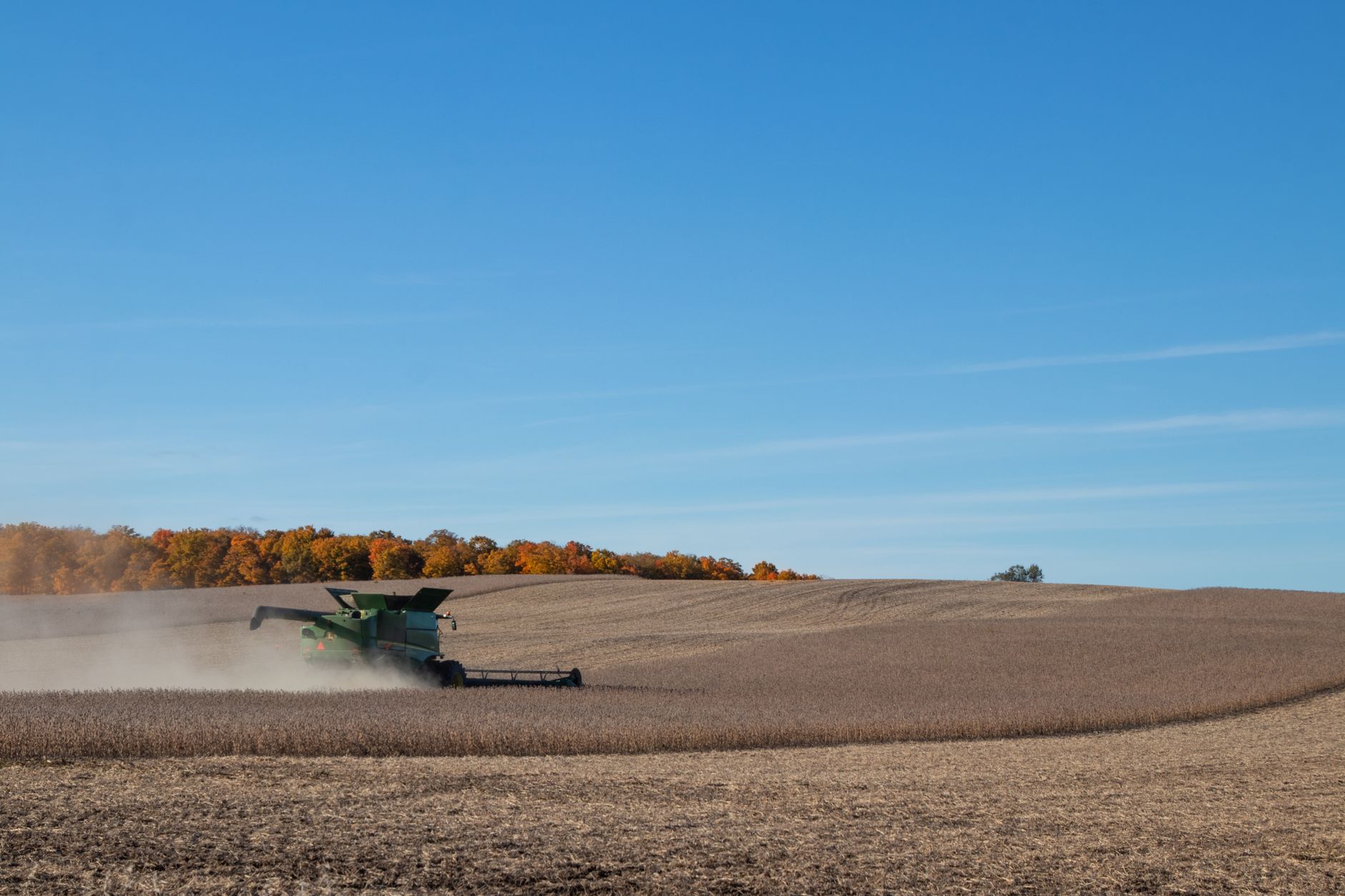
The Empty Seat in Merle’s Combine
She looked at me. “Gram.”
“I know,” I said.
We walked back to the machine shed together. I held the rail while she climbed, as I had all week, and she settled onto the front of the sheepskin and put the key in the ignition.
Then she went very still.
She was looking at the dash.
I had not looked at that dash closely in thirty-three years. On the left side, above the monitor, Merle had stuck a strip of masking tape, and on that tape he had written in carpenter’s pencil. The tape had gone brown and soft with age. A short pencil hung beside it from a loop of orange twine.
I leaned over from the little seat to read it.
It was in his square block printing, the way he labeled the grain bins and the tool drawers, gone over so many times the pencil had pressed little grooves in the tape.
Beans. 13 or wait. Ground speed 3 and a half. Reel a hair faster than ground. Rotor easy, they bruise. Blow the deck every fill. Watch the knife after rocks.
And below those, in a newer pencil, a different shade, pressed lightly, like he had written it sitting down with the tape on his knee:
Start Abby at 3.
It was dated July twelfth.
The day he greased the combine. The afternoon I stood at the sink with my hands in cold water and watched him sit on an upturned pail between every zerk.
I read that last line three times. I felt Abby not breathing in the seat beside me.
I understood then what he had been doing out in that shed, besides the grease. He had been getting it ready for her. He had sat there in the heat, too tired to stand, and thought about how fast a sixteen-year-old girl ought to go on her first day.
Not three and a half. Three.
“Gram,” Abby said. Her voice was steady, but it was a different steadiness than before. “Do you want me to start it?”
I took her hand off the key for a moment. I don’t know why. I just held it.
“Your grandfather,” I said, “was an impossible man.”
“I know.”
“He never told me one single thing.”
“I know, Gram,” she said, and the corner of her mouth went up.
I put her hand back on the key. “Start her at three.”
The engine caught on the second crank and settled into its low steady rumble. The old girl shook and woke. Abby engaged the separator, and I felt the machine take its first load in a year.
She dropped the header, put her hand on the ground speed lever, and eased it forward.
Three miles an hour is not fast. It’s the pace of a man walking behind a plow. It felt like flying.
The reel came around and laid the first row of beans onto the platform, and the knife took them clean, and they went up the feeder house in a long green-brown ribbon and into the machine. The sound changed. It is a sound I would know anywhere. It is the sound of a harvest actually happening.
Abby watched the header with her whole body, nose close to the glass. I said nothing for the first fifty yards. I thought that was the best help I could give.
At the first fence post she did not look at it. She looked at where she wanted to be.