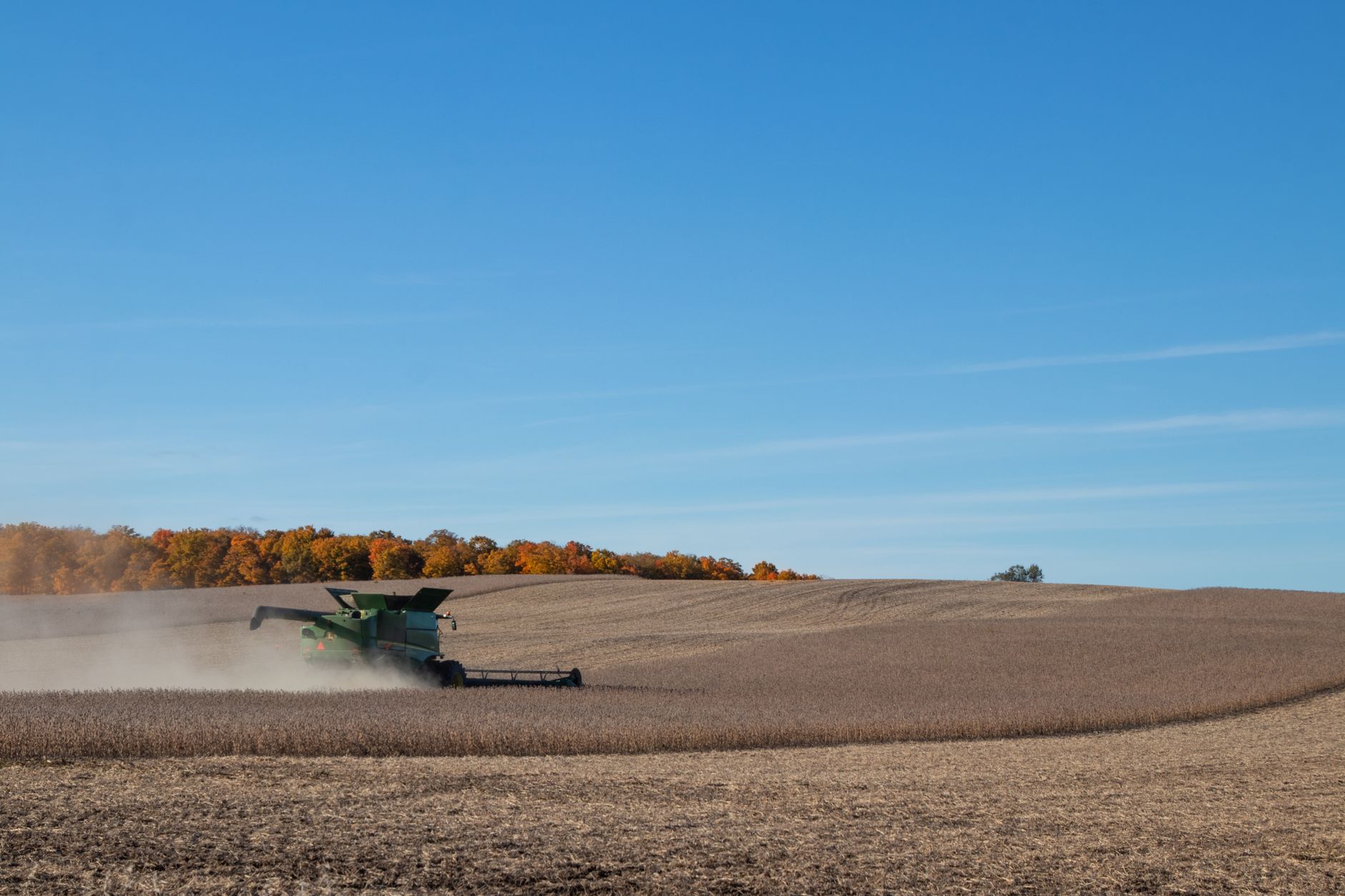
The Empty Seat in Merle’s Combine
“Then I need you to promise me three things.” Renee held up three fingers. “The key comes out of the ignition whenever you leave the seat, even for ten seconds. You never touch anything that moves with the engine running. And if Gram says stop, you stop. Not after you finish the pass. Right then.”
“I promise,” said Abby. “All three.”
Kurt rubbed his face with both hands. He looked at the picture of his father on the refrigerator, the one from the county fair in 1986 with a blue ribbon pinned to his shirt.
“He’d have already put her in it,” he said at last. “That’s what gets me.”
“I know,” I said.
“Okay,” said Kurt. “Three weeks. And Mom, every Saturday I’m not on a pole, I’m hauling for you. Don’t argue.”
“I wasn’t going to argue,” I said, though I had been.
I called Dwight the next morning and told him we would try it ourselves. There was a silence on the line that I could not read.
“If it rains and you’re behind, I’ll bring my truck,” he said finally. “Don’t you dare pay me for it.”
“I’ll make you a pie,” I said.
“I’ll take two,” said Dwight.
We started that afternoon, a Monday, after school.
I will say this for Abby. She did not once treat any of it as a game. She came straight from the bus in her jeans with her braid pinned up under a ball cap, and she stood in the shed with her arms at her sides while I walked her around the combine for the first time. It took an hour to go around it once.
“Before you ever climb up, you walk it,” I said. “Merle did it every morning for thirty-three years and I never once saw him skip it.”
I showed her the tires, the belts, the floor underneath for any drip of oil. The knife on the platform, where the sections ride in their guards like the teeth of a long flat comb, and where one cracked section will leave a ribbon of standing beans behind you the whole length of a field.
She ran her thumb down the sections. “Grandpa changed these in July.”
“He did.”
“They’re sharp.”
I made her grease the whole machine herself, every zerk, and she came out with grease on her cheek and her knees and one eyebrow. Then I put the air hose in her hand.
“Every time you stop for the hopper, you blow the engine deck off,” I said. “Chaff and dust pile up on a hot engine, and a combine will burn itself to the ground in about eleven minutes.”
“Has one ever?”
“Three, in this county, since I was married. One of them was a man I knew.”
She blew off the deck with the care of someone doing a thing she had been told might save her life.
The next day we went through the shutdown. I made her say it back to me over and over, standing at the foot of the ladder like a child learning her catechism. Header down on the ground. Rotor and feeder disengaged. Throttle back, engine off, key out. Key in your pocket. Wait for everything to stop turning. And then, only then, climb down.
On Wednesday, I finally let her climb into the seat.
I stood at the bottom of the ladder, holding the rail with my good hand.
She climbed the nine steps in her work boots, ducked her head under the door frame, and sat.