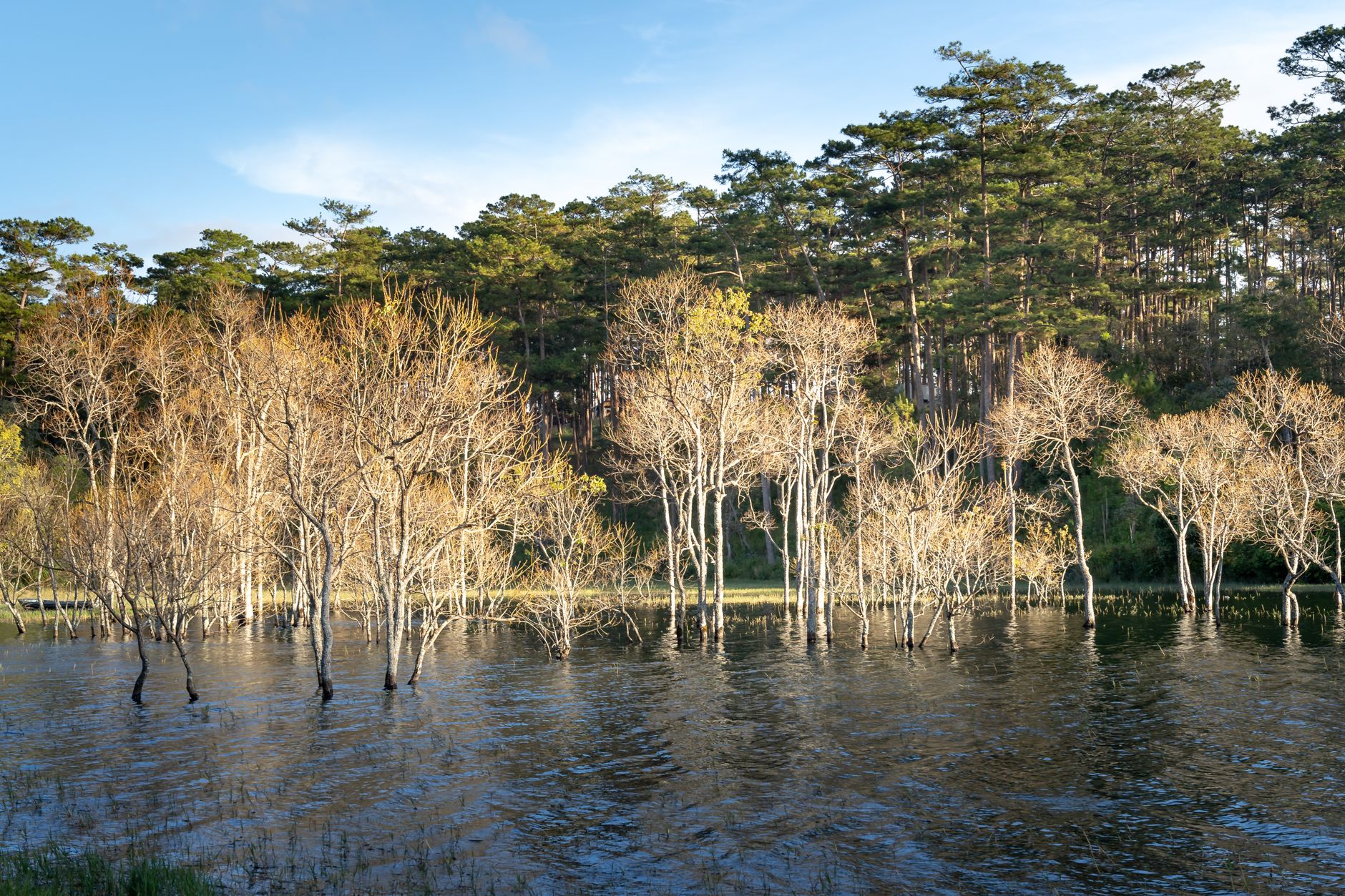
The Wives Blind in the Flooded Timber
The Last Pair
At seven twenty a pair of mallards came in low from the north, over the club’s timber. They were drakes, one behind the other, swinging along the fence line looking for a place to set down.
Glenn’s hands came up with the call in them. They were shaking. He had to try twice to get it to his mouth. Then he blew one soft chuckle, then a second one, then a low feeding call that rolled out under the oaks like something from fifty years ago.
It was my grandfather’s call. I knew it in my bones before I even turned my head. He had learned it from Elmer, the same as I had, and it came out of that walnut barrel sounding exactly like the man who made it.
The pair swung. They cupped. They came down through the hole in the oaks with their feet out.
“Glenn,” Sherri whispered. “Take them.”
He did not reach for a gun. He had not brought one. “You take them, honey,” he said to her. “I just wanted to call one more time.”
Sherri took them both. When Dixie brought them back, Glenn sat there with Elmer’s call in both hands in his lap. He did not try to hide that he was crying. Neither did his wife. After a while Ava reached over and put her mittened hand on his arm, and he put his own hand over hers and left it there.
“Your great-granddad,” he said to her, “was the finest man I ever knew.”
“I know,” Ava said. “Mama tells me.”
He held the call out to me. I shook my head. “You keep it through the spring,” I said. “You’ll need something to practice on while those knees heal.”
The Spring Meeting
Glenn had both knees replaced in February. Sherri drove him to Pine Bluff, and Kurt and I ran their errands for six weeks while he was laid up. He walked with a walker by March and a cane by April.
The club’s spring meeting was the second Tuesday in April. Danny called me the night before. “Glenn wants you there,” he said. “Six o’clock.”
“What for?”
“He wouldn’t tell me. He said to tell you to come.”
It was warmer than August had been, and the window unit was off. Twelve men in folding chairs. Somebody had finally fixed the Falstaff clock, and it ran right for the first time in my life.
Glenn stood up at the card table with his cane hooked over the edge of it. “I want to make a motion,” he said. “I move that we strike the vote from August from this book. I move that this club be open to any person of good character who loves this ground, the way Elmer wrote it on his tablet.”
He pointed up at the framed bylaws next to my grandfather’s photograph. “Any person,” he said. “Not any man. I went back and read it this winter. Elmer never wrote the word man in it at all. We just never looked.”
There was a silence. Then Gene Whitley said, “Second.” The vote was twelve to nothing. It took about a minute.
Then Glenn turned to me. “Becca, Harold’s seat is still open. It’s yours if you want it.”
I had thought about this moment all winter. I had wondered what I would say. “Thank you, Glenn,” I said. “I mean that. But I’ve got my forty acres, and I’ve got my wives, and I’ve got a list on my refrigerator. I don’t need the seat.”
Some of the men looked confused. Glenn did not. “Give it to somebody on the waiting list,” I said. “There’s a good many names on it now.”
There were. Three of them were women. Sherri had told me that.
“But there is one thing I’d like,” I said.
“Name it.”
“Youth day. First Saturday of December. Your blinds and mine. Every child and grandchild from both sides of that fence line, boys and girls. We put them all in the timber the same morning.”
Glenn looked at me a long time. Then he smiled, and it was the first time I had seen him smile since the August vote. “Elmer would have liked that,” he said.