The Lights on Route 9
Dale said it at the supper table, with the pork chops still on the plates and the kids still in their chairs.
He did not raise his voice. Dale never raised his voice. That was part of what made it land.
“Your mother’s going to be in a trailer by Christmas,” he said. “So you two might as well get used to the idea that the farm is where home is.”
Jack was eleven. He put his fork down very carefully, the way he did when he was trying not to cry in front of his dad.
Emma was fourteen, and she looked straight at me, waiting to see what I would do.
I did not throw anything. I did not say any of the things that were lined up behind my teeth. I picked up the bowl of green beans and asked Jack if he wanted more.
“No, ma’am,” he said.
Dale pushed back his chair, set his plate in the sink, and went out to the shop. The yard light came on a minute later.
I heard the big door roll up and the radio start, the farm report out of Fargo, same as every September night for sixteen years.
That was the last supper we ate as a family in that kitchen.
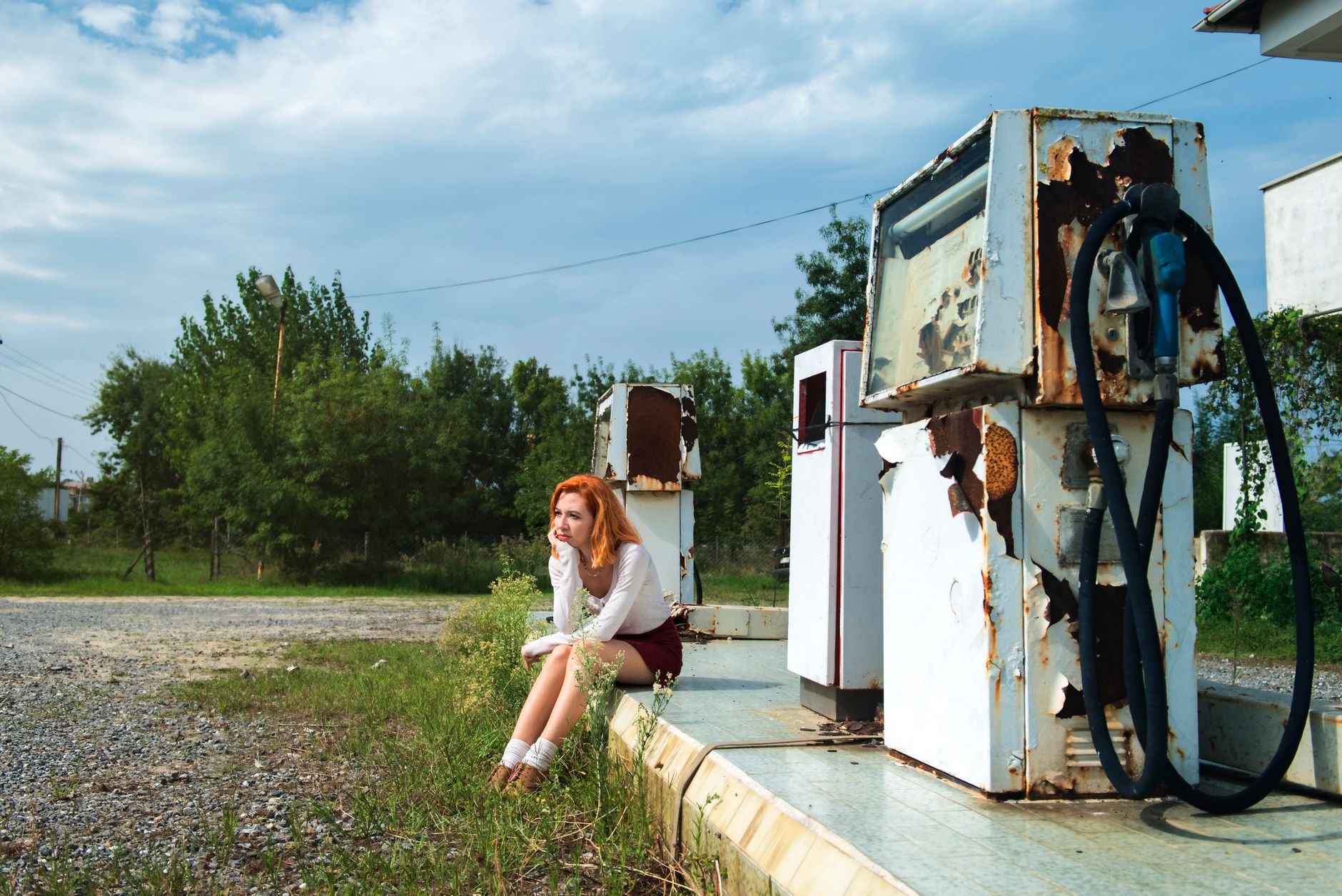
I want to tell you how I got from that table to a gas station on Route 9, because people around here still ask me, and the answer is longer than it looks from the road.
The ground and the girl at the bank
My name is Carrie Lindgren. I was forty-three that fall.
I had been married to Dale for sixteen years, and for every one of those years I kept the books for the Lindgren farm on the old desk in the back bedroom.
The farm was 640 acres east of Nordby, a full section of black Red River Valley dirt. Dale’s family had worked it since 1911.
It came to him before I ever married him, and his name was on it alone. I knew that the day I said I do, and I never once thought it mattered.
Dale told me in August that he was leaving me for Kelsey Moen. He moved into the hired man’s house across the yard while the papers went through, and he still came in for supper most nights, for the kids. Kelsey was twenty-nine and worked as a loan officer at Farmers State Bank in town.
She handled our operating line. I had sat across her desk with Dale every March for three years, signing papers while she slid me a pen.
I am not going to make Kelsey into something she was not. She was a young woman who fell for a married man who was lonelier than he let on.
That is a sin with two people in it, and I was not the judge of either one.
The divorce went fast, because I let it go fast. The mediator in Grand Forks laid it out on one sheet of paper.
The land stayed with Dale, as everyone told me it would, since it was his family’s before the marriage.
What was left to split was the equity in the machinery and the grain in the bin, minus the operating loan and the payment on the new combine.
When the mediator did the arithmetic, my share came to nineteen thousand dollars.
My sister in Fargo told me to get a lawyer and fight. She said I could argue for the hours I put into that farm, for the books, for the years I drove grain cart.
She was probably right that I could have dragged it out and gotten more.
But it would have meant dragging Dale’s family ground through a courtroom, with Emma and Jack old enough to hear every word of it at school.
Their great-great-grandfather broke that sod with horses. I was not going to teach my children to fight over it.
So I signed. Dale signed. He wrote me a check for $19,000 on a Tuesday afternoon in the bank lobby, at a table by the window, and Kelsey stayed in her office with the door shut.
I gave her credit for that.
We agreed the kids would live with me and go to Dale every other weekend and on Wednesday nights. The only question left was where “with me” was going to be.