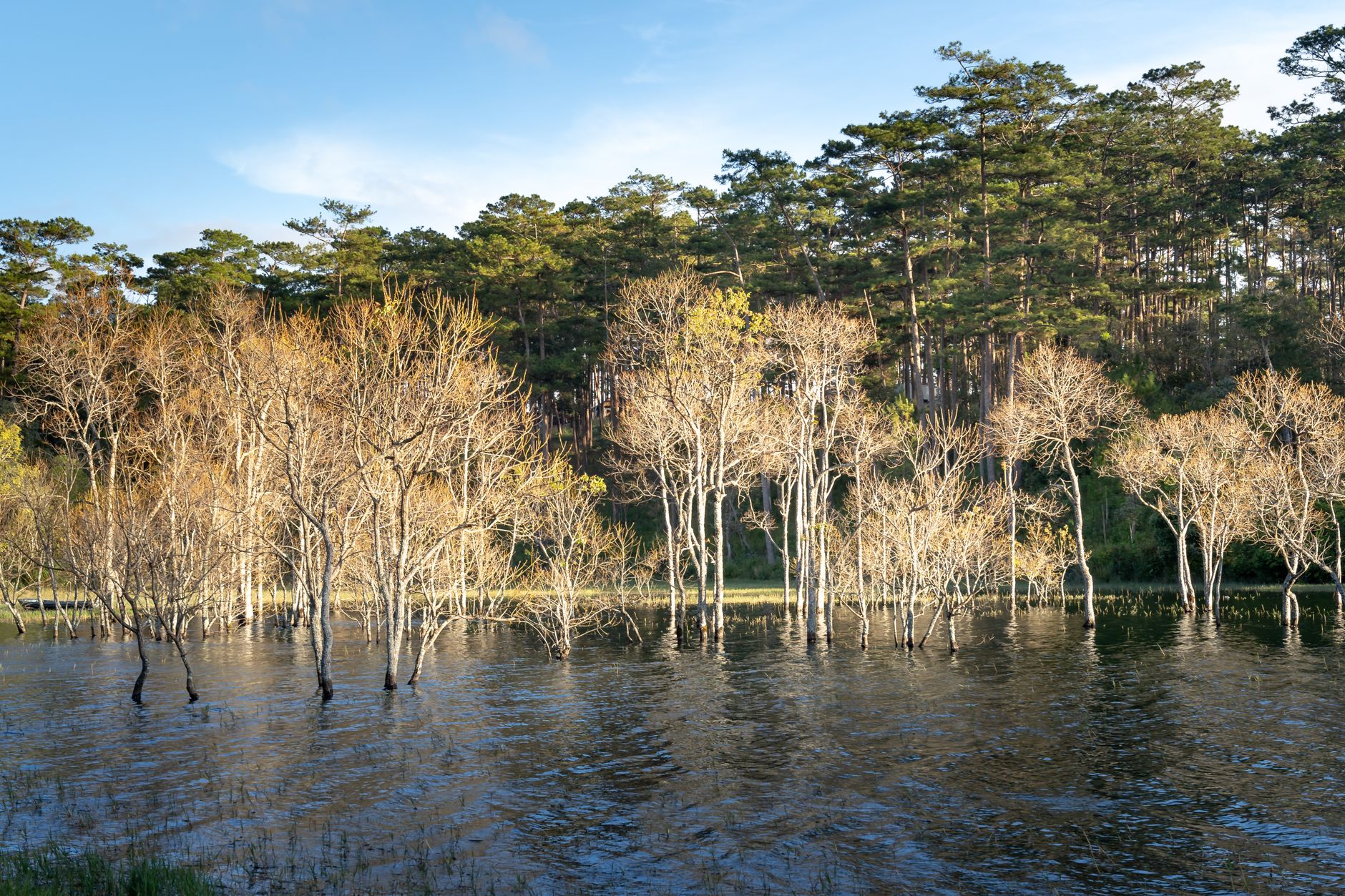
The Wives Blind in the Flooded Timber
The Daughters
By Christmas, the daughters were coming. Sherri’s daughter, Kim, drove down from Conway on a Saturday with her husband’s old gun and borrowed waders. Donna’s daughter came home from college. Carla brought her niece. I had to start a list on the refrigerator, and Kurt built a third bench in the second blind.
My Ava came every Saturday she was not at a basketball game. She is fifteen. She has been hunting with me since she was eight, but she had never hunted with anybody but Kurt and me.
The first morning she sat with the wives, I watched her watch them. She watched Donna load her gun and Sherri check the wind. She listened to Pam tell about wading the Bayou Meto with her granddaddy in 1971 with wool socks and rubber hip boots that leaked.
On the drive home she was quiet for a long time. “Mama,” she said finally. “Why didn’t they hunt all those years?”
I thought about how to answer her. “Because there wasn’t a place to,” I said.
“There is now.”
“There is now.”
I taught calling on the boardwalk. Every morning after we limited out, somebody would ask me to show her the feeding chuckle, or the comeback call, or how to lay off the call when ducks are working so you don’t spook them. I stood at the rail with Grandpa’s call and showed them the way he showed me, one note at a time.
The club’s Christmas supper was the Saturday before Christmas. The wives made the gumbo, the same way they had made it for thirty years. Except this year it was made with ducks they had shot themselves. Sherri told me afterward that Glenn ate two bowls and asked her where she had gotten so many birds.
“I told him I got my limit eleven times,” she said.
“What did he say?”
“Nothing,” Sherri said. “He put his spoon down and went out to the porch. He didn’t come back in for a while.”
Glenn’s Knees
What I did not know that winter, and what Sherri did not tell me until the end of it, was that Glenn Raney had not been in the timber since the first week of December.
His knees had been going for years. Both of them, bone on bone. He had been putting off the surgery because the doctor in Pine Bluff told him it would be six months before he could wade again. He was going to wait until after the season. He had told everybody he was fine.
The club’s ground is all walk-in. You park at the clubhouse and wade six hundred yards through the timber to reach the nearest blind. Mud to your shins under the water, cypress knees you cannot see, holes where the hogs have rooted. It is hard walking at thirty. At sixty-four, on two bad knees, it was impossible.
He went down on the second morning of December, in the dark, about halfway in. He got himself back up and back out and drove home. He never told the other men. He just stopped coming.
“He sits in his recliner every morning at five,” Sherri told me in January. “He doesn’t sleep. He sits there with the window cracked so he can hear the shooting.”
“Sherri, I’m so sorry.”
“He hears ours,” she said. “He knows which shots are ours. He can tell from the sound which way they’re coming from.”
The Last Morning
The last day of the season fell on Sunday, January thirty-first.
I missed church that morning, the way half the men on the Grand Prairie do on the last Sunday of duck season. Our preacher had laughed on Wednesday and said he would be in a blind himself. When I got to the levee road, Sherri’s truck was there.
She was standing beside it in her waders and her camouflage coat. The passenger door was open. And sitting in the passenger seat, with a cane across his lap and his face set like concrete, was Glenn Raney.
I parked and got out. I did not know what to say. “Becca,” Sherri said. “Is the first blind open?”
“It is.”
“I’d like to rent it for two,” she said. “One of us can’t wade.”
Glenn did not look at me. He looked down the boardwalk instead, two hundred feet of cedar-post decking running off into the gray timber with a handrail on one side. I watched him see it. I watched him understand what it was and who it was for.
“You built this,” he said.
“Kurt and I did.”
“For the wives.”
“For anybody who couldn’t wade anymore,” I said.
He sat there a long time. Then he swung his legs out of the truck, one at a time, slowly, the way a man does when every inch hurts. Sherri reached to help him and he waved her off, and then he took her hand anyway.
It took us twenty minutes to walk two hundred feet. He held the handrail with one hand and the cane with the other. Dixie walked beside him the whole way and would not go ahead.