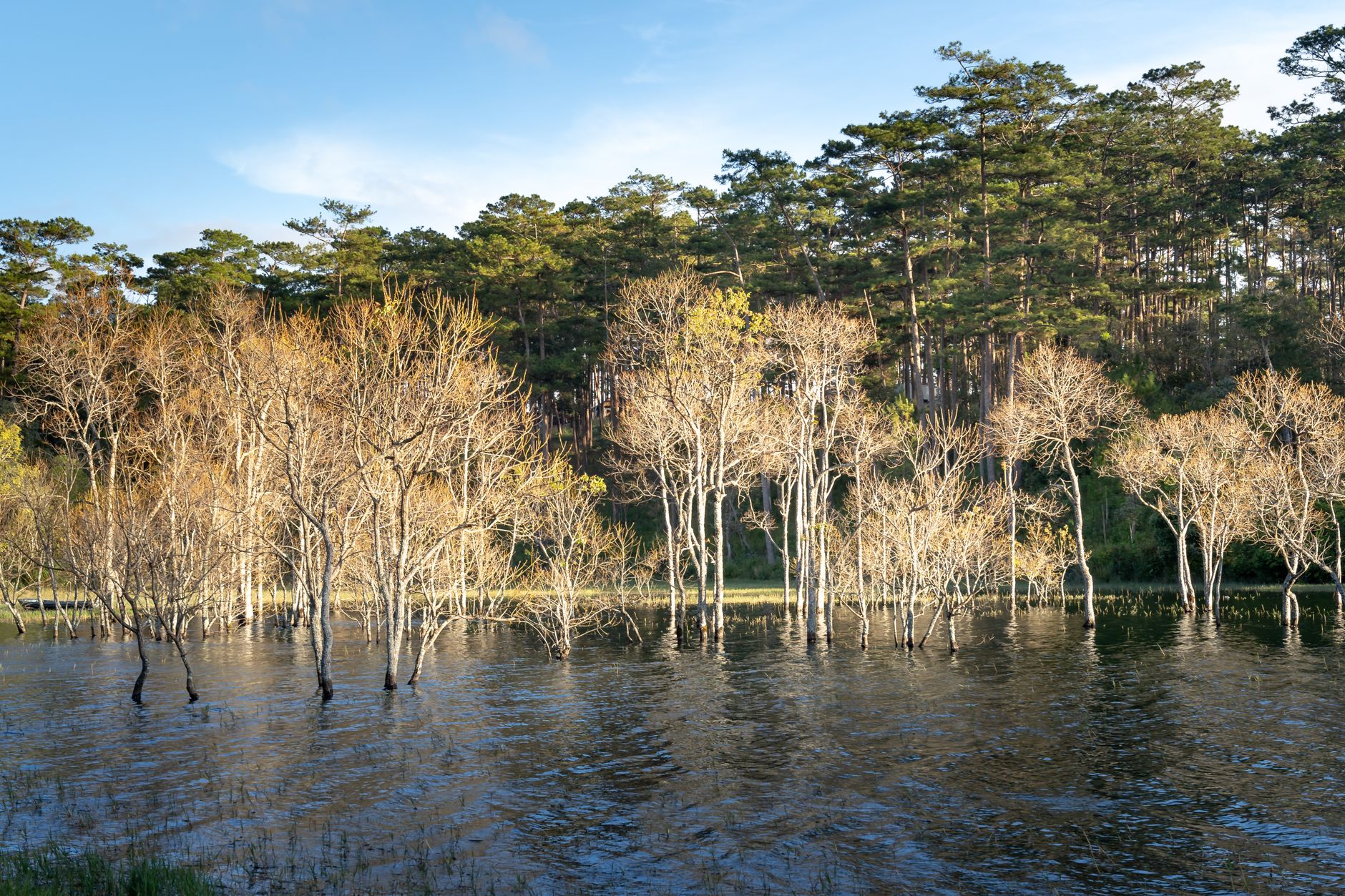
The Wives Blind in the Flooded Timber
The Blinds
I sell crop insurance for a living. From July through the end of harvest, my phone does not stop. Acreage reports, prevented planting questions, rice farmers wanting to know what their revenue protection is going to pay out if the price drops another dollar.
So Kurt and I built on Saturdays. Every Saturday in September and most of October, we were at Hubbards’ forty by six in the morning with the truck loaded down with lumber.
We built two blinds on cypress posts set four feet deep in the mud. Pressure-treated two-by-sixes for the frames, plywood floors, a shooting rail at chest height, and a bench long enough for five people to sit shoulder to shoulder.
We built a dog stand off the side of each one for my black Lab, Dixie, and for any other dog that might come.
We brushed the sides with cut cane from the ditch along the levee. Kurt cut it, and I wired it on. By the end of it my hands were so torn up from the wire that I had to wear gloves to church.
Then I built the boardwalk. It ran two hundred feet from the levee road to the first blind, then another hundred and forty from the first blind to the second.
Two-by-six decking on cedar posts, high enough to stay a foot above full pool, with a handrail on one side.
Kurt stood at the end of it one Saturday with a hammer in his hand and looked down the length of it. “Becca, I’m not complaining,” he said. “But nobody builds a boardwalk in a duck hole. You wade in. That’s how it’s done.”
“I know how it’s done.”
“Then why the boardwalk?”
“Because some of the people I have in mind haven’t waded in years.”
He looked at me a long time. Then he started to laugh, low, and he shook his head and went back to nailing. “You already know who you’re going to call,” he said.
“I’ve known since the truck.”
Sherri
Danny came out the second Saturday in October. I heard his truck on the levee before I saw it.
He got out with a post-hole digger over his shoulder and a cooler in his other hand. “I figured you’d need a third pair of hands for the second blind,” he said.
We worked all morning without talking about the vote. At lunch, sitting on the tailgate eating Marlene Hubbard’s pimento cheese sandwiches, he finally said it. “I’m sorry I couldn’t do more than keep my hand down.”
“You did more than anybody else in that room.”
“Glenn’s not a bad man, Becca. You know that.”
“I know he’s not.”
“He’s scared of something,” Danny said. “I don’t know what. But I’ve known him forty years, and I’ve never seen him that set on a thing.”
I thought about that while I wired cane. I thought about it again that night when I picked up the phone and called Sherri Raney.
Sherri and I go to the same Methodist church in Stuttgart. She sits two rows behind me on the piano side. She is sixty-two, quick, and she runs the funeral meal committee like a drill sergeant.
Most people in town do not know that she grew up on the White River below Clarendon, the only child of a man who ran trotlines and guided duck hunters for a living.