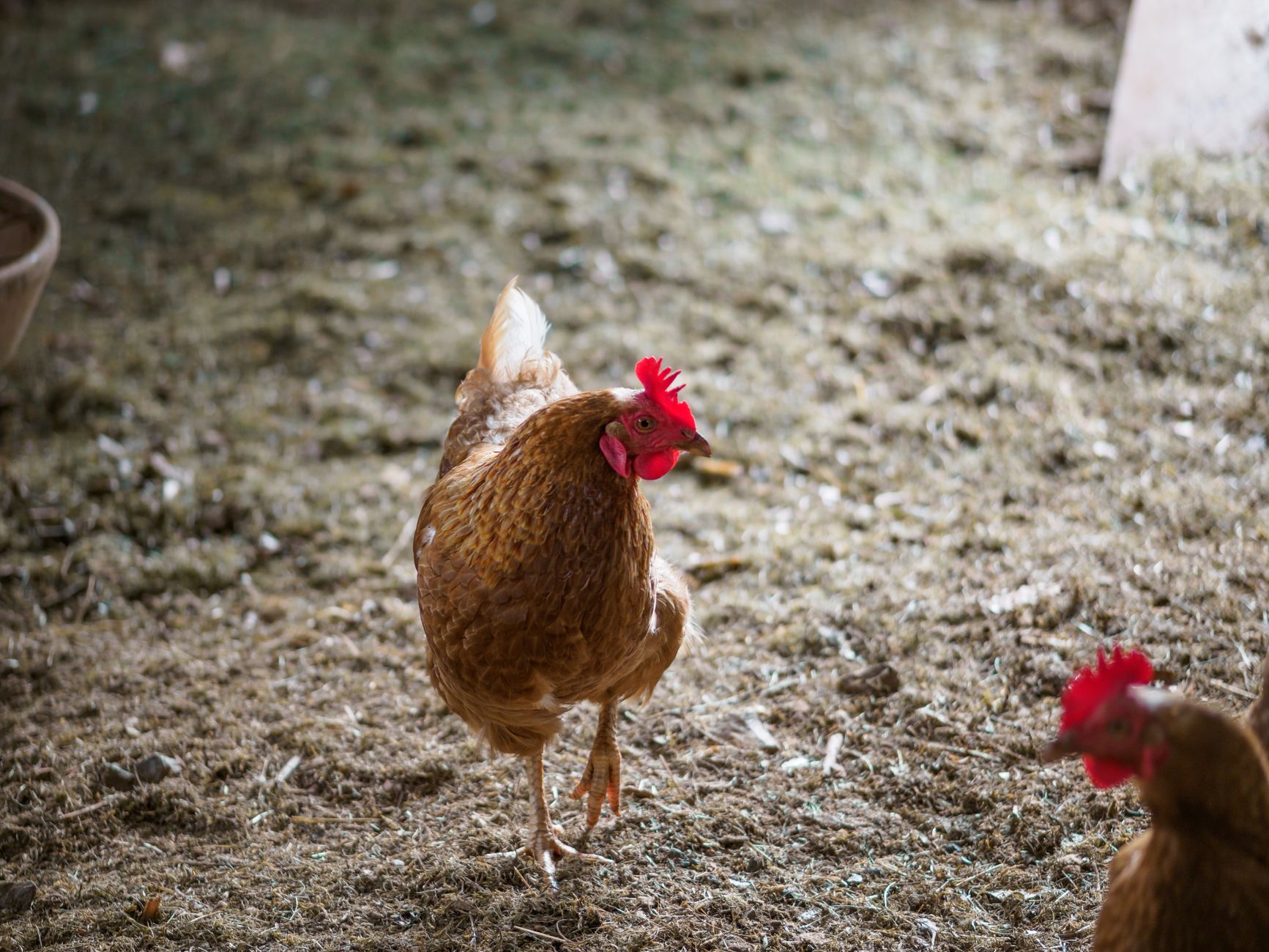
The Forty Hens I Bought Back
Colt went in with the flashlight pointed at the floor. He came out with a Rhode Island Red under each arm, and he turned them toward me so I could see their legs.
A blue band on one. A yellow band on the other.
Mom banded every bird she ever raised. A little plastic spiral on the right leg, a different color for each year’s hatch, so she always knew how old a hen was without having to guess. Green for the birds from three springs back. Blue for the next year. Yellow for last spring’s pullets. I had never once thought of it as anything but one of her fussy ways.
That week, those bands were the only proof we had.
We put eight hens in the crate. The Kroekers’ little girl, who was maybe five, stood by the tailgate with her chin shaking. She had named one of them Butterscotch that very afternoon.
Colt got down on one knee in the gravel.
“She’s going back to my grandma’s house,” he told her. “That’s where she’s from. You can come see her any Saturday. I’ll show you where she sleeps.”
I counted twenty-four ones out of the coffee can. Kim Kroeker put her free hand behind her back.
“I can’t take more than I paid.”
“You bought them fair,” I said. “You fed them, and you penned them right. I don’t want anybody out a dime because of my family. Please.”
She took it at last, and then she walked me to the truck door and said, low, so the children would not hear, “Is your aunt all right? She seemed like she was in an awful hurry to be finished with something.”
I thought about that most of the way home.
We turned the eight hens loose in the coop by flashlight, and every one of them walked up the ramp and went to the same place on the roost she had left that morning. They shuffled and muttered and settled. Colt latched the pop door and stood there with his hand flat on it for a minute.
Lucille had left the yard light on. There was a plate of funeral ham in the oven, covered with foil. She had gone to bed.
Before I slept I called the one name I had.
Mr. Zeller answered on the ninth ring. He is eighty-one and farms a little yet, south of town, and he has been a widower for three years. I told him who I was and what I wanted and that I would pay him three dollars a hen and be glad to do it.
There was a long pause.
“Thursday,” he said.
“I could come tomorrow, Mr. Zeller. I don’t want to put you out.”
“Thursday. At dusk. Not before.” And he hung up.
I knew my mother took him eggs. I did not know whether a man who says Thursday and hangs up is a man who means to help you.
Wednesday morning at eight I called the radio station.
The fellow who runs the swap program did not make me explain it twice. At five minutes past nine, between a man selling a hay rake and a woman looking for canning jars, he read it out just the way I gave it to him. He said that forty laying hens had been sold on Tuesday from Rosalie’s place northwest of York, that they had been sold by mistake the day after her funeral, and that her daughter would be grateful to buy back any that could be spared, at three dollars apiece. He gave Mom’s number. Then he said, on his own, “Folks, most of you have eaten that woman’s eggs.”