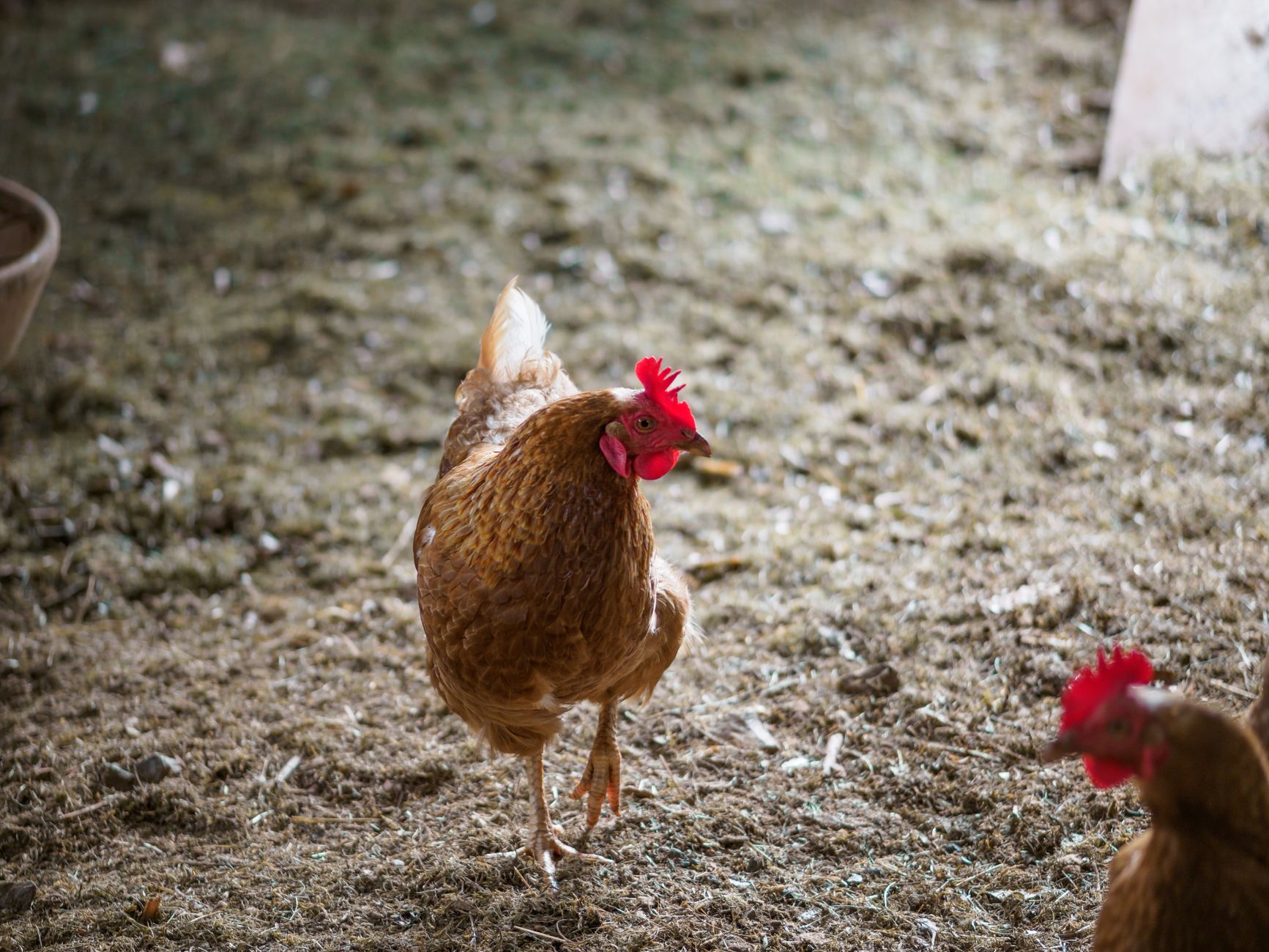
The Forty Hens I Bought Back
“Well,” she said. “Then I’m glad you’re the one handing it to me.”
Lucille said it fourteen times that morning. She said it to every one of them, the whole thing, and she did not shorten it and she did not dress it up. Some of them were kind about it. One old farmer took his eggs and said, “Two dollars,” and shook his head, and went back to his pickup, and she stood there and took that too.
The empties piled up on the counter. Thirty, forty of them, soft as cloth at the corners, every lid gray with my mother’s pencil. Years of Saturdays. Lucille started reading them when there was a gap between cars. She would pick one up and tip it to the window.
“She wrote the weather on this one,” she said once. “Twenty below. Left on your porch, do not come out.”
Mr. Zeller came at nine. He had shaved. He drank one cup of coffee standing up and told Lucille, very gravely, that he was the fellow she had thought was hard of hearing, and she laughed, the first time I had heard it all week.
Nobody would take their eggs for nothing. I want that written down. I told every one of them there was no charge, and every one of them walked around me and put three dollars in the coffee can anyway.
A little after ten, a tan Buick came up the lane at about four miles an hour.
It was Mrs. Pavlik. She is eighty-four, and she had been buying two dozen a week since the summer Mom started. She stopped right in front of the coop, not the house. She rolled down her window.
“Annette,” she said, “come and get these birds out of my automobile before they ruin the upholstery.”
There were two apple boxes on the back seat and a laundry basket with a bath towel clothespinned over the top. The towel was moving.
Nine hens.
“I have been on the telephone since Wednesday noon,” Mrs. Pavlik said, while Colt and Dale carried them out two at a time in the dog crate. “I have the church directory and I am not afraid to use it. A couple by the lake had four. The Schmidt girl’s neighbor had three. Two went to a man who was fixing to butcher them this very weekend, and I told him I would pray for him, and he did not care for my tone.” She sniffed. “Count the legs. They’ve all got her bands.”
They did. Green and blue and yellow, every one.
Forty.
I got the coffee can. There were twenty-seven dollars owing her, by my count, and I started to count it.
“You put that away,” she said, just exactly like Mr. Zeller. “I broke my hip in the winter of ninety-eight. Your mother carried eggs up my back steps for two winters and shoveled them first. I have owed that woman a good deal more than twenty-seven dollars for a long time.” She looked past me to the kitchen door, where Lucille was standing with a dish towel in her hands. “Is that the sister?”
“Yes, ma’am.”
“Send her out here.”
Lucille came. She came the whole way across the yard and stood by the Buick window with her back straight, and she started in on her fourteen-times sentence, and Mrs. Pavlik lifted one finger off the steering wheel.
“I heard. Everybody has heard.” She was not unkind, but she did not soften it. “You sold thirty-five years of that woman’s mornings for the price of a loaf of bread apiece. I want you to know that I know it.”