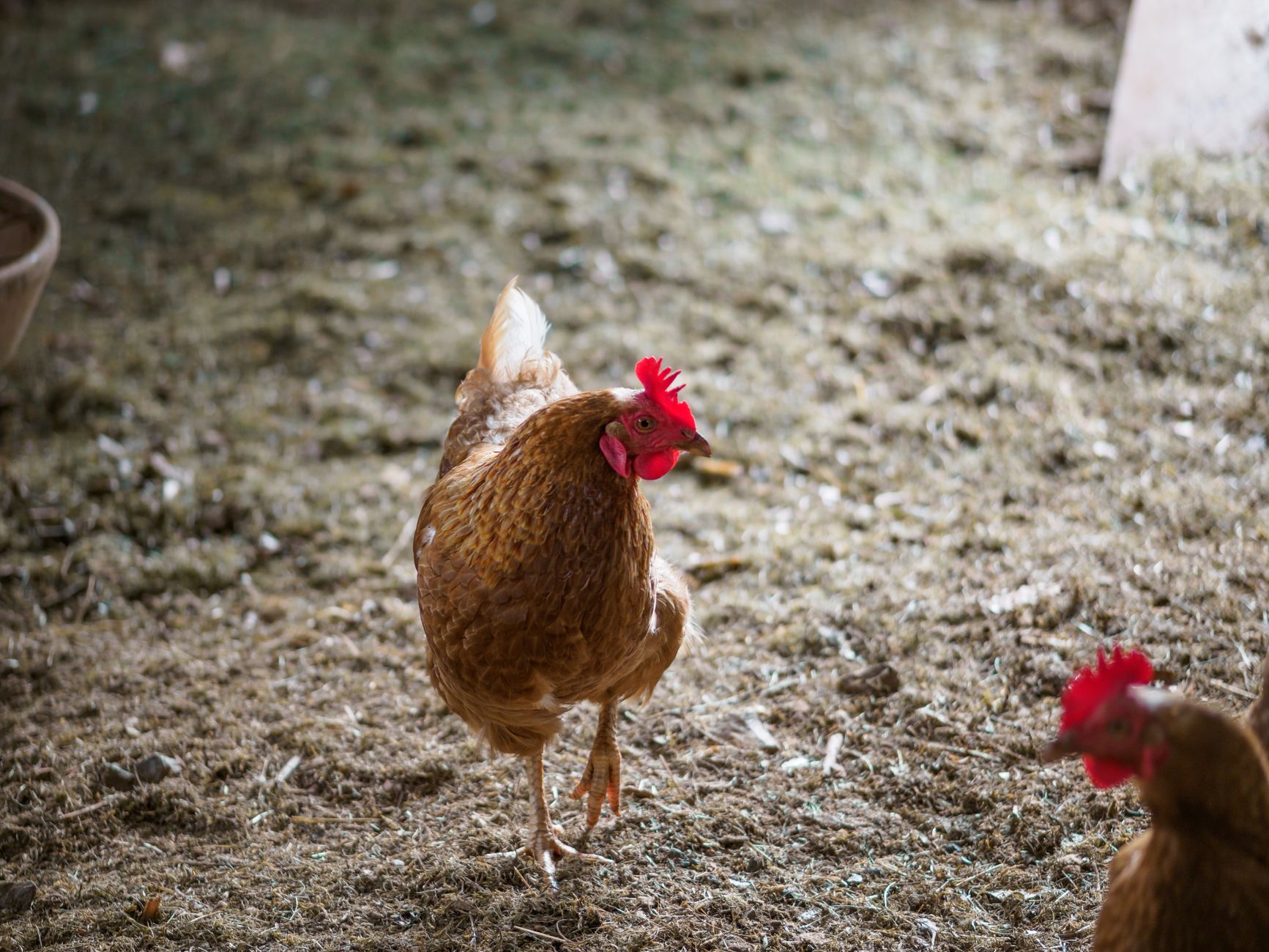
The Forty Hens I Bought Back
Aunt Lucille heard a decision.
She is seventy-eight, my mother’s older sister. She left the farm for Lincoln the week she finished high school and worked forty-one years in the claims office of an insurance company, and in forty-one years she never once left a file open on her desk overnight. By Saturday she had found a realtor. By Sunday she had moved into Mom’s spare room with a bucket and a box of trash bags. I did not have the strength to stop her, and I thought there would be time. I thought the worst thing that could happen before Friday was a clean pantry.
The place was coming to me. Mom and Dad had settled that years ago, and Lucille knew it as well as I did. She was not stealing from anybody. In her own mind she was saving me the trouble.
“Who bought them?” I asked.
“People.”
“Which people, Aunt Lucille?”
“People from the radio. I don’t know them. I don’t know anybody out here anymore.” She pulled the glove back on. “A young woman with a van full of children. A heavy man. Somebody’s hired man in a seed cap.”
“Did you write down a single name?”
“It was cash, honey. You don’t write a receipt for two dollars.”
“Not one name.”
She thought. “One. An old man, Zeller. He said to tell you he’d taken twelve. He said it twice, like I was hard of hearing.”
So there it was. I could not pick up the telephone and undo it, because there was no one to call. Thirty-nine and one. Forty hens had gone down that lane in the backs of strangers’ cars, and the only record of it was eighty dollars in an envelope.
I felt like screaming. I am forty-seven years old and I have never screamed at a relative in my life, and I came closer that afternoon than I ever hope to come again.
But arguing with Lucille had never once in my lifetime changed what Lucille had already done. And it would not bring home one hen.
And she was right about one thing, though not the way she meant it. A laying hen in her second spring is worth fifteen dollars to anybody in York County who knows a hen from a hat. Two dollars is what a spent hen brings at the sale barn, the kind that is headed for somebody’s soup. Whoever had answered that radio call had either gotten the bargain of the year or meant to wring some necks.
Mom called the refrigerator the icebox all her life. On top of it, pushed back against the wall, sat a red coffee can with a plastic lid gone cloudy with age.
I reached up and took it down.
That was her egg money. She had sold eggs out of that kitchen door since 1991, the year I turned twelve, when she decided the hens were going to buy the groceries. Three dollars a dozen, lately. Two for most of the years before that. It all went in the can, and it was nearly all ones.
I took the lid off and counted it on the table, next to Lucille’s envelope.
A hundred and twelve dollars.
“What are you doing?” Lucille said.
“They paid two,” I said. “I’ll pay three.”
“For chickens.”
“For Mom’s.”
“Annette, you can’t even find them.”
“I can find twelve.” I put the money back in the can and pressed the lid down. “That’s a start.”