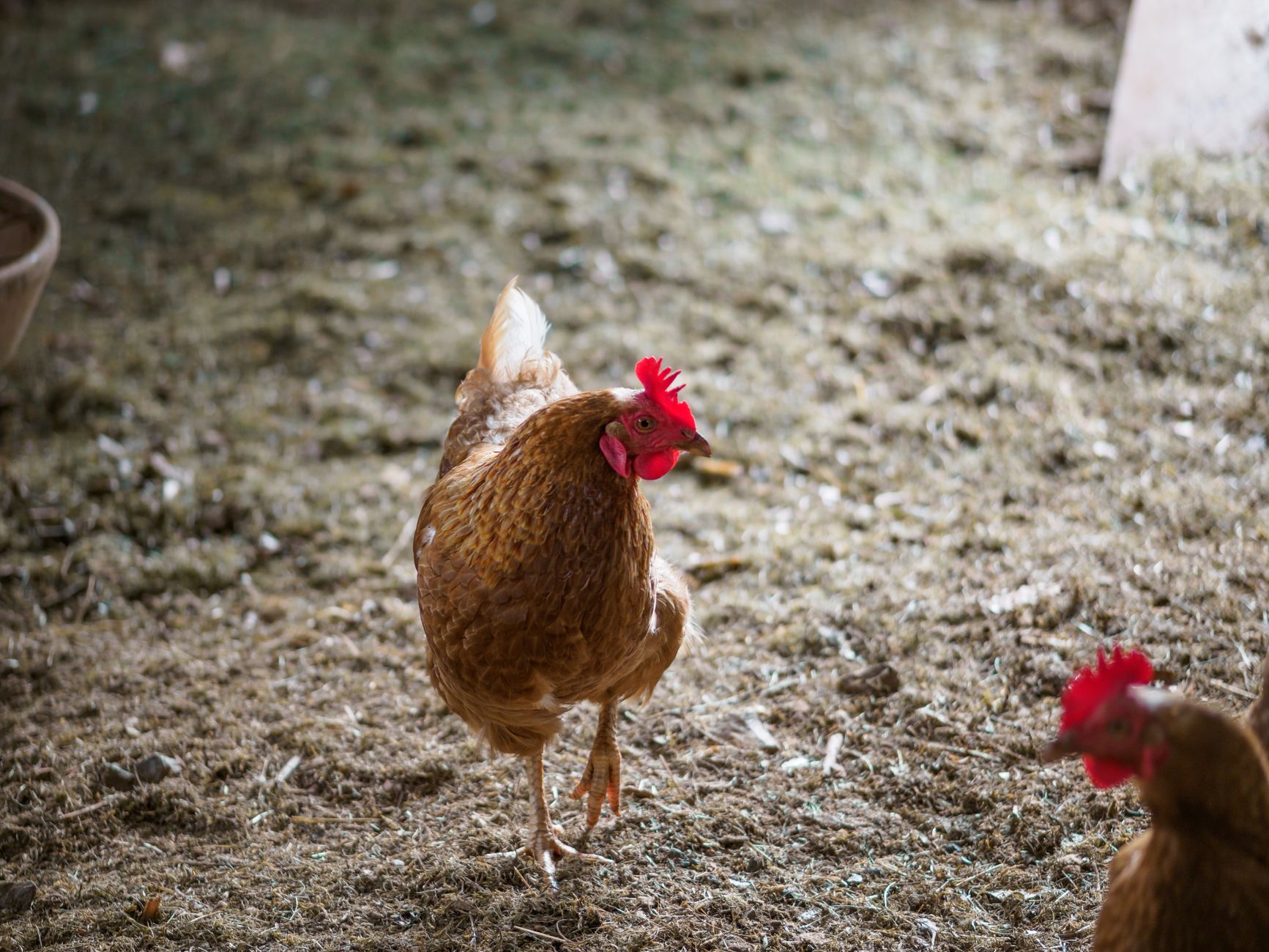
The Forty Hens I Bought Back
“Nineteen.”
“How many to go?”
“Twenty-one. Twelve tomorrow, if Mr. Zeller’s a man of his word. Nine I can’t find.”
Lucille turned her coffee cup a quarter turn on the saucer.
“I didn’t know they had bands,” she said. Nobody had asked her. “She never told me they had bands.”
Dale looked at her a long moment, and I will always be grateful for how he said the next thing, because he could have said it a good many other ways.
“Rosalie would’ve told you anything you asked her, Lucille. She’d have walked you out there and shown you every one.”
My aunt got up and rinsed her cup and went down the hall.
Thursday at dusk we drove to Mr. Zeller’s.
He was waiting by his henhouse in bib overalls and a canvas chore coat, with his hands in his pockets.
“You’re Rosalie’s girl,” he said.
“Yes, sir. This is my son, Colt.”
He nodded at Colt as though that settled something.
I had it counted out ahead of time. Thirty-six ones with a rubber band around them. I held them out.
He did not take his hands out of his pockets.
“Put that away.”
“Mr. Zeller, I mean to pay. You bought them fair, the same as everybody.”
“I know you mean to. I won’t sell you those hens, Annette.”
Colt looked at me. I stood there holding my dead mother’s egg money, with the wind going through my jacket, and I honestly did not know what kind of man I was talking to.
Mr. Zeller turned and went up his porch steps, slow, one hand on the rail. He was gone long enough for me to hear my own heart. When he came back he was carrying an egg carton, and he carried it in both hands, level, like something that might spill.
It was one of Mom’s. I knew it before he got to the bottom step. She reused her cartons until they fell apart, and her customers brought them back empty every week, and she wrote on the lid in pencil each time. A name, the day she packed it, how many. When the lid filled up she turned it and wrote down the side.
“Read it,” he said.
The lid was gray with old pencil. Line after line of Zeller, and a date, and 1 doz. Dozens of them, most too rubbed to make out. But the last line was clear, because nobody had ever written over it.
Zeller. No charge. Tell Dorothy the brown ones are for her.
“That was my wife’s last week,” he said. “Three years ago in March. Your mother came up this porch every Saturday for fourteen months while Dorothy was sick, and she never took a dime, not once. I tried. I’d put two dollars in her coat pocket and find it under my sugar bowl.” He cleared his throat. “Dorothy couldn’t keep much down toward the end. She could keep down a soft egg.”
I could not see the carton anymore. Colt took it out of my hands so I would not drop it.
“I heard that radio Tuesday morning,” Mr. Zeller said. “I knew the place and I knew that wasn’t her on the telephone, and I knew what kind buys a two-dollar hen. I went as fast as I go. Your aunt had sold twenty-eight by the time I got my boots on. I took what was left.” He looked off toward his henhouse. “It wasn’t my place to tell a grieving family its business. It was my place to see that twelve of her hens didn’t get their necks wrung. I’ve been boarding them. That’s all. A man doesn’t charge for boarding.”