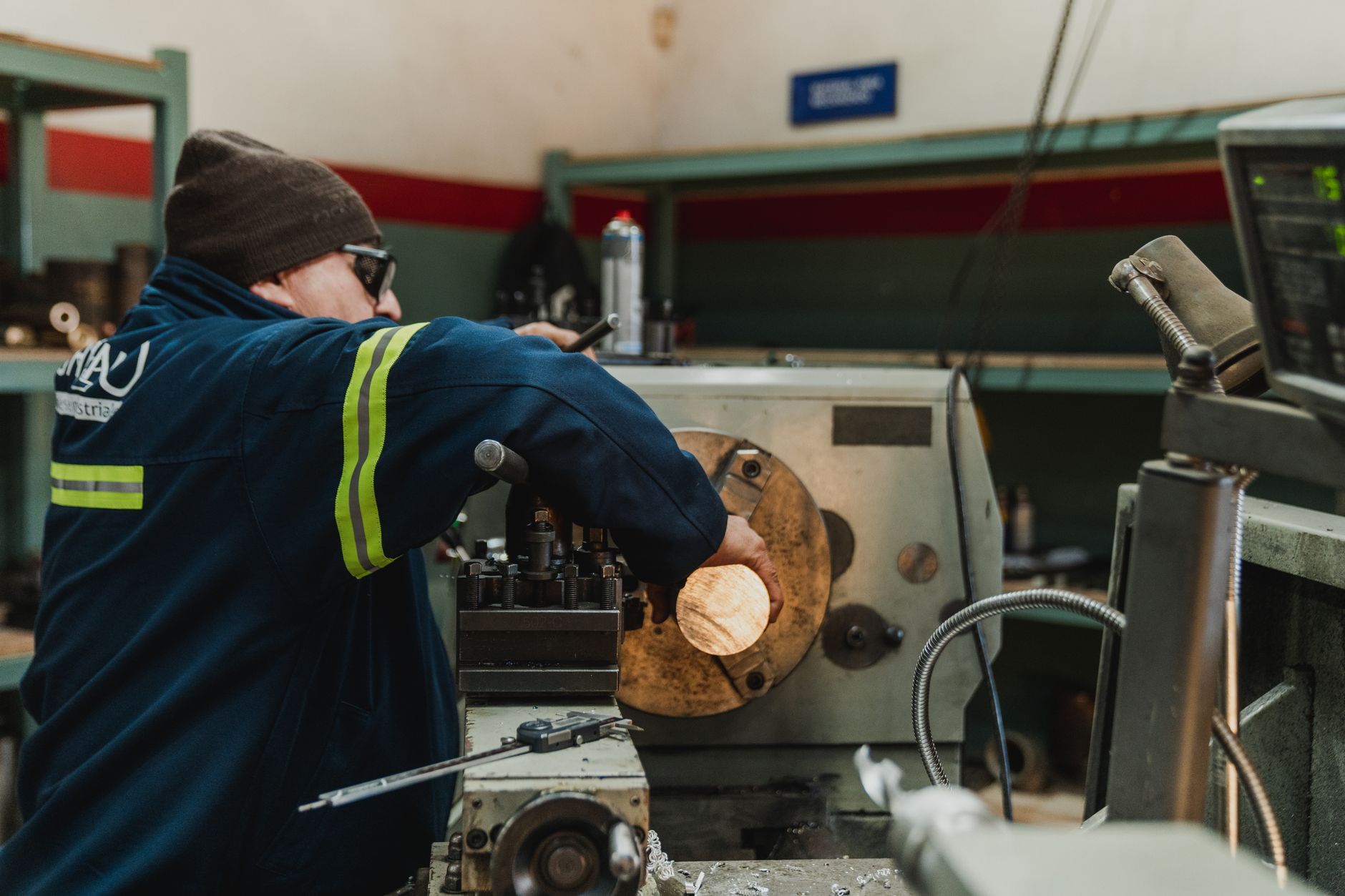
The Machinist Who Hid Behind A Mop
The Parts
The first test part came off the machine at eleven forty, twenty minutes inside my hour, and the shop’s quality inspector measured it twice before she said anything out loud, the way a careful person does when the number she is reading seems almost too good after a morning like the one we’d had.
“Two ten thousandths,” she said. “Dead in the middle of tolerance.”
Nobody cheered the way you might expect from a movie. What happened instead was quieter and, to me, better. Dallas let out a breath he had clearly been holding since he pulled that spindle cover. The lead engineer put both hands on the workbench and just stood there a moment, head down, in what I understood to be relief mixed with something like professional humility, the particular kind that comes from watching a problem you could not solve get solved by a method you would never have thought to try.
We ran nine more parts before the shift changed, all of them inside tolerance, all of them stacked and crated for the truck that would leave for the Quad Cities before six that evening. The account held. Sixty barrels, two hundred and sixty thousand dollars, and by my count, somewhere close to forty jobs that would have been at real risk come January if that contract had walked.
I will admit I felt something in my chest standing at that workbench I had not let myself feel in three years, not pride exactly, more like the quiet, solid feeling of a man doing the one thing he was built to do, after a long stretch of believing that part of his life was over for good.
The floor manager came and stood next to me while the last crate was being loaded onto the pallet jack. She did not say anything for a moment. Then she said the thing I remember best out of that whole day, better even than the fix itself.
“I told this whole shop I’d stand in the middle of the floor and say who found what my engineers couldn’t,” she said. “I meant to do it quiet, maybe just to you. But I think this deserves to be said the way I said the dare. Out loud, in front of everybody.”
Mr. Renke
Word travels fast on a shop floor, faster than it has any right to, and by the time the last barrel was crated, old Mr. Renke himself had come down from the front office, a man well into his seventies who still walked the floor most afternoons out of habit more than necessity, the same as his father had before him.
He did not know me by name before that day either, though it turned out he remembered my old shop, remembered a set of boring bars I had built for his own father back when I was not yet thirty, and he stood there a long moment looking at the test parts stacked on the pallet before he said anything at all.
“Dallas tells me you used to run your own shop,” he said to me. “Best in the county, he says.”
“It was a good shop,” I said. “It’s closed now.”
“So Dallas tells me that too.” He looked at the machine, then back at me, the way an old man looks at a thing he has decided about and does not intend to spend a long time explaining. “I don’t imagine a man forgets nineteen years of that kind of work just because he picks up a mop for a while.”
I did not know what to say to that, so I did not say anything.
What happened next, I want to describe carefully, because I do not want anybody reading this to think it turned into something it was not. Mr. Renke did not hand me a fortune. He did not put my name in any newspaper. He did not offer to buy back the shop I had lost or make me rich in front of a room full of people, and I would not have wanted any of that even if he had offered it. What he did was smaller, and to me it mattered more than any of those things would have.