The Machinist Who Hid Behind A Mop
The Sound I Knew Before I Should Have
The trouble was, I could not make myself stop listening.
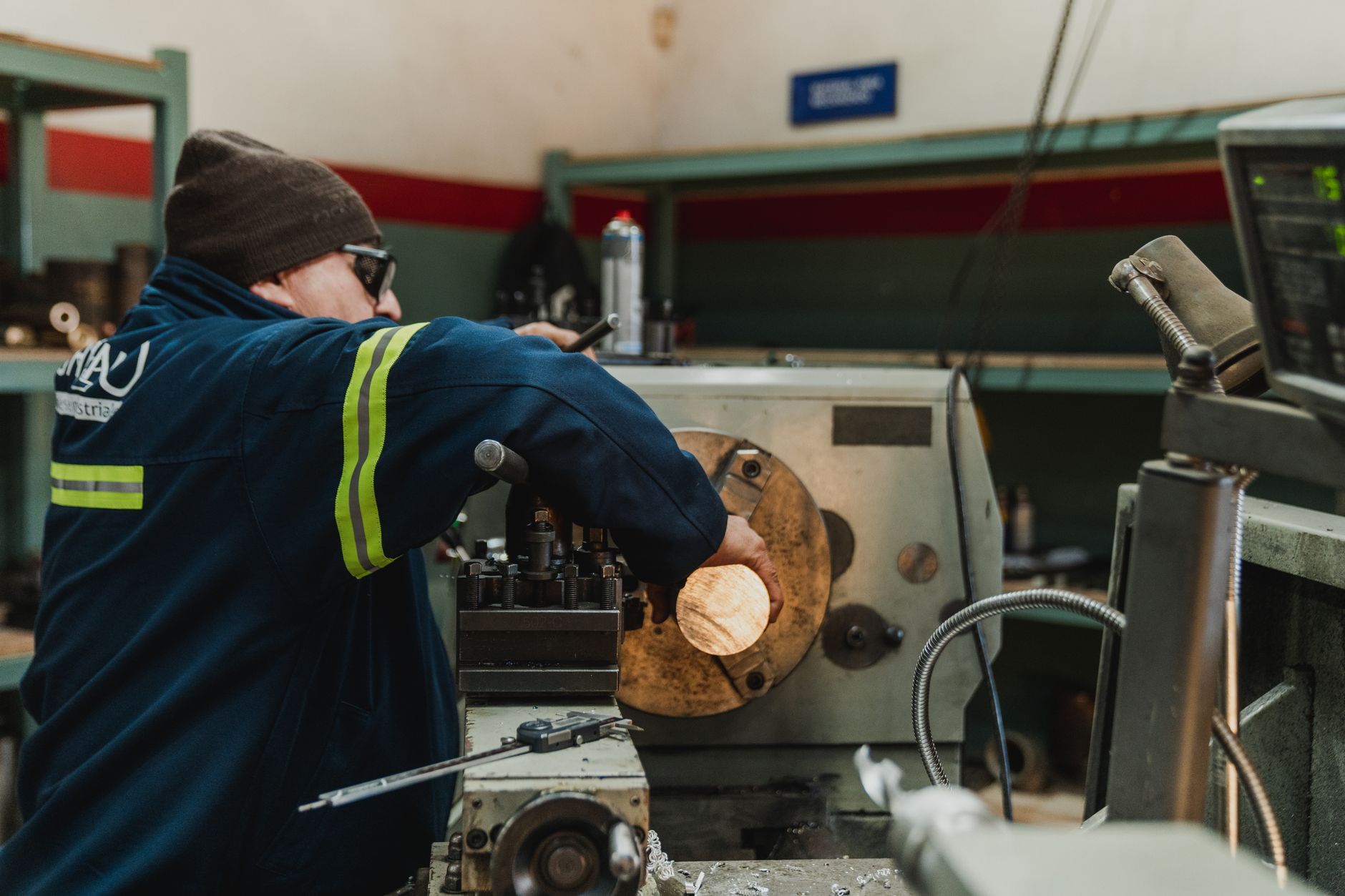
A boring mill that size runs a rhythm you can feel through the floor before you can hear it with your ears, a low steady breathing that any man who has stood next to one for two decades learns the way he learns his own wife’s footsteps on the stairs. This one had a hitch in it. Not loud. Not obvious to anybody who had not spent years listening for exactly that kind of hitch. But it was there, a fraction of a second of hesitation every time the spindle changed direction to start a new pass, and I would have bet everything I had left in the world that the hesitation was coming from the tool holder’s draw bar, not from any number typed into that control panel.
I had seen it once before, in my own shop, on a machine I had rebuilt myself out of parts from an auction in Bloomington. A worn collet seat lets the tool holder seat a few ten thousandths off true every time it re-engages, and the machine cannot tell the difference between that and a programming error, so it keeps hunting for a fix that does not exist in its own code. It is a mechanical problem wearing a software costume. I had spent four days chasing that exact ghost myself once, back when I still had a shop with my own name over the door and nobody to answer to but myself and the bank.
The two engineers moved on to checking the servo drive calibration next, which told me they were still hunting in the wrong direction entirely.
I do not know exactly what made me open my mouth. I have thought about it a great deal since, turned it over the way you turn over any decision that changes the shape of your life afterward, and the truest answer I have is that I heard my late wife’s voice in my head before I heard my own. Barbara used to say it to me on the mornings I dreaded going in to open my own shop, back when the work was hard and the money was thin and I complained about it over coffee like a man half my age.
“Whatever you’re doing, Conrad,” she would say, quoting something she’d had underlined in her Bible since before I met her, “do it like you’re doing it for the Lord and not for people.”
She said it about mopping floors the exact same way she used to say it about running my own machine shop. She never once treated the second job as smaller than the first, not even toward the end, when the medical bills made it plain which job was paying our bills and which one no longer could.
I set the mop against the wall, wiped my hands on my scrubs, and said, quiet, mostly to myself the way a man talks when he has not fully decided to be heard, “It’s probably the tool holder seat. Not the program.”
The shop floor is loud most hours of the day. That particular minute, between passes, it was not.