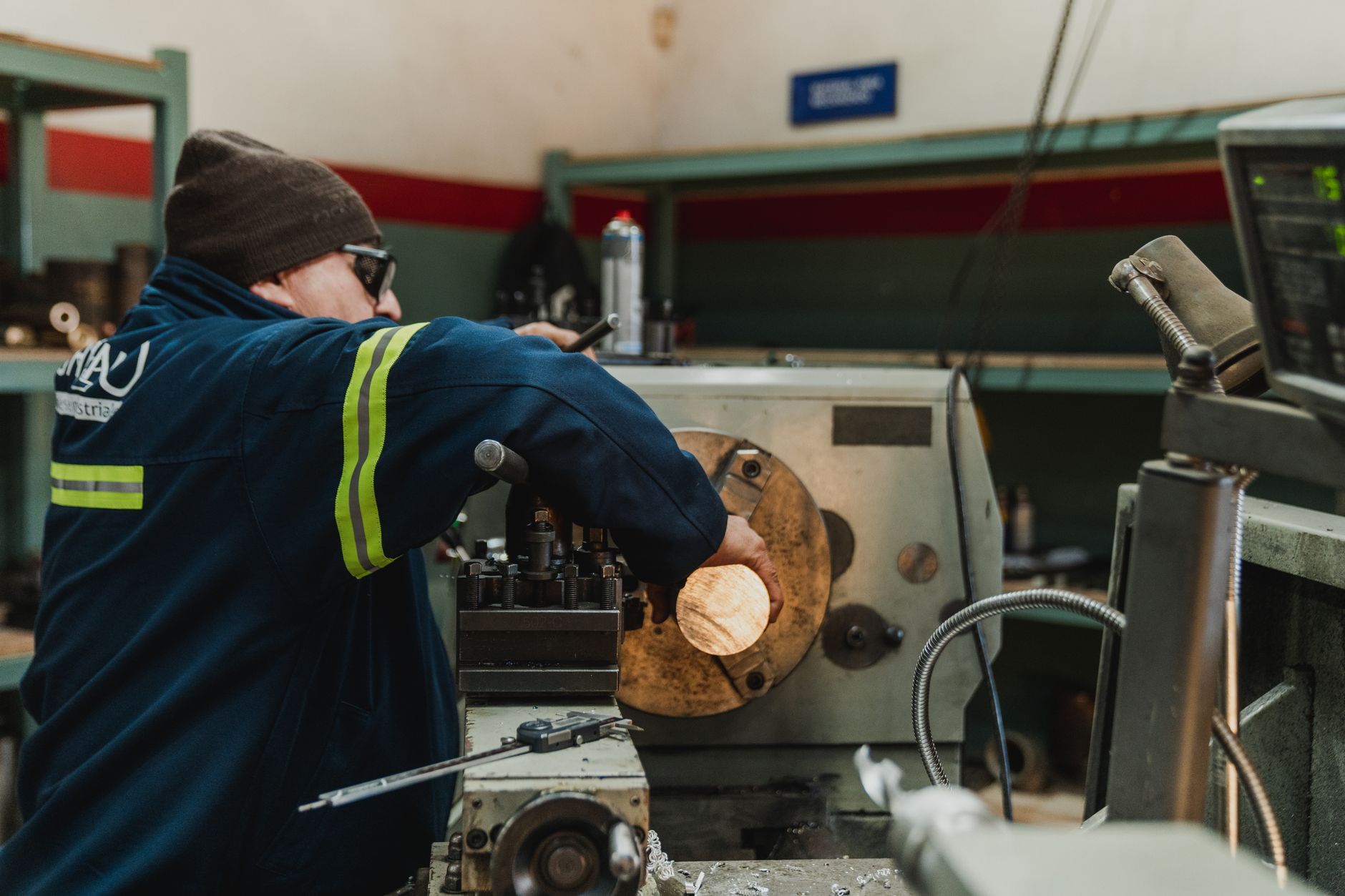
The Machinist Who Hid Behind A Mop
She turned around fast when I spoke. Her heels were loud on the epoxy floor.
“Excuse me?” she said. Her eyes went from my face down to the name stitched on my scrubs, then to the mop still leaning against the wall behind me. “Did you just say something about the tool holder?”
A couple of the younger machinists laughed, not unkindly exactly, more the reflexive kind of laugh a room lets out when something feels out of place. My face went hot the way it does when you are the only person in a room who has said the true thing and the room has already decided you could not possibly be right.
“I think it’s the collet seat,” I said, keeping my voice steady. “Worn draw bar. It’ll hunt like that right before it goes.”
The lead engineer, to his credit, did not laugh at all. He looked at the machine, then back at me, with the particular expression of a man who has run out of his own ideas and is too tired to be proud about where the next one comes from. But he did not say anything either, and in that silence, the floor manager made her decision.
“We are two hundred and sixty thousand dollars and eleven hours from losing this account,” she said, loud enough that half the shop floor turned to listen, “and my engineers, who I pay a great deal more than I pay you, cannot find it. You want me to believe you can, in the next hour, standing here with a mop bucket.”
“I didn’t say I could fix it in an hour,” I said. “I said I know what it is.”
She was quiet for a second. Then she said the thing that I believe she regretted saying almost as soon as it left her mouth, the thing that decided everything that came after it.
“Then prove it,” she said. “You get one hour with that machine. If you’re right, I will stand in the middle of this shop floor and tell every person in this building exactly who found what my engineers couldn’t. If you’re wrong, and you damage that spindle any further than it already is, I will have no choice but to let you go, and I am sorry, because I don’t want to do that to a man with a family. But I cannot afford to let pride, mine or yours, cost this company its biggest account.”
It was not cruel the way the shop rumor made it sound by the end of that week. It was a frightened woman drawing the only line she could think to draw, in front of a room that was watching her decide whether being fair meant being soft. I understood that even then, standing there with my hands still smelling of floor cleaner.
“One hour,” I said. “I’ll need the tool crib key, and somebody to pull the spindle cover.”