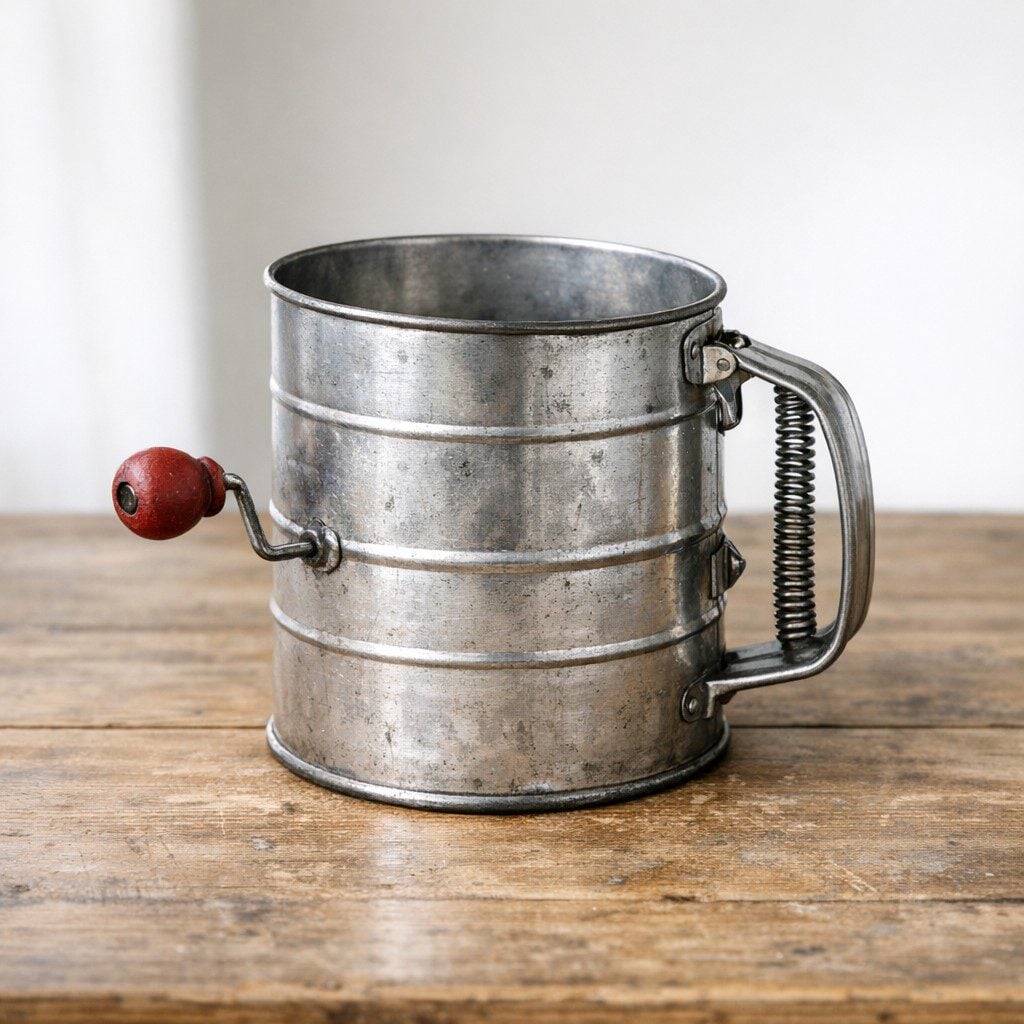
The Flour Sifter They Left Me
How I got the photograph back, and what Aunt Carol said
Aunt Carol came into the shop about two years ago. I had not spoken to her since Prewitt’s office, not really, just nods at the funeral home when somebody else died, which is how you keep track of your enemies in a small town.
She came in on a slow Tuesday and stood in the doorway a minute like she was not sure she was allowed, and then she came up to the counter, and she was older, we all were, and something had gone soft and defeated in her face that I took no pleasure in. She set a grocery sack on the counter.
“I was cleaning out,” she said. “I found some things of Mother’s. I thought you might want them.”
The photograph was on top, Della young with her ribbon, in its old frame, the glass a little dusty. Under it was Della’s rolling pin, the one with the red handles that matched the sifter, and a stack of index cards in Della’s own hand, church-supper recipes, not the crust, she never wrote the crust down, but her chicken and dumplings and her apple butter and her dinner rolls. Things I thought were lost.
I did not know what to say. Aunt Carol saved me from having to. “I heard you got the blue ribbon,” she said. “With her pie.” And then she said the thing I have turned over in my mind many times since. “You were the only one of us that paid attention to her. I want you to know I know that now. I am sorry it took me this long.”
I could have said a lot of things. I had rehearsed a lot of things over the years, in the truck, in the shower, the way you do. I could have reminded her that she was going to throw the sifter out. I could have told her about the initials scratched under the base, the D M H and the R A C and the word MINE, which I had never told a soul about. But I looked at that tired, sorry old woman who had lost her sister and her money and her way, and I heard Della in my ear, “Let them show you who they are, and then believe them,” and Carol was showing me somebody different than she had been, and I decided to believe that too.
So I poured her a cup of the coffee that is free for anybody old enough to remember Della, and cut her a slice of the sour cream raisin, and sat down across from her, and we talked for an hour about a woman we had both loved in our different ways, one of us badly and one of us well, and when she left she hugged me, and I let her.
I hung the photograph behind the counter that afternoon, next to the sifter. Della young and unsmiling, and her sifter, and her recipe cards, all together again in a place where her pie is still being made every single day. It is the closest thing to bringing somebody back that I have ever found.