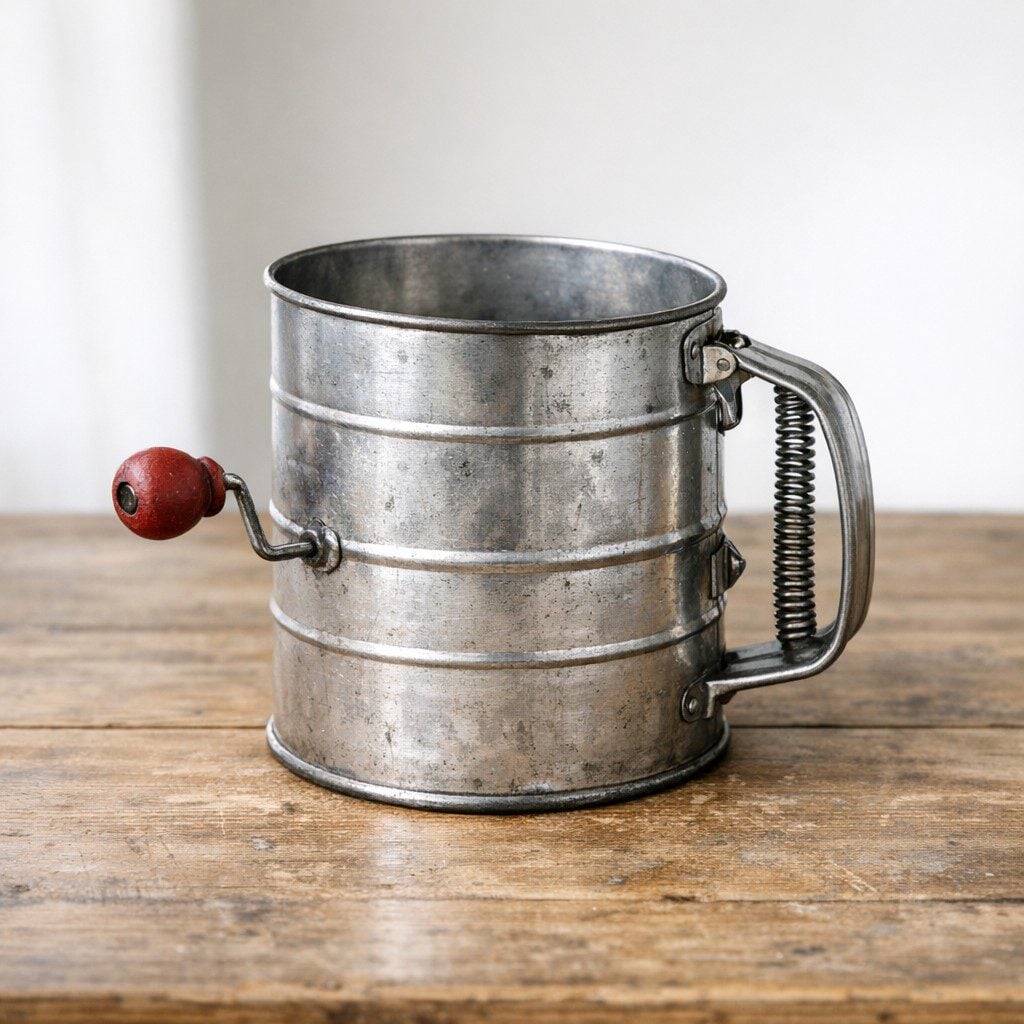
The Flour Sifter They Left Me
The list, read out loud
Prewitt was an older man himself, gentle, the kind of small-town lawyer who has drawn up wills for half the graves in the cemetery. He put on his glasses and read the will, and I watched my family’s faces do the arithmetic.
The farmhouse and the eighty acres it sat on went to Denise and Brett, split between them. That was the big one, good bottom ground that a man from an outfit down in Arkansas had already been sniffing around to buy, plus the house and the outbuildings. The savings, close to ninety thousand dollars that Della had squirreled away over a lifetime of never spending a dime she did not have to, went to Aunt Carol. The 1996 Buick, which ran like a watch, went to Brett. And on down the list, the good furniture, the good china, the quilts, the little bit of jewelry, all of it parceled out to Denise and Brett and Carol, the ones who had come around at Christmas with their hands out and their hearts closed.
I sat there and I waited for my name. I am not proud that I waited. I had told myself in the parking lot that I did not care about the money, and mostly that was true, but a person still wants to hear her name. A person still wants to know she was seen.
Prewitt cleared his throat and came to the last line, and I watched him wince a little as he read it, because he was a decent man and he could hear how it sounded.
“To my granddaughter Ruth Ann Calloway,” he read, “I leave my flour sifter.”
That was it. That was the whole line. Not the house, not an acre, not a dollar, not the photograph on the wall or the iron bed or the quilt she and I had pieced together the winter I was seventeen. A flour sifter. A dented tin thing you could buy at an estate sale for a quarter, if anybody wanted it, which nobody did.
The laughter I will never forget
There was a silence in that office, and then my cousin Brett laughed.
It was not a big laugh. It was worse than a big laugh. It was a short, surprised bark, the kind you let out before you can stop yourself, and then he tried to cover it with a cough, and Denise put her hand over her mouth, and Aunt Carol got a look on her face like she had smelled something and was too polite to say what.
“Well,” Brett said, “at least you got the important stuff, Ruthie.”
And Denise, who could never leave a thing alone, said, “Honestly, that’s kind of perfect. You’re the cook.”
The cook. Like the fifty years of biscuits out of that kitchen were a hobby I did in my spare time. Like the pies that had won ribbons and buried grandparents and married off half the county were a cute little quirk of mine, the way somebody else collects thimbles.
I did not say anything. That is the thing I want you to know about me, so you understand what came after. I did not make a scene. I did not tell them what I thought of them. I was raised by Della Hartley, and Della Hartley did not make scenes. She said, “A closed mouth catches no flies,” and she said, “Let them show you who they are, and then believe them.” So I sat in that chair with my face like a still pond, and I let them show me.
Prewitt slid a small cardboard box across the desk. Somebody had already been to the house, Aunt Carol probably, been through the kitchen deciding what was trash, and there it was, wrapped in a piece of newspaper, my whole inheritance. I took it in both hands. It was lighter than I remembered and heavier than it looked.
“You’re welcome to it,” Aunt Carol said. “Lord knows nobody else wants that old thing. I was going to throw it out.”