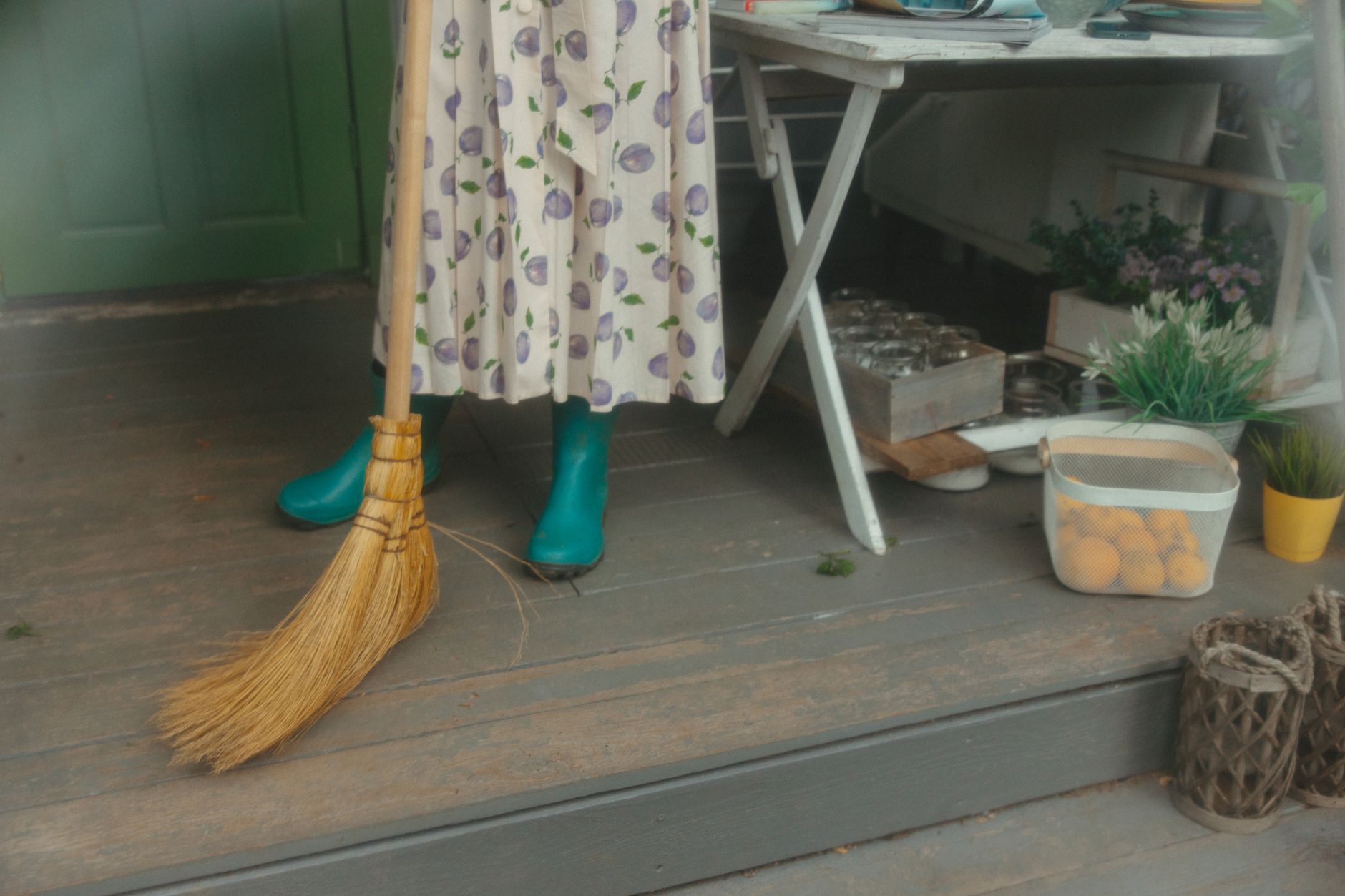
The Porch I Swept for My Neighbor
The first morning I swept Clifton Bartels’ porch, it was thirty-four degrees, and I did it in the dark so that nobody on Orchard Lane would see an old woman in a barn coat and her late husband’s work gloves pushing a broom across another person’s boards.
It was a Saturday in the first week of October. I had been awake since four, which is when I wake now no matter what the clock says. I had been lying there listening to the furnace tick and thinking about the porch next door.
I had been thinking about it for nine days.
I am seventy years old. I live alone in a white frame house on Orchard Lane, outside Cobden, Illinois, about twelve miles south of Carbondale, where the road runs between the apple orchards and the hills start to roll toward the Shawnee. My husband Vernon has been gone four years this March. My name is Lorraine Voelker, and I am not a bold person.
But I got out of bed that morning, and I put on my boots, and I carried the push broom out of my garage and across the frozen grass. Next door a man had just lost his wife, and his porch was telling the whole road that nobody was coming anymore.
The porch next door
Clifton and Roz Bartels had lived in the brick-and-clapboard house next to mine for forty-one years. They were there when Vernon and I bought our place. Roz came across the yard that first week with a loaf of zucchini bread and a pot of African violets, and she said, “I’m Roz, that’s Clifton, and that’s our dog, who doesn’t bite and isn’t any good at anything else either.”
Clifton had worked thirty-four years on the grounds crew at the university in Carbondale. He knew every tree on that campus by its Latin name and would tell you if you asked. He was a long, quiet man with big hands and a gray crew cut. He was seventy-four now.
Roz had played the organ at Cobden United Methodist for as long as anyone could remember. She was small, and she laughed with her whole shoulders. And every morning of her life, at six o’clock, she swept that porch. Vernon used to say the scratch of her broom was the day getting permission to start.
She had a wooden rocker out there and a wicker table with a lamp, and a row of mums in clay pots along the rail that she bought every September at the church sale. When I looked over from my own kitchen window, that porch looked like somebody lived there and was glad about it.
Roz died on the third Sunday in September.
It was her heart. It was quick, and it was at home, and Clifton found her in the kitchen when he came in from the garden.
The funeral was that Thursday. The whole church came, and half of Union County, and the Methodist women put on a lunch in the fellowship hall that could have fed an army. Their son Wendell flew in from Indianapolis with his wife and stood beside his father the whole service, one hand under his elbow. I sat in the fifth pew and could not sing the hymns, because Roz was not at the organ, and nobody had told my ears.