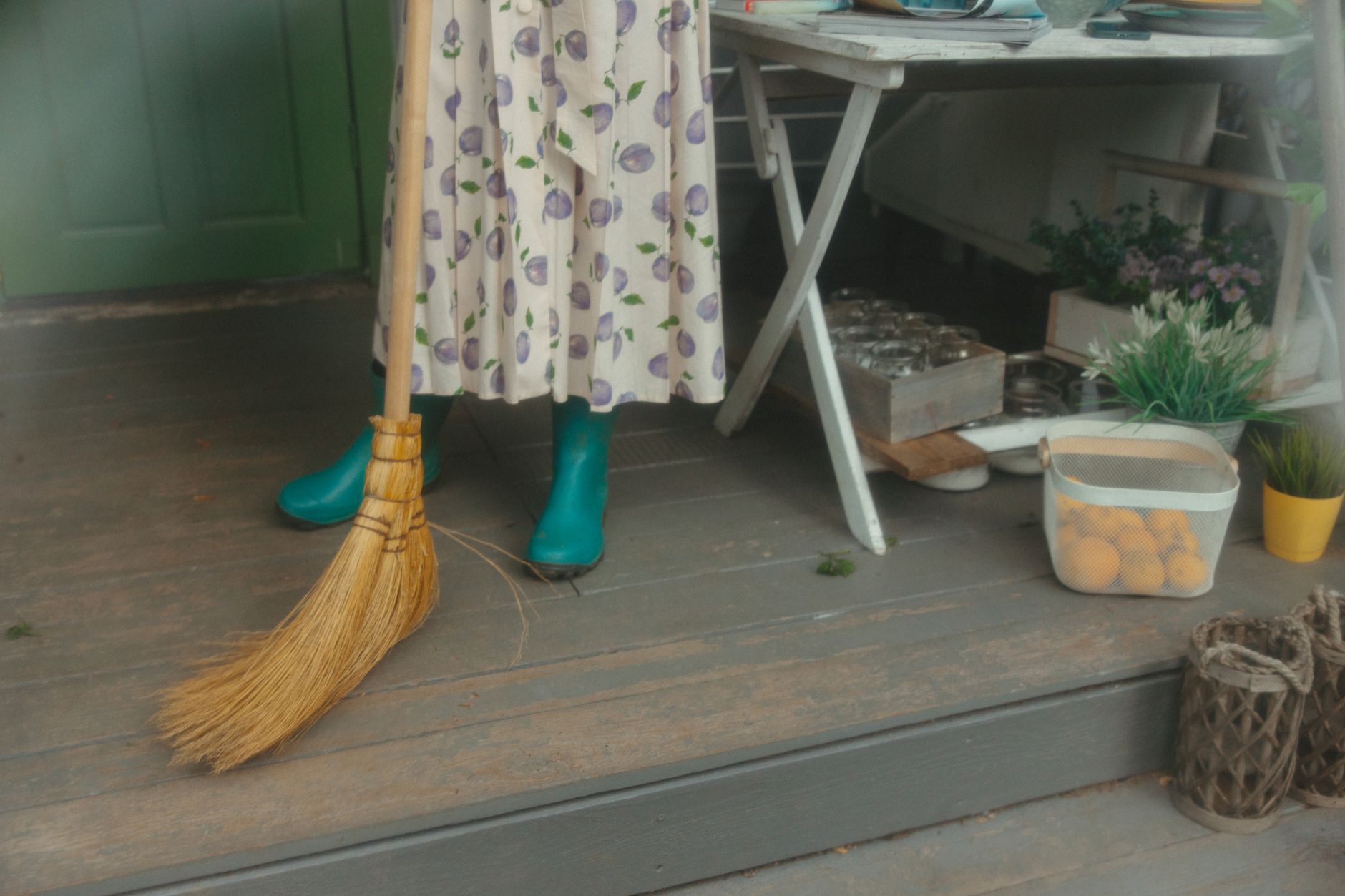
The Porch I Swept for My Neighbor
Nine days of dishes
For the first nine days the porch looked like a church basement.
Women came with casseroles. A ham in foil. A pound cake. Two tuna noodles, which I say with love. Dishes with the owners’ names on masking tape.
They stacked up on the wicker table and spilled down onto the boards. Men in good jackets stopped and shook his hand through the screen. Cars lined the gravel shoulder.
Then one morning there was nothing but leaves.
From my kitchen window I watched his porch lose its date. The Carbondale paper stayed in its plastic sleeve until the sleeve went cloudy. The mail began to pile on the wicker table, and the wind took the top envelopes and scattered them on the lawn. His truck did not move, and the front room curtain opened a hand’s width in the morning and closed in the evening, which was how I knew he was alive.
But a casserole comes with a stopping date, and nobody tells you that, and nobody can help it. People have their own kitchens and their own families. The dish gets collected, the card gets written, and everybody goes back to their lives with a clear conscience. The house goes on being a house where someone used to live.
Nobody sets a date for the grief. It just keeps its own calendar.
And Roz’s mums, which were so yellow on the day of the funeral, started to go brown in their pots, because nobody watered them.
I knew that porch. That was the thing. I knew what it was saying, because mine had said the same thing four years before.
What my own porch said
Vernon carried the mail for thirty-one years. Rural Route 3, out of Cobden, in a Jeep with the steering wheel on the wrong side. He knew every dog and every mailbox between the orchards and the lake. He died in March of four years ago, in the hospital in Carbondale, of the sort of long sickness that gives you time to say everything and still leaves you with nothing to hold.
For nine days my porch was full too.
Then it stopped. I remember the exact morning. I opened the door to take in a dish somebody had left, and there was just the dish, and nobody on the steps. The mail carrier, who was not Vernon, put the bundle on the rail and not in the box, because the box had a bent flag that Vernon always meant to fix.
I went back inside, and I sat down at the table, and the house got very loud.
A house that two people lived in for forty-six years has a hum to it, the sound of somebody else being in the next room. When the hum stops, the quiet has weight. I understood that the world had finished being kind to me, and I was going to have to do this part alone.
I did not clean the porch that spring. I ate toast for supper and let the weeds grow up through the steps, and I told myself it did not matter, because who was looking?
But here is a strange thing, and I think about it more than I would admit to anyone. My porch did not stay dirty.
Every Tuesday for two months, after that first bad week, I would come out in the morning and the boards would be swept. Clean. Leaves gone, cobwebs gone, the mail I had left in a heap squared up on the rail.
I assumed it was Vernon’s nephew Troy, who lives over in Anna and sometimes mows for me. I never asked him. I did not want to find out it was somebody else and have to be grateful out loud. I told myself it was the wind, which is a ridiculous thing to tell yourself, but grief makes you ridiculous. Then in May it stopped, and by then I had started to sweep it myself, a little, on the days I could, and I did not think about it again.
That was my porch. And it was the sight of Clifton’s, forty feet across the grass from my kitchen window, going gray and quiet in exactly the same way, that got me out of bed that Saturday.