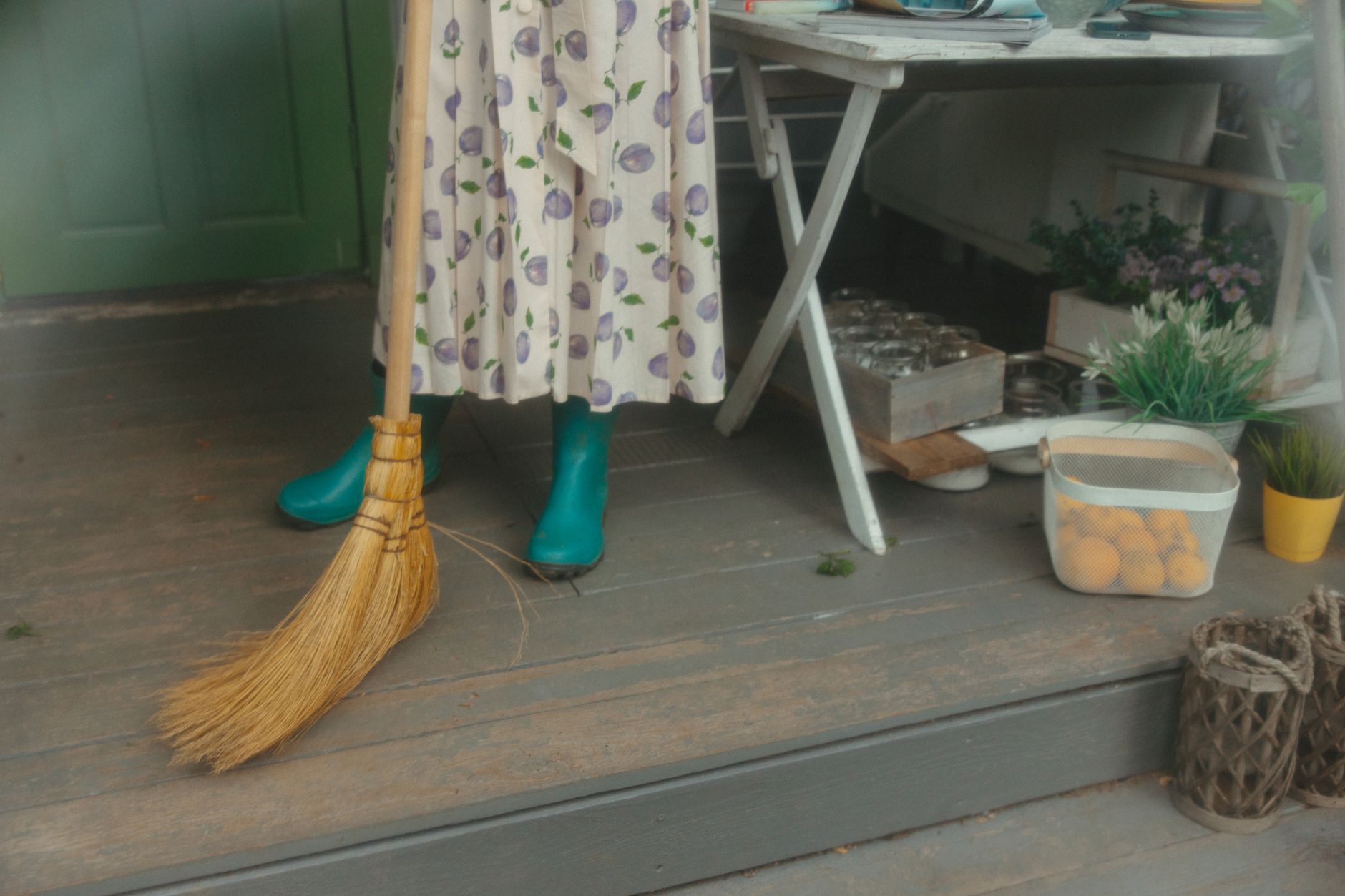
The Porch I Swept for My Neighbor
I did not knock. That was the decision, and I had made it in the kitchen, and I stuck to it.
Clifton Bartels is a proud man. When his tractor broke down, he spent a week fixing it with a book before he would ask a neighbor. If I knocked, he would have to come to the door in his slippers with his grief all over his face and be polite about it, and I did not want him to have to be polite.
I wanted him to have to do nothing at all. I wanted a plate of hot supper to be there, and then not be there, and no one owing anyone.
I went home. I ate my own supper at the table by the window, with the light on his house showing yellow across the yard. I did not see the door open. I washed my dishes and went to bed.
At ten minutes to six the next morning, I went out with the broom, and the plate was on the rail.
Washed. Dried. Stacked, with the second plate on top of it, folded inside the towel. Empty, and clean enough to eat from.
There was no note.
I stood and looked at it for a good while in the cold. Then I tucked it under my arm, and I swept the porch again, though it did not need it, and I went home and made another meatloaf.
How it went
That was the shape of it.
At ten minutes to six, I swept. In the evening, I carried a plate across the yard. In the morning, I found it washed and empty on the rail, and I took it home and filled it again.
I did not make it fancy. Pot roast on Sunday, chicken and dumplings on the cold days, ham and beans, pork chops with fried apples. Nothing with a name.
I swept through the first frost. I swept through a week of steady rain in the middle of October, standing under Vernon’s big golf umbrella with the broom in one hand, and the water ran off the porch roof in a sheet behind me like a curtain. I swept on a Sunday when my knees said no, and I did it anyway, and sat down on his top step afterward until the shaking stopped.
Every morning the plate was on the rail.
Every morning, empty.
I never saw him. I want to be plain about that. In all that time, I never once saw Clifton Bartels’ face. His curtain would move, sometimes, a hand’s width in the front room window. His truck sat in the drive and never started. A light would be on in the kitchen at odd hours, once at three in the morning when I was awake with my own thoughts.