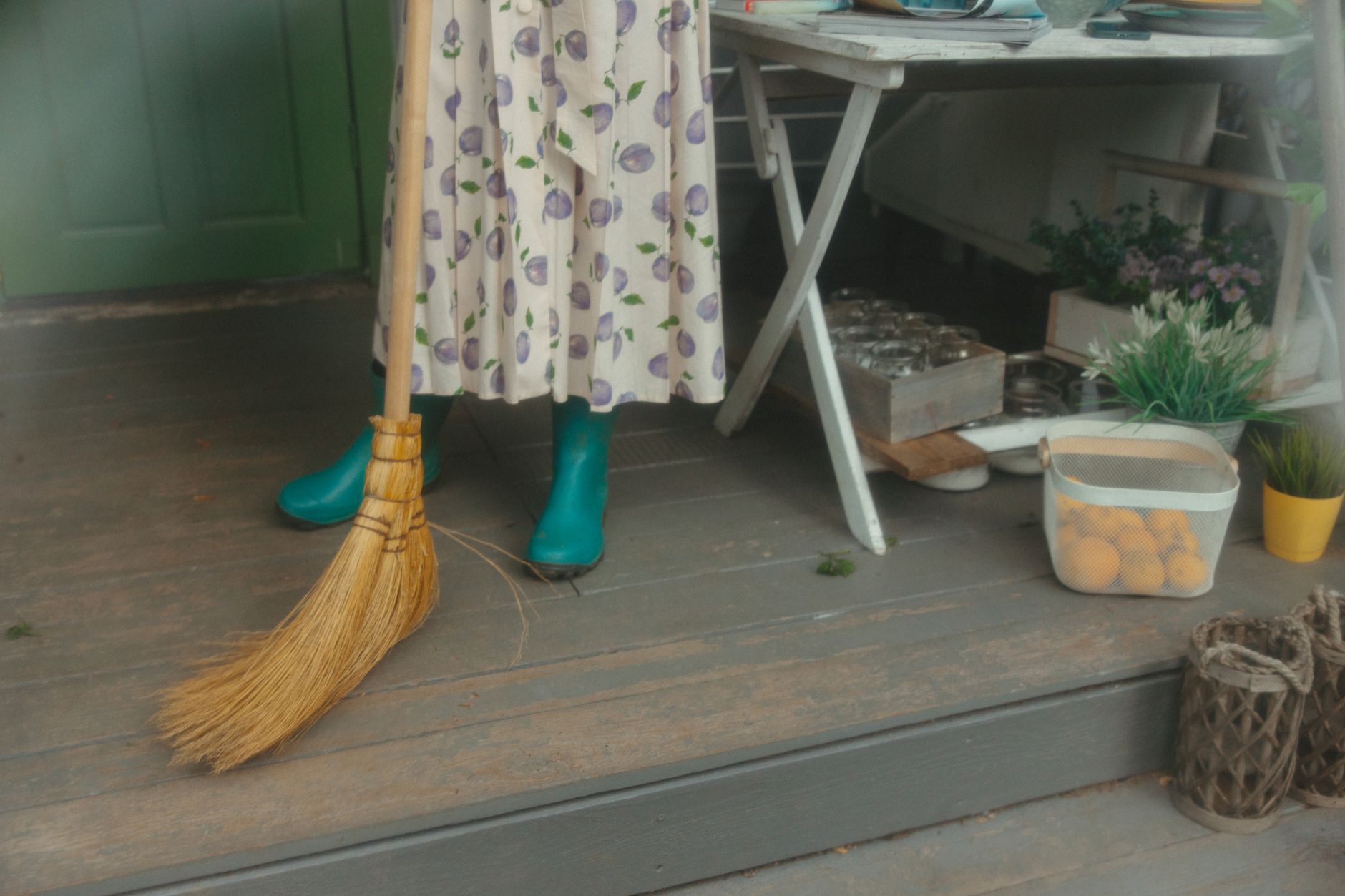
The Porch I Swept for My Neighbor
“Four years ago. After Vernon.” He said it quietly, watching my face. “Every Tuesday morning for nine weeks, before you were up. She got Wendell’s old push broom out of our shed, and she went over there at half past five, and she swept your porch, and she was back in our kitchen before you ever put on the coffee.”
The frost was melting off the rail beside my knee. I could hear it dripping. I watched one drop gather and fall.
“She told me she saw it from the window,” Clifton said. “She said, Clifton, there’s a woman over there whose man carried the mail for thirty-one years, and nobody has touched her steps. She said she knew what it was like. She’d lost her sister. She said the porch is what the world sees, and it ought not to look like nobody loves you.”
“She never said a word,” I said. My voice was not steady.
“She made me promise. She said if you knew, you’d have to thank her, and you’d have had to do it in the worst weeks of your life. She said the best kindness is the one that can’t be paid back. So I never told. I carried it for four years.” He wiped his face again, openly this time, and did not hide it. “I wasn’t going to tell it now either. But then I heard the broom.”
Tuesdays. For nine weeks. And in May it had stopped because I had started to do it myself.
“I thought it was Troy,” I said at last. “I thought it was the wind.”
“I know,” Clifton said. “She thought that was the funniest thing.”
And we sat there on his porch in the cold while the sky went from black to gray to the pale color of dishwater, and I would like to tell you that we said some great and wise thing, but we did not. Mostly we were quiet. I handed him the soup, because it was getting cold, and he took it in both hands.
“You’ll want to eat that before it sets,” I said.
“Yes, ma’am.”
“There’s cornbread in the tin.”
He looked at the tin. Then he laughed, one short surprised laugh, the first I had heard from him since September, and he said, “Roz would have paid money to see this. The two of us out here at six in the morning, talking about cornbread.”
“Roz would have been in the kitchen,” I said, “telling us both to come inside.”
“She would,” Clifton said, and his voice caught, and he pressed his lips together hard and looked at the orchard until it passed.