The Harvest the Neighbors Brought In
I did not decide to pull over. My hands did it for me.
The Mercury went crooked onto the gravel shoulder, and I put it in park and sat there with both hands on the wheel and the window down. Dust was coming in. It smelled like cut corn and hot machinery and diesel, and under all of it, faintly, like pork roast, which made no sense until later.
Our field was moving.
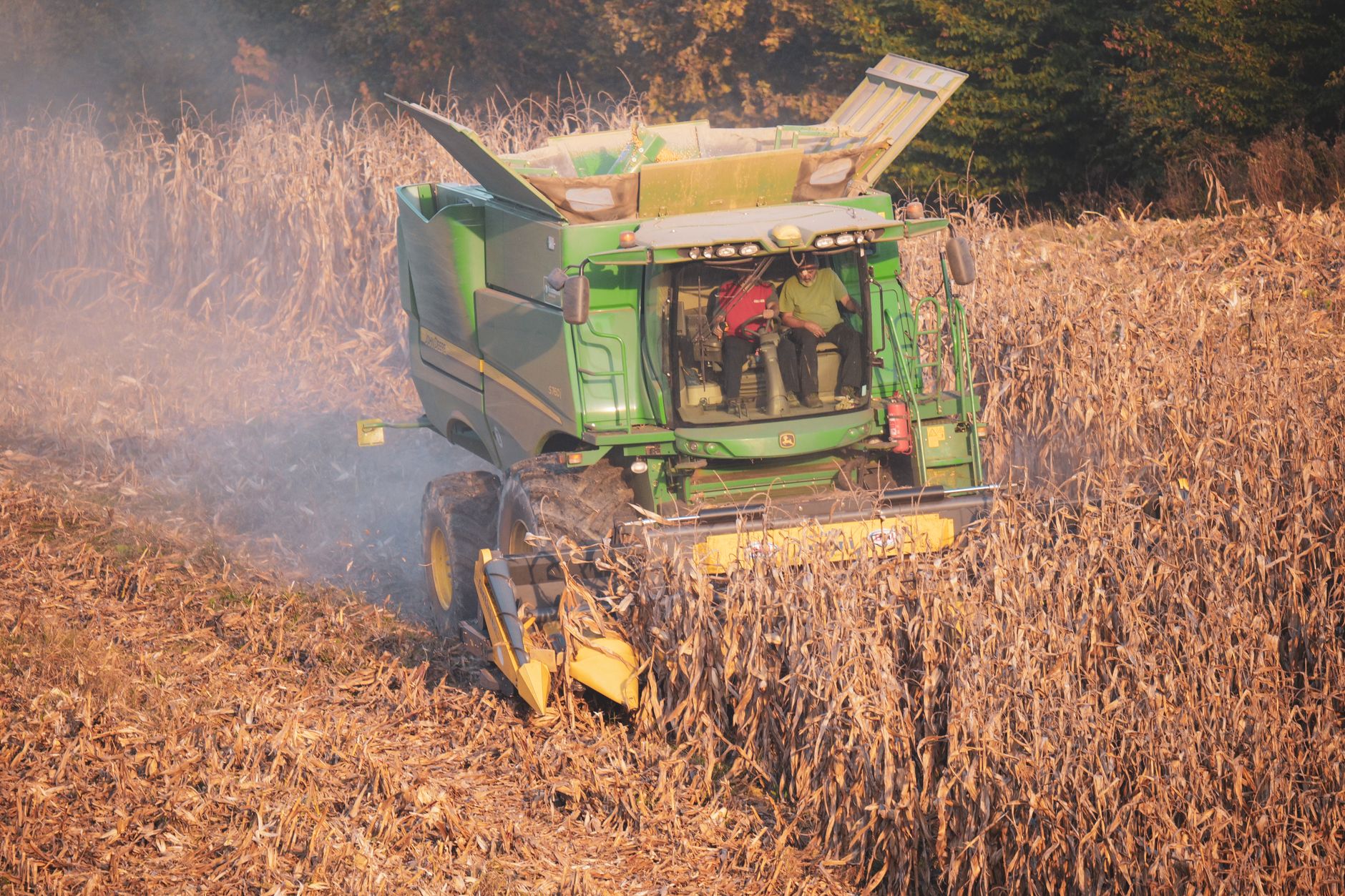
That is the only way I can say it. Two hundred forty acres of Gordon’s corn, standing a week past ready, and now four combines were working across it side by side like geese in a V. Every one of them was wider than anything my husband owned. Beside each combine ran a tractor pulling a grain cart, and down along the section road a line of semi trucks sat nose to tail with their flashers going, waiting their turn.
Gold dust hung over the whole thing. The sun was coming through it sideways.
I had slept perhaps five hours in two days, most of it upright in a vinyl chair. I had sat in a hospital chapel at four o’clock that morning, and I had driven an hour home with the window cracked so I would not nod off. I think I said something out loud on that shoulder. I think it was Gordon’s name.
I left the engine running. I do not know why that is the detail I remember.
I should tell you how I got to that shoulder, because it matters.
My husband is Gordon Hostetler. He is sixty-seven years old and he has farmed the home place outside Dedrick, in Polk County, Nebraska, since he was nineteen, and for forty-two of those years he has been married to me. He is a quiet man. He is not a talker and he is not a hugger, but he is the kind of man who will drive to the other end of the county at ten at night because you mentioned your mother’s furnace was making a noise.
That fall the corn was late. The spring had been wet and we had planted the last of it in the middle of May, and by the first week of October the stalks were still a little green around the middle. Gordon walked out to the east field every evening, snapped off an ear, shucked it, thumbed a kernel, and walked back with his mouth set.
“Another week,” he said, every evening. “Maybe less.”
On the second Sunday of the month he sat through church with his hand pressed flat against his breastbone. I thought it was heartburn. He said it was heartburn. Pastor Rooney’s sermon was on the loaves and the fishes, and I remember I was a little bored with it, and I remember that I looked over at Gordon during the last hymn and he was the gray of a dishrag.
“Gordon,” I said, quietly.
“Heartburn.”
“Gordon.”
“Arlene, it is heartburn.”
We drove straight past our own lane and on to the hospital in Lincoln, an hour down the highway. He did not argue, and that is how I knew it was bad.