The Harvest the Neighbors Brought In
I said, “Keep Gordon with me, and that is the main thing.”
I said, “But if You have got any room in Your day for a field of corn, I would be obliged. Don’t let it stand in the snow. Don’t let him come home to a ruined crop with his chest sewn up and nothing he can do about it.”
Nothing answered. I did not expect it to. At five the nurse came to find me. At seven the surgeon came by and said Gordon was stable and waking, and that I should go home, take a shower, and sleep four hours in my own bed, and then come back.
“He is going to be sore and grumpy,” the surgeon said. “That’s a good sign.”
I went.
So there I was, on the shoulder, with the engine running and the whole thing too big to take in.
A pickup came down the road behind me and slowed. A gray Ford, mud to the door handles. The window came down and it was Irvin Sheets, who farms the place three miles south of us and who is seventy-three years old and has not been seen to smile at anything but a rain gauge since the eighties, when the bank took half the township.
He was smiling.
“Arlene,” he said.
“Irvin.” My voice came out thin. “Irvin, what is this?”
“Looks like harvest,” Irvin said.
“I didn’t call anybody.”
“No, ma’am,” he said. “I don’t expect you did.” He nodded up the road. “Go on in. He’s waiting on you.”
“Who is?”
But he only touched his cap, and the window went up, and the Ford pulled around me and headed on toward the farm lane. I found out later that Irvin, who had finished his own corn on Saturday, had been driving a grain cart since half past six that morning, and had only gone out for a gas can.
I turned the engine off. I got out, and I walked down our field road in my good church shoes, through the lane Gordon keeps mowed for no reason anyone has ever been able to explain.
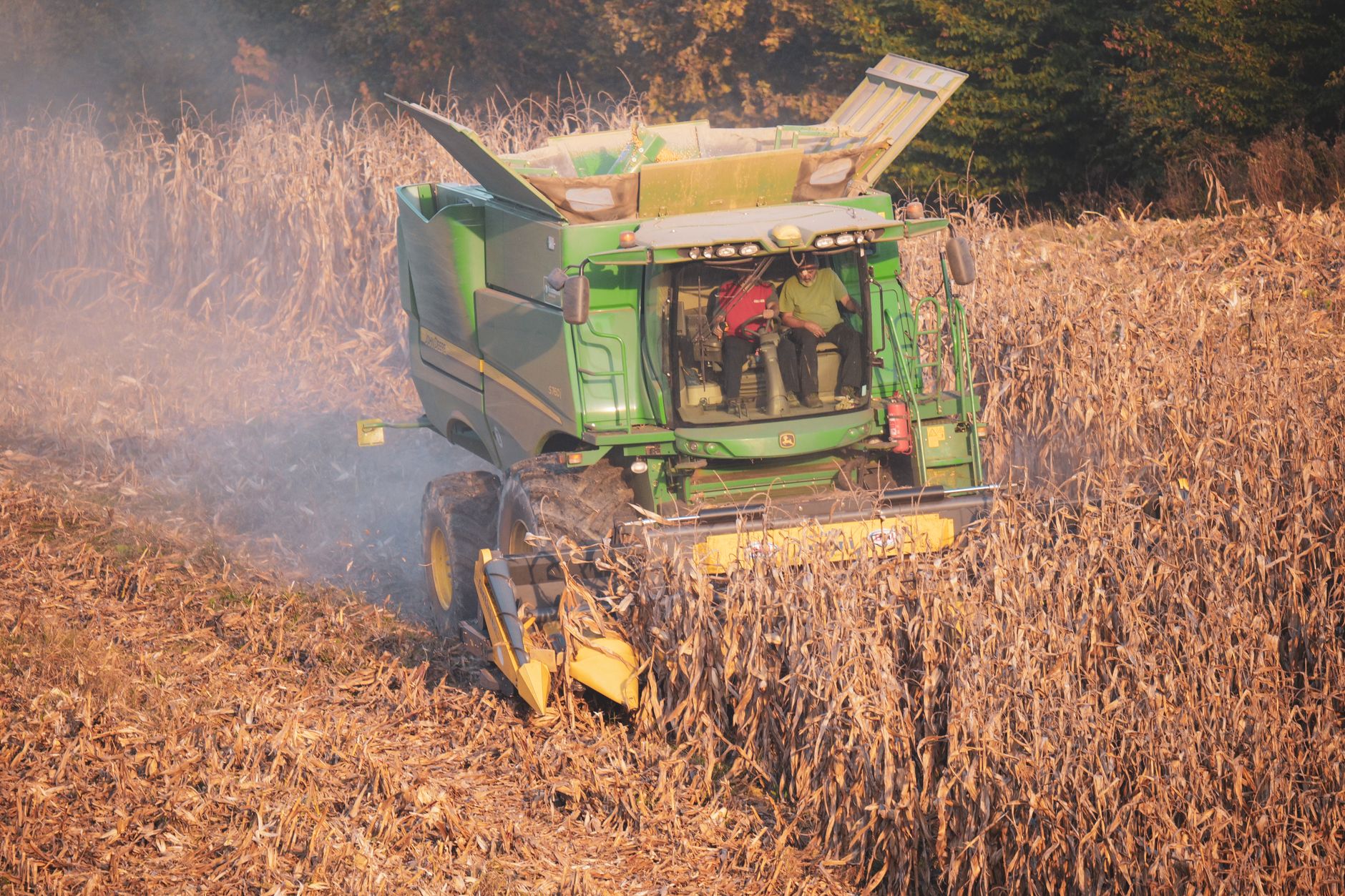
The noise got bigger. You do not know how loud a combine is until you are walking toward four of them. It is a deep working roar with a rattle in it, and the corn pouring out the spout into the cart in a long gold rope. Chaff came down on my shoulders like a light snow. A grain cart went by, close, and the boy driving it, who could not have been more than seventeen, lifted one finger off the wheel at me as if I were someone passing on the county road.
The nearest combine slowed. The engine dropped. The header stopped turning, and after a second the whole big machine settled into a hum.
The cab door opened.
A man came down the ladder one rung at a time, the way a man does when he has been up since four. He took his cap off when he reached the ground. He was maybe thirty-five, with a sunburned neck and dust in his eyebrows and the line of his sunglasses pale across his face.