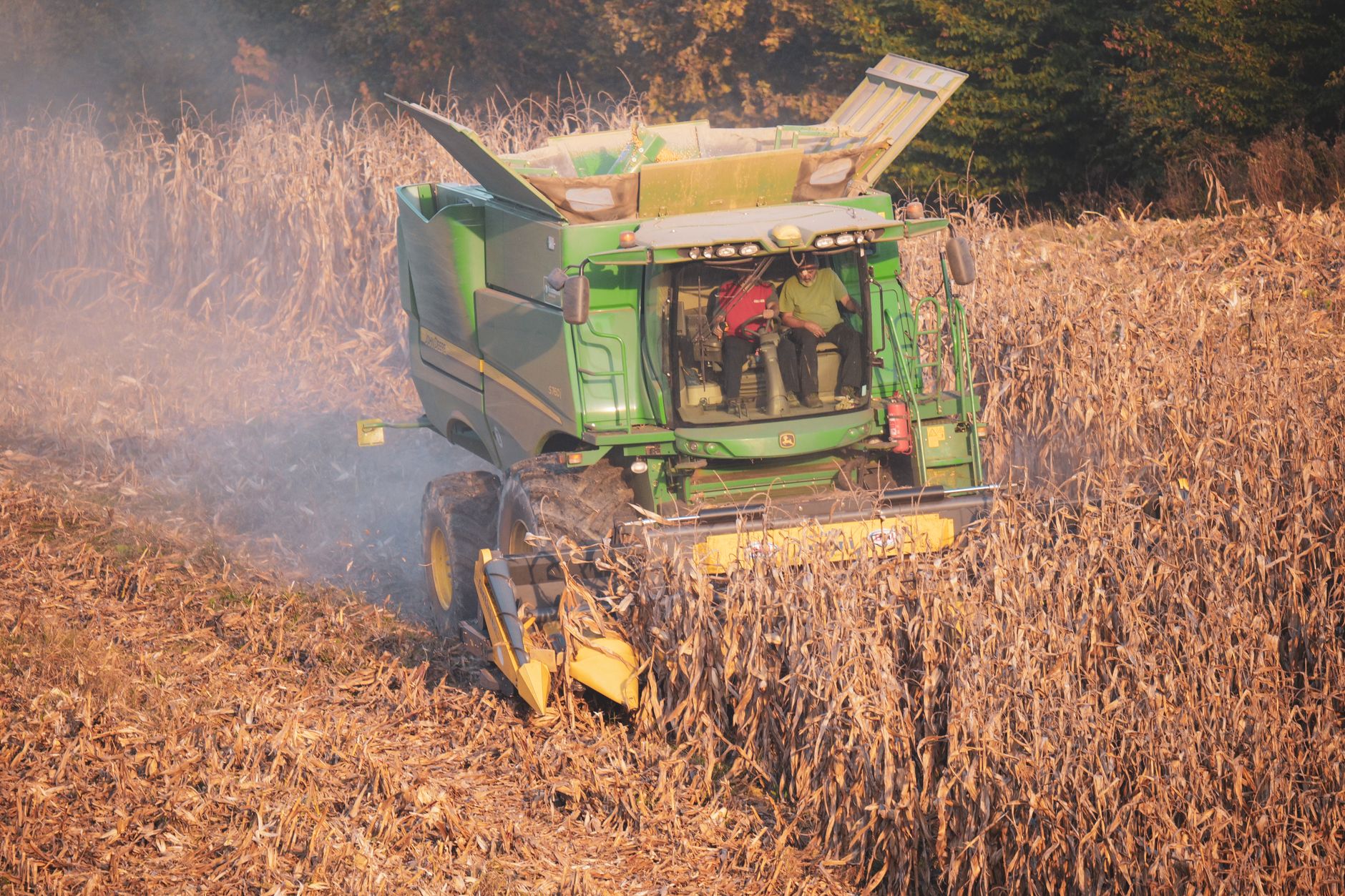
The Harvest the Neighbors Brought In
They kept him Sunday night. On Monday morning a cardiologist with kind tired eyes drew me a picture on the back of a clipboard sheet. Three of the arteries were nearly closed and the fourth was worse. He said the word bypass the way you might say the word rain on a day you had planned a picnic, gently and without apology.
“How soon?” I said.
“This afternoon,” he said. “If it were my father, this afternoon.”
So that was how fast it went.
They let me walk beside the gurney as far as the double doors, a little after one. Gordon looked small under the paper gown, and his big farmer’s hands, so brown on the backs and so pale in the palms, lay open on the blanket like he had forgotten what to do with them.
I took one. I said, “I’m right here. I’ll be right here the whole time.”
He looked up at the ceiling tiles going past. Then he turned his head to me and said, very clearly:
“Arlene. The corn.”
I wish I could tell you I was gracious about that. What I did was laugh, one short ugly laugh that came up out of me before I could stop it, because forty-two years of marriage, and a man about to have his chest opened, and the last thing he said to me through those doors was about a field.
A nurse touched my arm. The doors swung shut.
I stood there in a hallway that smelled like floor wax, and then I started to shake.
They had said four hours. It was closer to seven.
I sat in the waiting room with a packet of peanut butter crackers in my fist and did not open it. Somewhere in there, because I am my husband’s wife and some things rub off, I started doing the math on the corn.
We had two hundred forty acres. Gordon’s combine was an old eight-row machine he had babied for fifteen years. Alone, most days, he got through thirty acres. It had always taken him ten days to two weeks, with our son-in-law driving over from Omaha on weekends and me running the lunches. This year our son-in-law was in a hospital bed of his own, having his gallbladder out, and our daughter Julie had her hands full with him and the baby. She said she would come Wednesday.
And then there was the sky. The man on the radio that morning had said rain Thursday, with wind behind it, a front coming down out of the Dakotas. I knew what that meant. Corn that has stood too long gets brittle at the stalk. A good wind will lay it flat. Once it lies down, a combine picks up half of what it should, and the ears that drop in the dirt are just gone. I had watched it happen to a neighbor in a bad year. It is a sad thing to see a man walk his field in November, picking up ears by hand.