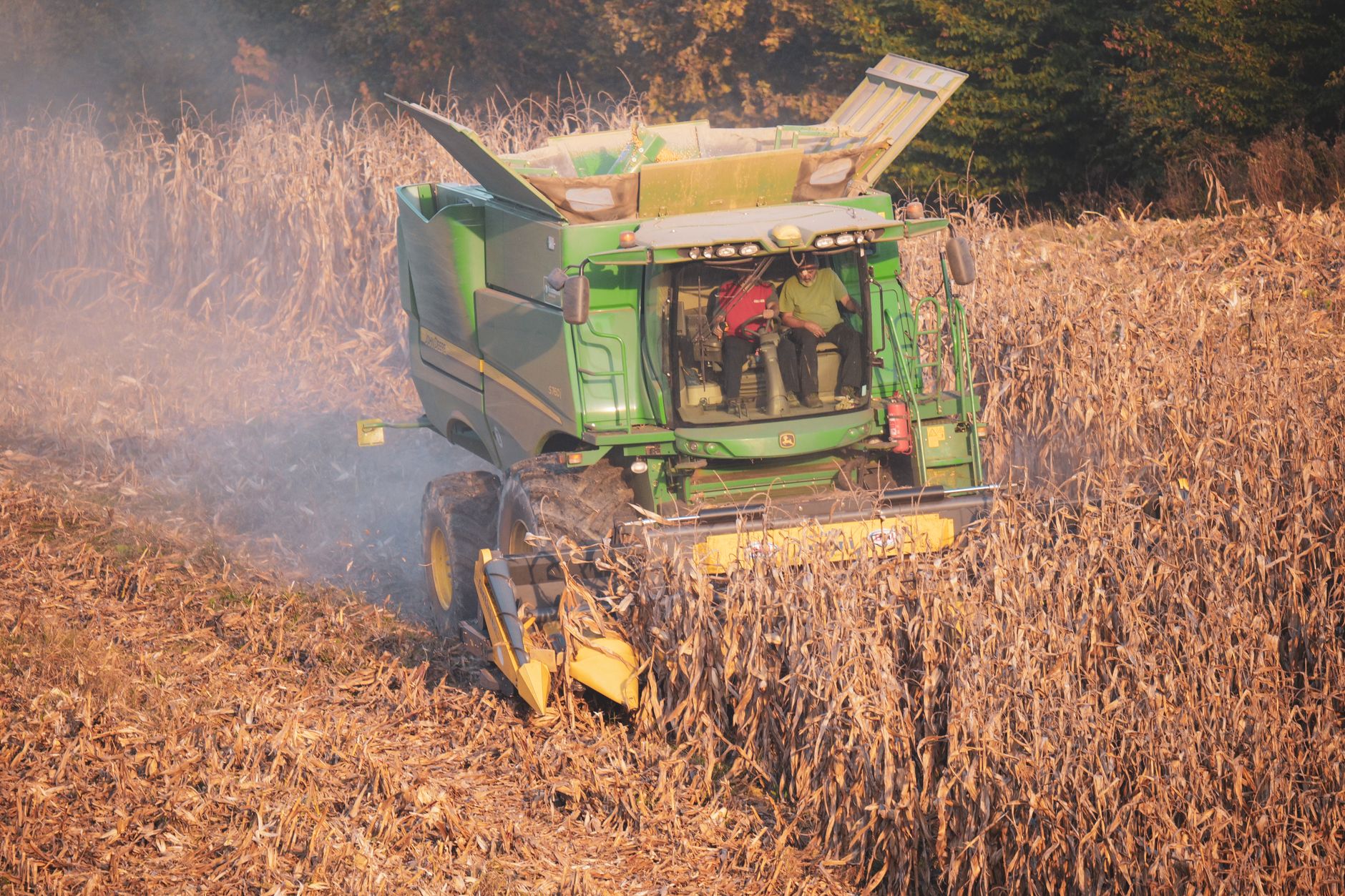
The Harvest the Neighbors Brought In
I knew him. I had known him since he was a skinny boy in a church Christmas pageant, standing in the back as a shepherd with a bath towel on his head. Nathan Weiss. His people farm two miles north of us, on the old Weiss place. I knew his wife, Amy. I knew he had a daughter who sold Girl Scout cookies at the co-op.
His eyes were red. It was not the dust.
“Mrs. Hostetler,” he said. “Before you say anything.”
“Nathan, I don’t understand. Did Quinn send you?”
“Quinn told me you called him,” he said. “That’s all Quinn did.”
He stood there turning his cap in his hands. The combine hummed behind him. I could see the other three still working across the rows, a quarter mile off, and the dust going up from them gold.
“I’ve been carrying something around since last night,” he said. “I wasn’t sure I’d get to hand it to you. I thought maybe I’d have to hand it to him, and I didn’t know if he’d be well enough.”
He put his hand in his shirt pocket.
What he took out was folded small. It was a piece of paper gone soft and yellow, creased so many times that the folds had turned the color of weak tea. He unfolded it with a care I felt in my chest, and he held it out to me, and his hand was shaking.
It was a grain ticket. When you haul a load of corn to the elevator, they weigh the truck coming in and going out, and they hand you a slip of paper that says what you brought. Moisture, bushels, the date, whose account to put it in. Ours are in a shoebox above the freezer, going back forty years.
This one said October 2004. The account name was Dexter Weiss.
I knew that name. Dexter was Nathan’s father. He had been a big, loud, laughing man with a barn full of cats, and he had died when Nathan was twenty-one, and I had sat in the back row at that funeral beside Gordon, who did not say one word the whole day.
“I don’t understand,” I said.
“Turn it over,” said Nathan.
I turned it over. There was handwriting on the back, in pencil, in the flat blunt hand my husband uses for seed orders and the feed bill. It has written every grocery list I have ever sent him to the store with.
It said: Lorna. For the boy’s boots. Say nothing. G.
I read it twice.
“That was 2004,” Nathan said, quietly. “I was fourteen. My dad had his first stroke on a Friday in the first week of October, right at the end of the afternoon. He was out in the machine shed. My sister Carrie found him.”
I remembered that fall in pieces. The prayer chain and the casseroles. Gordon coming in late every night that week, standing at the sink eating a sandwich with his coat still on, and me saying, “Where on earth have you been?” and him saying, “Helping out the Weisses a little.” A little. That was the word he used.