The Harvest the Neighbors Brought In
A woman my own age sat in a lawn chair at the end of the table with a quilt over her knees. She had Nathan’s chin. When she saw me, she put both hands on the arms of the chair and began to push herself up, and the woman beside her said “Lorna” in the scolding voice that means the same as sit down, and she did not sit.
Lorna Weiss. I had last seen her at the Fourth of July picnic, across a potato salad, and we had said hello the way you do.
“Arlene Hostetler,” she said. “Come here to me.”
I went. She took both my hands in hers. Her grip was good.
“Did he show you the ticket?”
“He did.”
“It’s been in the drawer with the church directory for twenty-two years,” Lorna said. “Under the rubber bands. I’d take it out every so often to see it was still there.” She looked past me at the combines. “I bought him the boots. Brown ones, with the thick soles. He wore them to school and to chores and to church, all that winter and the next. The soles came right through. Your husband never told me why he did it, and I never asked, and I have prayed for that man every night since.”
“He never said a word to me about any of it,” I said.
“That’s Gordon,” said Lorna.
I ate two plates of pork roast, standing up, with my elbows on the tailgate. I thanked a great many hands.
Around two o’clock Macy brought her wagon over for a refill, and she looked at me for a while, the way children do, without apologizing for it.
“Daddy says Mr. Hostetler’s corn is the cleanest in the county,” she said. “He says Mr. Hostetler taught him all of it.”
“Did he,” I said.
“Is it okay that we’re doing it?” said Macy. “Nobody asked us.”
“It’s okay,” I said.
She nodded, as though that settled something, and went off down the field edge with the wagon rattling behind her.
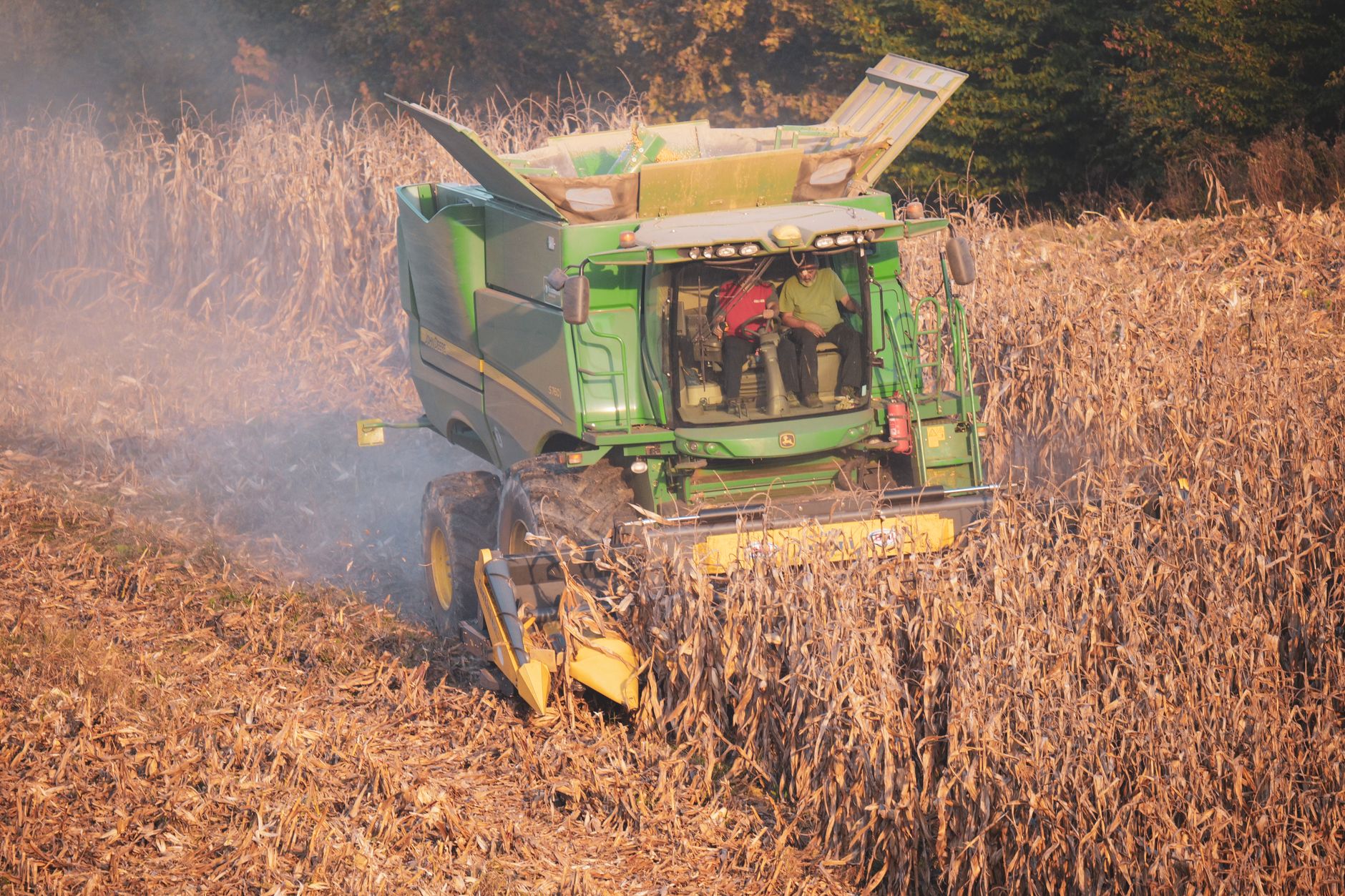
I stayed by the windbreak a long while. Out in the field, a long row of stalks was falling into a header, one after another, and behind the machine lay the stubble, pale and combed, in rows that went to the fence line. Gordon had worried about those rows every night of the summer. These people I barely knew were carrying them in.
The last load went across the scale at twenty to eight that night, under the lights. I was standing at the end of the field lane with Lorna’s quilt over my arm, because she had insisted, and I watched all four combines work their way down to the last standing strip together, side by side, the way geese come down onto a pond.