The Harvest the Neighbors Brought In
He turned his cap around once more.
“I’ve been waiting a long time, Mrs. Hostetler. Then yesterday afternoon Quinn Fehr called me about a bale of straw, and he said in passing, ‘Hostetler’s wife just called me, booked through the twenty-ninth, I couldn’t help her.’ And I stood in my own kitchen. I knew what that was.”
“What it was?”
“What I’d been waiting for,” he said.
He had made fourteen phone calls between three o’clock and supper. He wrote them on the back of a feed-store envelope, and I have seen that envelope since, because Amy kept it.
He called Irvin Sheets first, who was done with his corn and had a grain cart. He called Jim Sheridan, who had a sixteen-row combine and ninety acres of his own still standing. Jim said, “Nathan, I’ve got rain coming Thursday.” Nathan said, “I know. Me too. I’ve got a hundred and ten standing.” Jim was quiet a good while. Then Jim said, “Well. We’ll have to be quick, then.”
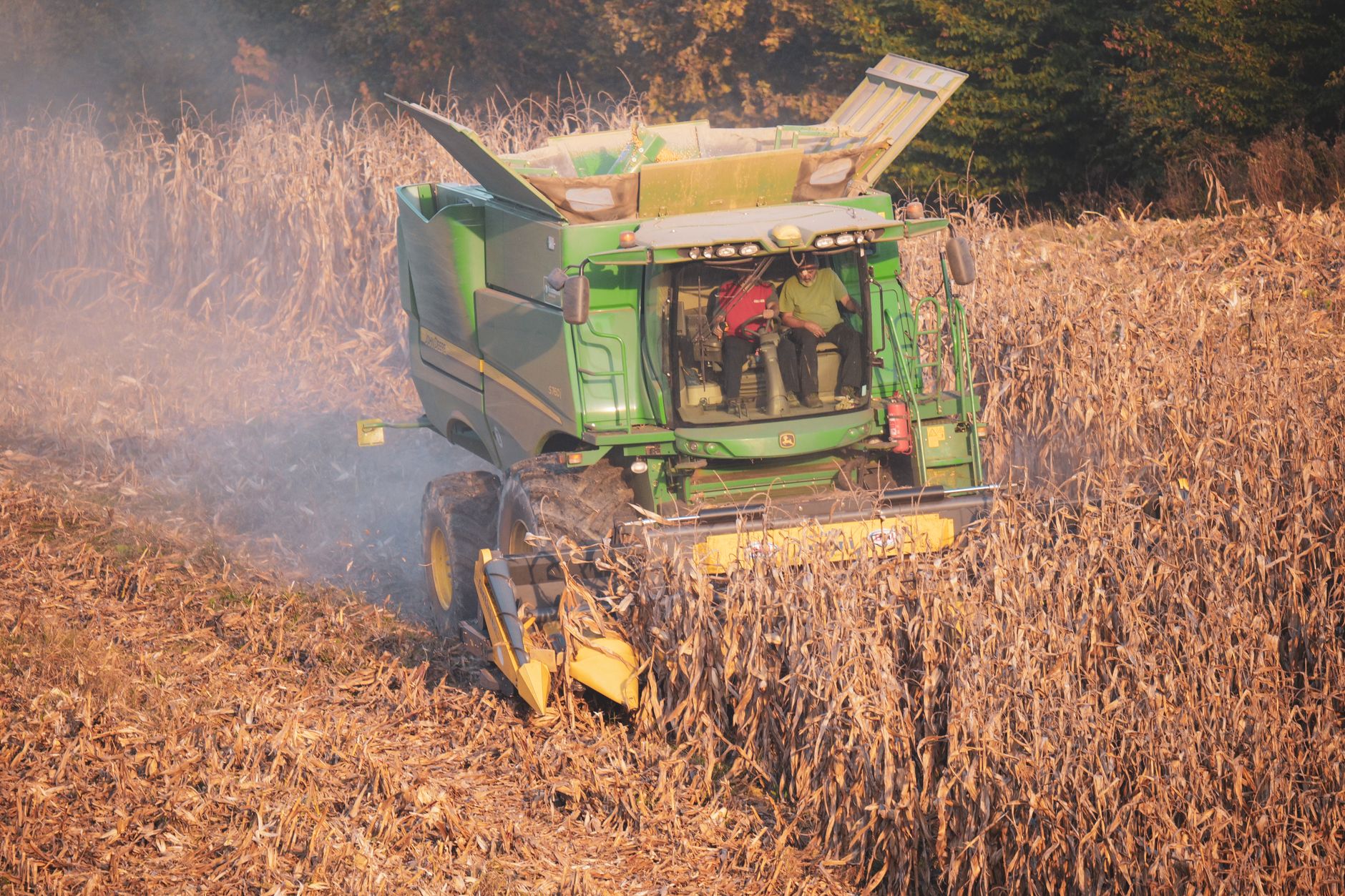
That was how it went. Every man had his own corn out, or part of it, and every man said some version of the same thing, and then said he would come. A dairyman from over by Shelby who had never met Gordon in his life came because his father had once spoken well of him. Three men from the church brought their trucks. The co-op opened the scale line early and sent a man out with coffee. Someone’s wife called someone’s wife, and by the time the sun came up on Tuesday, a thing had happened that nobody had planned, which is how the best things happen in a place like ours.
Pastor Rooney had come out at half past six with his Bible. The men took their caps off at the edge of our field, in the cold, and he prayed for Gordon and for me, and then he prayed for the weather.
“He asked for no rain till Thursday,” Nathan said. “In so many words. He said we were not going to tell the Lord how to run His sky, but we would be grateful.”
I did not laugh. I thought of the chapel, and the pew, and what I had said there to nobody, and I held on to the tire.
“Come eat,” he said at last.
I said I could not. He said it was not a request. “There’s a roast,” he said. “My mother would not hear otherwise.”
At the end of the field lane, where the gravel widens by the cedar windbreak, someone had backed a pickup in with its tailgate down and set up one long folding table with white paper on it, held at the corners with canning jars. That was where the pork roast smell was coming from, out of two roasters plugged into a generator. There were buns, and a pan of kolaches, and green beans in a slow cooker, and a case of cold bottled water. A girl of nine in a coverall cut down to fit her was walking the field edge with a red wagon, handing water up to the drivers when they stopped to unload. That was Nathan’s daughter, Macy. Her ponytail was full of chaff.