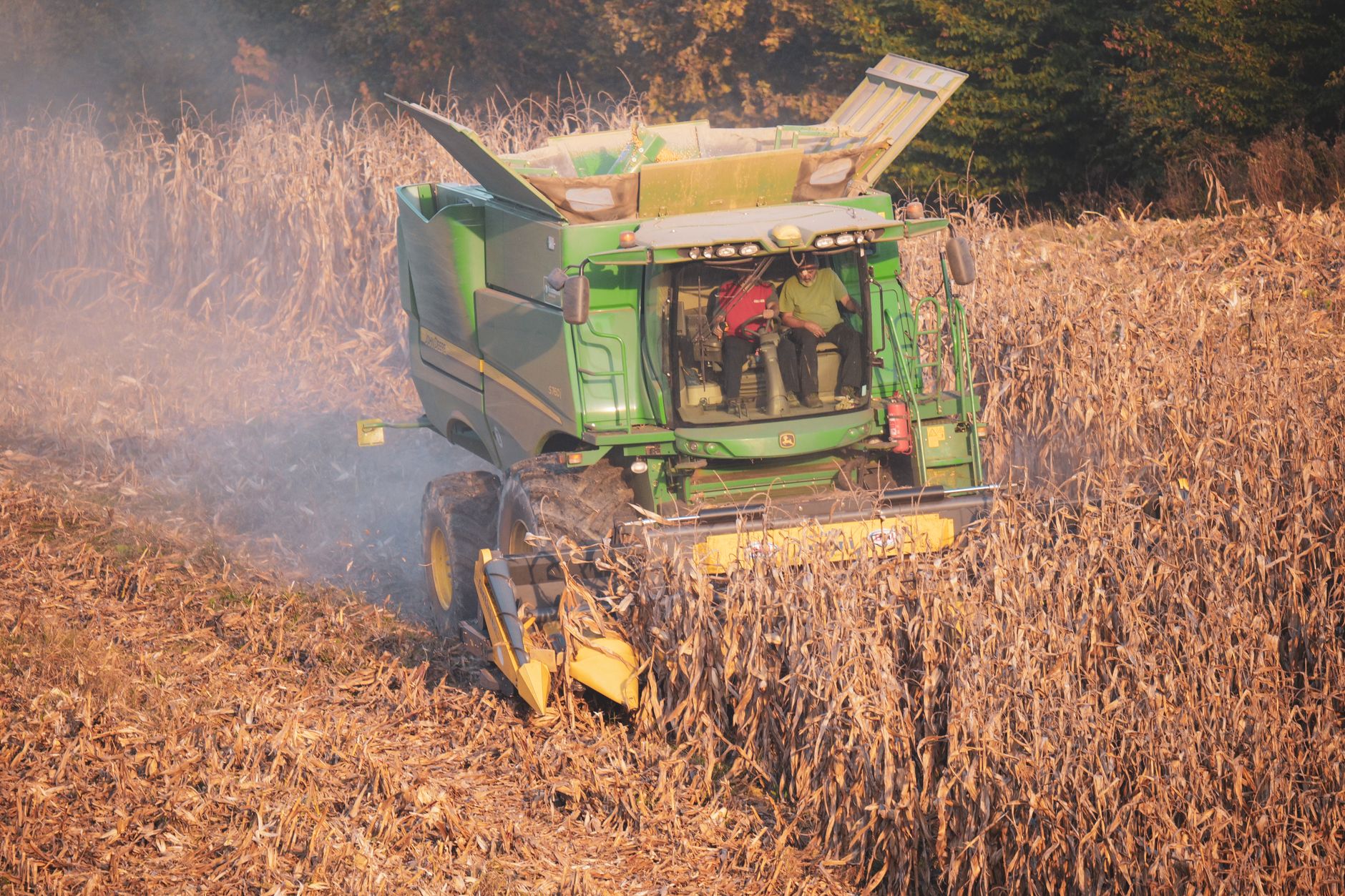
The Harvest the Neighbors Brought In
When the final stalks went in, the machines cut their engines one at a time. It was very quiet. I could hear a killdeer somewhere in the dark, and the click of cooling metal, and a man laughing at the far end of the line.
Nobody cheered. They climbed down. They shook hands. They stood around the tailgates with paper cups of coffee and talked about the wind. Jim Sheridan and his boys were gone before the dust had settled, back to their own ninety acres with the lights still on the combine, because the rain was still coming and nothing had changed for them.
I tried to pay for the fuel. I pulled my checkbook out at the end of the lane, and Irvin Sheets put one big hand over it, and said:
“Arlene, put that away. You’ll shame us.”
“Irvin, there has got to be something.”
“There’s a man in Lincoln who needs to sit down for a month,” he said. “See to that.”
I put the checkbook away.
I drove back that night, an hour in the dark, with the radio off. It was past nine when I got to his room. They had moved him out of recovery to a regular floor, and he was propped on two pillows with a heart-shaped pillow clutched to his chest, which I had been told to make him use whenever he coughed. His color had come back a little. He looked old and sore and cross.
“Where have you been?” he said. “I called the house. Nobody picked up.”
“I was busy.”
“Doing what?”
I sat down on the edge of the bed. I took his hand. It was the same hand, brown on the back and pale in the palm.
“Gordon,” I said. “Your corn is in.”
He blinked.
“All of it. Two hundred forty acres. It’s in the bin and the rest went to the elevator. First loads ran a hundred ninety-eight.”
He said nothing for a very long time. Then he said, in his careful dry way, “Who ran my combine?”
“Nobody ran your combine. They brought their own.”
“Who is they?”
“Irvin Sheets,” I said. “Jim Sheridan. The dairy people from Shelby. Pastor Rooney said a prayer. Nathan Weiss.”
Gordon turned his head on the pillow and looked at the wall.
“Nathan set it up,” I said.
“Did he set the concaves right?” my husband said hoarsely.
“Gordon.”
“Well, there’s a way to do it. In corn that wet.”
“I think he knew the way,” I said.
I took the folded ticket out of my pocket and put it in his palm and closed his fingers over it.
He looked at it. He knew it at once. He turned it over, and he read his own handwriting from twenty-two years ago, and his mouth worked.
“I didn’t do it for this,” he said.
“I know you didn’t,” I said. “That is the whole trouble with you.”
He laughed. It hurt him, and he said “Oh” and grabbed for the pillow, and I held his shoulder while he coughed. When he got his breath back, he lay with his eyes closed and the ticket still in his fist.