Two Hams for Grandma’s Wake
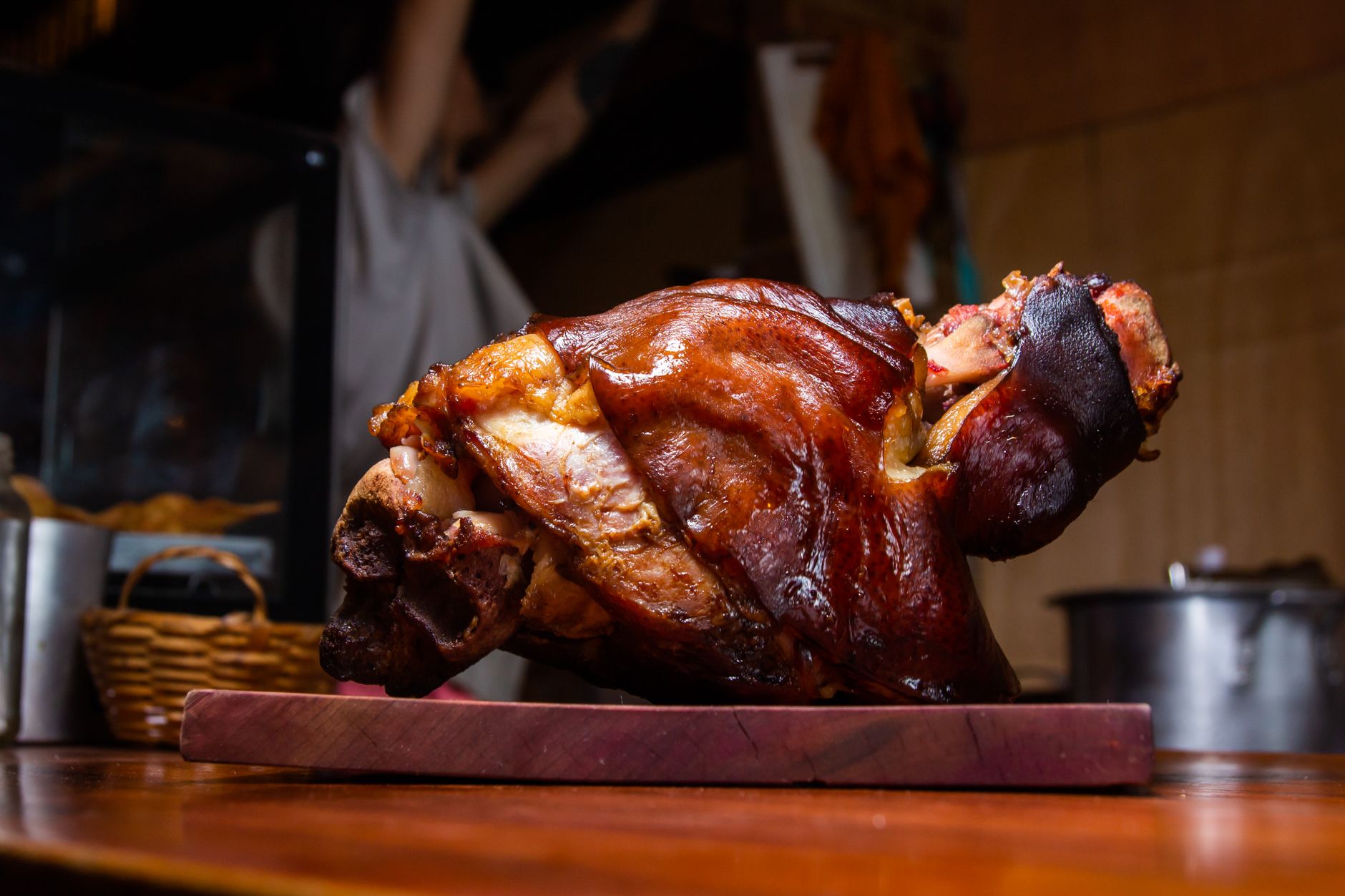
I sliced ham for an hour and a half, thin, the way my mother said. People made sandwiches on Mrs. Becker’s buns, took a scoop of potatoes, and went to find a chair or a corner.
Owen never stopped. When the napkins ran out, he went to the cupboard and got the second pack and folded more right there on the counter.
He carried coffee cups for the old ladies, one at a time, with both hands and his tongue sticking out the side of his mouth in concentration.
I kept an eye on Glen. He got a plate, finally, when Pam brought one to him.
He ate standing up in the dining room doorway, where he had stopped when he came in, and he didn’t sit down. He watched the room. He watched the table. He watched me.
Once I heard him say to one of his sons, “Mom’s table looks good with the leaves in.”
And his son, a big man about my age named Kevin, said, “It’s Nick’s table now, Dad. And it’s good ham.” Glen didn’t answer. He just looked at his plate.
I didn’t hear it as a victory. I felt sorry for him.
He had buried his mother that morning and was eating food cooked by a man he barely tolerated, in the house he grew up in.
Around two-thirty, Marlene came into the kitchen and found me at the sink, up to my elbows in the roasting pan.
She took off her rings, one by one, and set them on the windowsill. Then she rolled up the sleeves of her black dress.
“Move over,” she said. “You wash, I’ll rinse. Dot will dry. She’s slow, but she’s thorough.”
“Marlene, you don’t have to,” I said. “You’re a guest. Sit down and visit.”
“I washed dishes at this sink before your grandfather was born,” she said, which was very nearly true.
“I’m not a guest in this kitchen, young man. And neither are you.” And she took the pan out of my hands.
Dot came in behind her with a dish towel over her shoulder.
The three of us stood at that sink for most of an hour, washing the old wheat pattern cups as fast as people finished their coffee, and the two of them talked the whole time.
They told me about the winter of 1951, when the snow came over the porch rail and Ida, eighteen, kept the whole family fed on canned venison and bread she baked every morning.
“She was the oldest,” Dot said, drying a cup slow and careful. “She was always the one who took care. She took care of all of us.”
Her eyes filled up, and Marlene handed her a fresh towel without even looking at her.
Then Dot went to put the cups away and opened the wrong door.
She opened the pantry door instead of the cupboard, and she stopped, with the dish towel in one hand and a cup in the other.
“Oh,” she said. “Oh, Marlene. Look.”
Marlene dried her hands and came over. The two of them stood together in front of the open pantry door, two old women in black, and looked at the pencil lines running up the inside of the frame.
Glen 1968. Glen 1969. Joanie 1966. All the way up, year after year, in Ida’s slanted hand.
“She never painted it,” Marlene whispered. “Ida never painted it in all those years.”